%2Ffile%2Fattachments%2Forphans%2FWFD_2716_955550.jpg)
Soweto Couple Turns Schoolyard Into Organic Farm
A husband and wife transformed a barren school field in Soweto into a thriving certified organic farm that feeds families, trains new farmers, and proves sustainable agriculture can flourish anywhere. Their secret? They built everything from scratch using cardboard, bones, and food waste.
When Gregory Mkhize pulls a Jerusalem artichoke from the red soil at Faranani Primary School in Soweto, he's not just harvesting a tuber worth R150 per kilogram. He's proving that abandoned land can become a lifeline for an entire community.
Gregory and his wife Nthabiseng didn't start out as farmers. Before 2019, they worked as marketing agents for a vitamin company, but when supply chains collapsed, they returned home to Soweto and saw neighbors struggling with unemployment and food insecurity.
They approached the local primary school with an ambitious pitch: let us turn your abandoned field into a farm. The school agreed, granting them a 99-year lease on land that had soil so depleted it was almost sand.
The couple spent years rebuilding that exhausted earth without spending a fortune on chemicals. They dug deep trenches and filled them with cardboard for carbon, bones from street vendors for calcium, tin cans for iron, branches, food waste, and leaves. Today, that soil will stay fertile for over 20 years.
Siyoyisile Indlala Community Farm now holds dual organic certification and employs six people from the neighborhood. Everything on the farm follows a circular system where nothing goes to waste.
Rabbit droppings become fertilizer sold at R500 for 50 kilograms. Residents who bring five liters of urine or food waste get discounts on fresh produce. That urine gets combined with comfrey and processed for seven days until it becomes high-nitrogen liquid fertilizer the Mkhizes call bio-nitrate.
The grass cut on school fields becomes mulch. Seeds from each harvest get saved and replanted. "We are not buying anything," Gregory said. "Everything here rotates itself."
The Ripple Effect
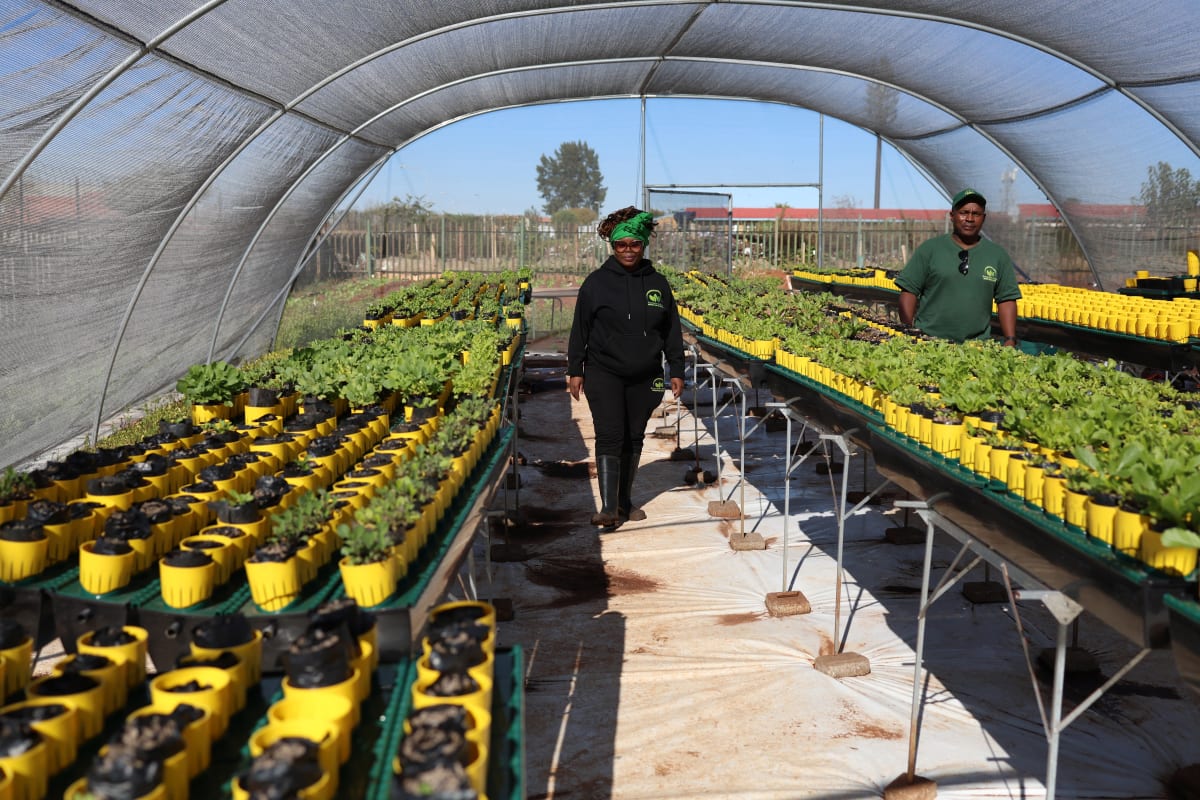
The farm's most powerful impact might be its smallest product. Inside a growing tunnel, the Mkhizes teach a method called snail planting where seeds are rolled in soil inside plastic, creating dense seedlings that sell for R20 to R30 each.
These seedlings can grow in a cut two-liter bottle on a windowsill or balcony, bringing fresh food to homes with no garden or growing experience. Every Saturday, 64 children from Faranani and their parents come to learn, leaving with bottle systems, seedlings, soil, and the knowledge to grow their own food.
The couple has trained four farmers who now run their own organic operations nearby. Some families proudly send back photos of what they've grown at home. "Our programmes count as a skill for life," Nthabiseng said.
What started as two people with a shovel has become a blueprint for sustainable farming that any community can replicate, one seedling at a time.
More Images

%2Ffile%2Fattachments%2Forphans%2FWFD_2626_678987.jpg)
%2Ffile%2Fattachments%2Forphans%2F6I1A1433_925598.jpg)
Based on reporting by Daily Maverick
This story was written by BrightWire based on verified news reports.
Spread the positivity!
Share this good news with someone who needs it