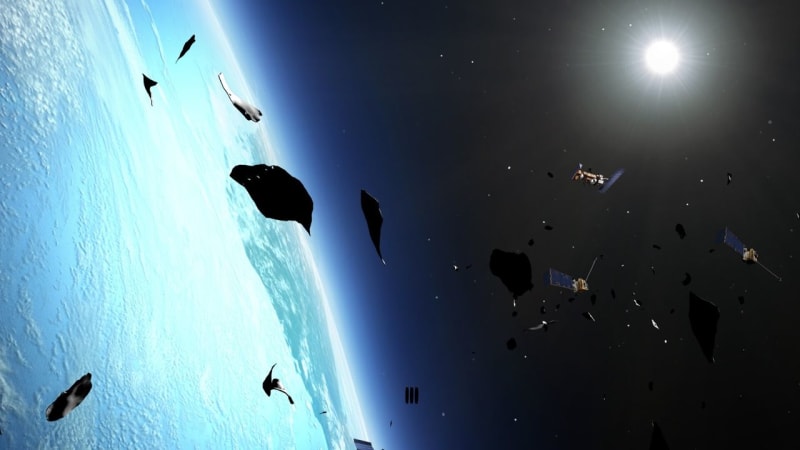
Space Debris Crisis: How One Cracked Window Almost Changed Space Exploration Forever
A tiny space debris impact nearly derailed a critical space mission, highlighting the urgent need for global cooperation in managing orbital environments. This incident could become a turning point in how nations approach space exploration safety.
In the vast, silent realm of Earth's orbital commons, a tiny crack in a spacecraft window nearly triggered an unprecedented space emergency in November 2025, revealing the growing peril of humanity's technological footprint above our planet.
Space debris experts now estimate nearly 130 million pieces of orbital junk are careening around Earth at incredible speeds, ranging from abandoned satellite fragments to remnants of rocket stage explosions. This floating hazard represents more than just mechanical waste—it symbolizes a mounting challenge that could fundamentally reshape how we approach space exploration and international cooperation.
The dramatic incident unfolded on November 5th, when China's Shenzhou-20 spacecraft discovered microscopic damage to its viewport window, caused by a high-velocity space debris impact. This seemingly minor breach rendered the craft unsuitable for a safe crew return, forcing an extraordinary response: the first emergency launch mission in China's human spaceflight program history.
In an unprecedented move, an uncrewed, cargo-loaded Shenzhou-22 spaceship was launched on November 25th to facilitate the astronauts' return. Ultimately, the Chinese crew successfully returned to Earth aboard the Shenzhou-21 spacecraft, marking the first alternative return procedure in the nation's space station program.
Moriba Jah, a renowned space debris expert from the University of Texas at Austin, sees this incident as more than a technical hiccup. 'A crew return was postponed because microscopic debris compromised a spacecraft window,' Jah explained. 'That decision reflects responsible risk management grounded in incomplete knowledge and exposes our collective inability to maintain a continuous, verifiable understanding of orbital dynamics.'
The broader implications are profound. Each fragment left in orbit adds to a growing tide of uncertainty, challenging our current approach to space exploration. Jah advocates for designing missions, governance frameworks, and information systems that can 'regenerate knowledge faster than it decays'—a vision of proactive, collaborative space management.
International experts now argue that this near-miss should catalyze a global reckoning. The solution requires unprecedented collaboration: establishing common baselines for orbital situational awareness, developing interoperable knowledge systems, and creating certification programs that prioritize orbital safety over competitive achievements.
As humanity continues to expand its presence beyond Earth, the Shenzhou-20 incident serves as a critical reminder. Our technological ambitions must be matched by equally sophisticated stewardship of the orbital environment. By embracing transparency, shared knowledge, and collaborative risk management, we can transform this potential crisis into an opportunity for more responsible space exploration.
Based on reporting by Space.com
This story was written by BrightWire based on verified news reports.
More Good News
 🚀 Innovation
From Sci-Fi to Science: UK Company Pioneers Manufacturing in Space
 🚀 Innovation
Rocket Lab: The Ambitious Startup Reshaping Global Space Exploration
 🚀 Innovation