Space Shuttle Endeavour's Epic 12-Mile LA Crawl Took 68 Hours
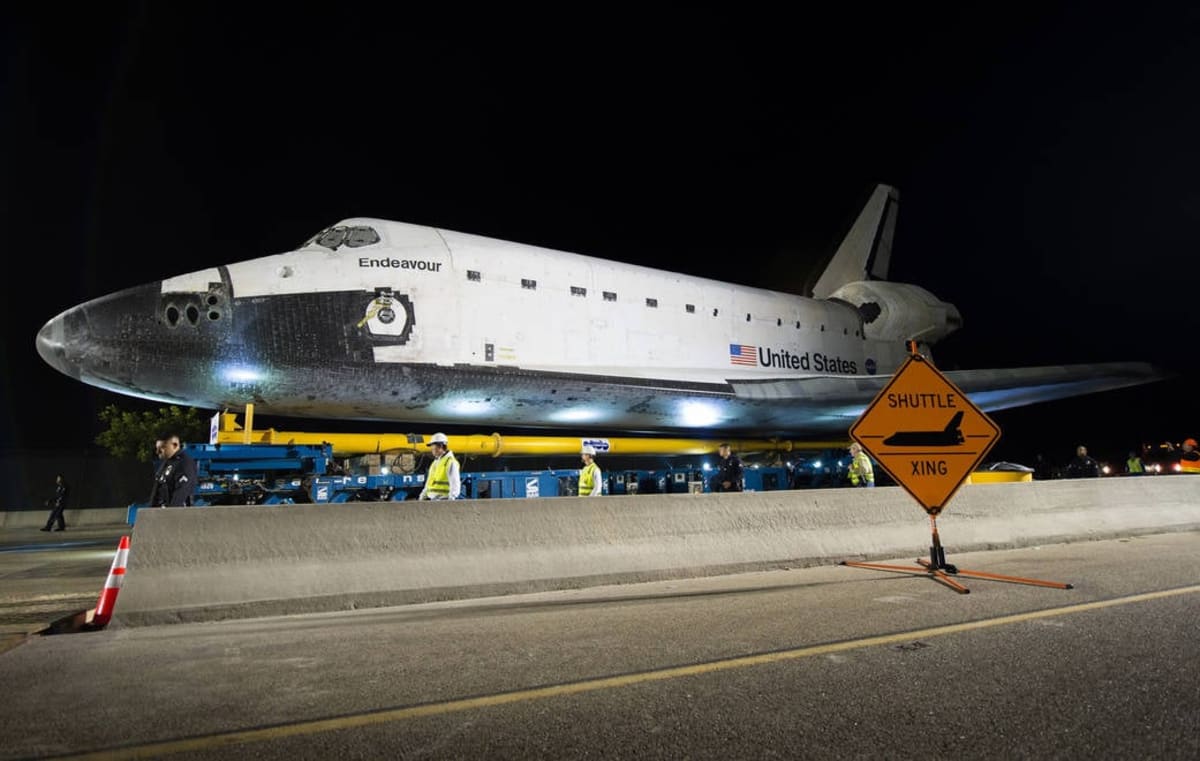
In 2012, retired space shuttle Endeavour made a breathtaking final journey through Los Angeles streets, creeping just 2 mph as crews trimmed 400 trees and removed 220 traffic signals to squeeze its 78-foot wingspan through the city. The 12-mile trip took three days and became an unforgettable community celebration of space exploration history.
Moving a 170,000-pound spacecraft through city streets sounds impossible, but Los Angeles proved it could be done with patience, precision, and a whole lot of teamwork.
In October 2012, space shuttle Endeavour completed its final mission. After flying to California atop a Boeing 747, the retired orbiter faced its slowest journey yet: 12 miles from LAX to the California Science Center at a maximum speed of 2 mph.
The three-day crawl through Inglewood and Los Angeles became an engineering marvel and a public spectacle. Endeavour's 78-foot wingspan often cleared obstacles by mere inches as specialists stopped, measured, adjusted and crept forward block by block.
The challenge wasn't just weight. Endeavour sat 57 feet tall on its specialized transporter, and its tapered wings swept differently with every turn of its 122-foot-long body. Workers couldn't simply steer between painted lines when the spacecraft was wider than most streets.
Route planners spent months surveying every inch of the path. They removed about 220 traffic signals and more than 400 trees before Endeavour even began moving. Arborists continued trimming branches in real time as the orbiter squeezed past.
Utility crews raised power lines, disconnected cables and temporarily removed streetlights. Police closed roads while crowds gathered to witness history rolling past their neighborhoods at walking speed. What was planned as a two-day Saturday-to-Sunday journey stretched into Monday.
The Over Land Transporter gave operators exceptional control. This multi-axle system, originally built to move orbiters 37 miles from their Palmdale assembly facility to Edwards Air Force Base, came out of 27 years of storage and was refurbished specifically for this mission.
Spotters monitored the nose, belly, tail and both wingtips simultaneously. A tiny adjustment at the transporter could shift a wingtip several feet by the time that angle reached the wing's end. Teams would stop, reassess multiple clearance points and make millimeter-precise corrections before inching forward again.
Why This Inspires
This wasn't just about moving metal from point A to point B. An entire city rearranged itself to preserve a national treasure that had flown 25 missions and traveled 123 million miles in space.
The tree removals sparked controversy, but the city committed to replacement planting. Streets that were never designed for a spacecraft's dimensions were temporarily reimagined because some things matter enough to make room for them.
Thousands of Angelenos lined the route to watch Endeavour pass. Children saw the spacecraft that had helped build the International Space Station rolling past their homes. Workers who had spent careers on the shuttle program watched their legacy become a permanent museum exhibit.
Today, Endeavour rests at the California Science Center, inspiring visitors who can stand beneath wings that once orbited Earth, made possible by a community that proved great things move forward one careful inch at a time.
More Images

Based on reporting by Google News - Science
This story was written by BrightWire based on verified news reports.
Spread the positivity!
Share this good news with someone who needs it