Space Viruses Beat Drug-Resistant Bacteria on Earth
Viruses evolved aboard the International Space Station returned to Earth with a surprise power: they could kill antibiotic-resistant bacteria better than their Earth-bound counterparts. This accidental discovery could help scientists develop new treatments for dangerous infections.
Scientists sent bacteria and viruses to space for an evolution experiment and accidentally created a potential weapon against drug-resistant superbugs.
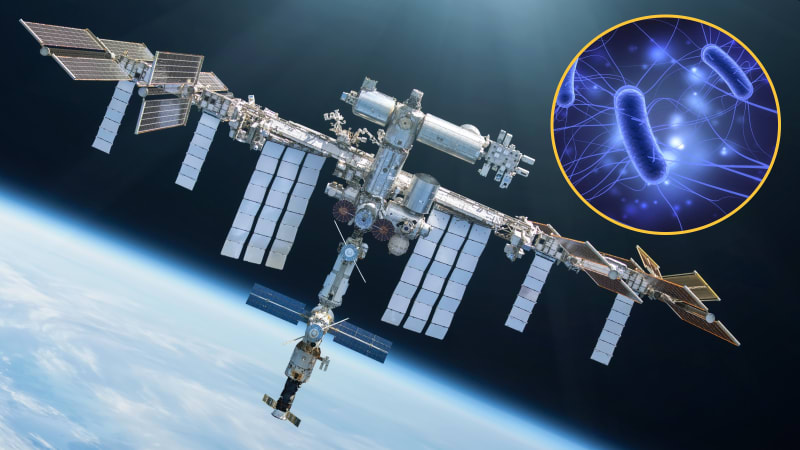
Researchers from the University of Wisconsin-Madison launched E. coli bacteria and the viruses that infect them, called phages, to the International Space Station. They wanted to study how these microscopic enemies would evolve differently in space compared to identical samples kept on Earth.
The experiment revealed something fascinating about microgravity. Without gravity constantly stirring fluids around, the bacteria and phages bumped into each other less often. This forced the viruses to become more efficient hunters, developing better ways to grab onto and infect passing bacteria.
The space-adapted phages accumulated specific genetic mutations that boosted their infection abilities. Meanwhile, the bacteria fought back with their own mutations to resist the viral attacks. This cosmic arms race produced different evolutionary changes than what happened in the Earth samples.
Then came the unexpected breakthrough. When researchers brought the space-evolved phages back to Earth and tested them, they discovered these viruses could kill E. coli strains that commonly cause urinary tract infections. These are typically resistant to normal T7 phages.
"It was a serendipitous finding," said lead researcher Srivatsan Raman. "We were not expecting that the phages that we identified on the ISS would kill pathogens on Earth."
Why This Inspires
This discovery shows how studying life in extreme environments can lead to solutions for problems back home. Scientists are racing to develop alternatives to traditional antibiotics as more bacteria become resistant to existing drugs. Phage therapy, which uses viruses to kill harmful bacteria or make them vulnerable to treatment, represents one promising approach.
The research could have applications beyond Earth too. Future astronauts on long missions to Mars or extended stays on the Moon might benefit from these more effective phage therapies in microgravity environments.
Nicol Caplin, a former astrobiologist at the European Space Agency, explained the broader potential: "If we can work out what phages are doing on the genetic level in order to adapt to the microgravity environment, we can apply that knowledge to experiments with resistant bacteria."
The study demonstrates that sometimes the best way forward is to look up. By understanding how evolution works differently in space, researchers can design better treatments for infections that have become increasingly difficult to treat on Earth.
Space just became an unlikely ally in the fight against superbugs.
More Images


Based on reporting by Live Science
This story was written by BrightWire based on verified news reports.
Spread the positivity!
Share this good news with someone who needs it