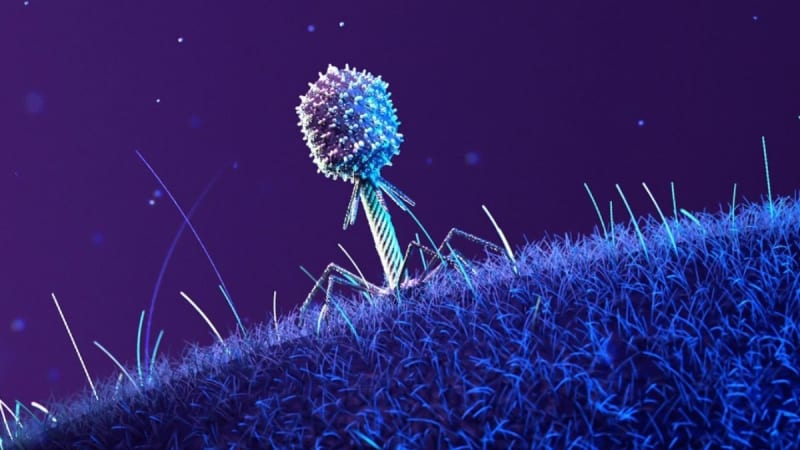
Space Viruses Could Fight Drug-Resistant Infections on Earth
Scientists sent bacteria and viruses to the International Space Station, and their mutations in space revealed new ways to combat drug-resistant infections back on Earth. The discovery could help millions suffering from infections that no longer respond to antibiotics.
A box of microbes that traveled to space and back just handed us a potential solution to one of medicine's biggest problems.
Scientists from the University of Wisconsin-Madison sent bacteria and their viral enemies called bacteriophages to the International Space Station in 2020. For 25 days, these tiny organisms battled each other in microgravity while an identical experiment ran simultaneously on Earth.
The results surprised everyone. Space fundamentally changed how these organisms evolved and interacted with each other.
The bacteria developed mutations in genes controlling stress response and nutrient management. Their surface proteins changed too. The viruses mutated right back, adapting so they could still latch onto and infect their bacterial targets.
But here's where it gets exciting. When researchers brought those space-mutated viruses back to Earth, they discovered something remarkable.
The mutations that happened in space made the viruses exceptionally good at killing bacteria responsible for urinary tract infections. These aren't just any UTIs either. More than 90 percent of UTI-causing bacteria are now resistant to antibiotics, leaving millions of people with limited treatment options.
Biochemist Vatsan Raman and his team realized they could engineer new therapeutic viruses based on what they learned from the space mutations. These enhanced phages showed far superior activity against drug-resistant pathogens compared to their Earth-bound cousins.
The Ripple Effect
This breakthrough extends far beyond UTIs. The research opens a new frontier in fighting antibiotic resistance, which threatens to become one of the deadliest health crises of our time.
By understanding how evolution works differently in microgravity, scientists can now engineer better weapons against superbugs. The space station essentially served as a laboratory for accelerated evolution, showing us solutions we might have taken decades to discover on Earth.
The findings also validate an entirely new approach to medical research. Sometimes the best answers to our earthly problems come from looking beyond our planet.
This space research just turned into a lifeline for people facing infections that modern medicine struggles to treat.
More Images

Based on reporting by Google News - Science
This story was written by BrightWire based on verified news reports.
Spread the positivity!
Share this good news with someone who needs it