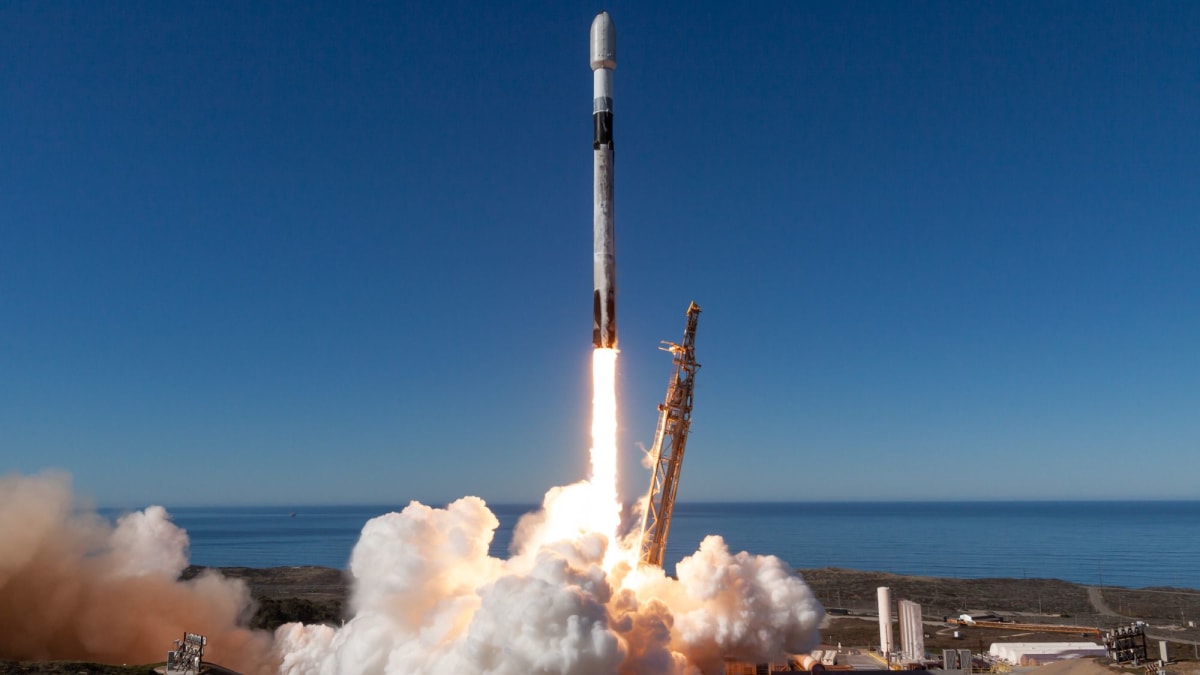
SpaceX Launching 119 Satellites This Monday Morning
SpaceX will send 119 satellites into orbit during its Transporter-16 mission from California on Monday, continuing a rideshare program that's made space more accessible than ever. Since 2021, these affordable rideshare launches have helped over 1,600 projects reach the stars.
SpaceX is about to give 119 different space projects their ticket to orbit, proving that reaching for the stars doesn't require a fortune anymore.
The Falcon 9 rocket will lift off from Vandenberg Space Force Base in California at 6:20 a.m. EDT on Monday, March 30. You can watch the launch live on SpaceX's website starting 15 minutes before liftoff.
This Transporter-16 mission carries an impressive mix of spacecraft. The payload includes tiny cubesats, larger microsats, hosted payloads, a reentry vehicle, and orbital transfer vehicles that will deploy eight additional satellites later.
The launch represents the 16th flight in SpaceX's Transporter rideshare series, which works like a carpool for satellites. Instead of organizations needing to buy an entire rocket launch, they can share the ride and split the cost.
The Ripple Effect
Since SpaceX launched Transporter-1 in January 2021, these rideshare programs have democratized space access in remarkable ways. Together with the Bandwagon program, they've sent more than 1,600 payloads into orbit.
That first Transporter mission still holds the record with 143 satellites launched at once. By offering affordable access to space, SpaceX has opened opportunities for universities, startups, and researchers who previously couldn't afford their own missions.
The rocket's first stage booster will land on the droneship "Of Course I Still Love You" about 8.5 minutes after launch. This will mark the 12th flight for this particular booster, showcasing the reusable technology that's made these frequent, affordable launches possible.
The satellites will begin deploying about 55 minutes after liftoff, each one representing someone's dream, research project, or innovation. From student experiments to commercial ventures, these 119 payloads prove that space exploration belongs to everyone now, not just governments and giant corporations.
More Images

Based on reporting by Space.com
This story was written by BrightWire based on verified news reports.
Spread the positivity!
Share this good news with someone who needs it