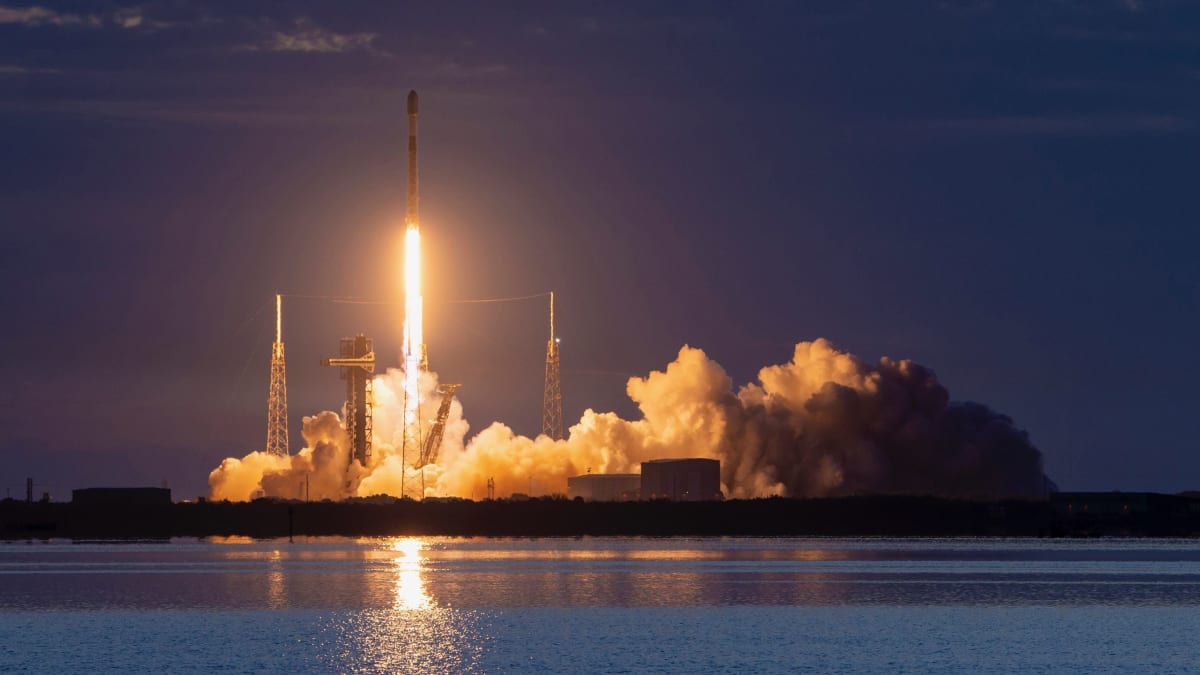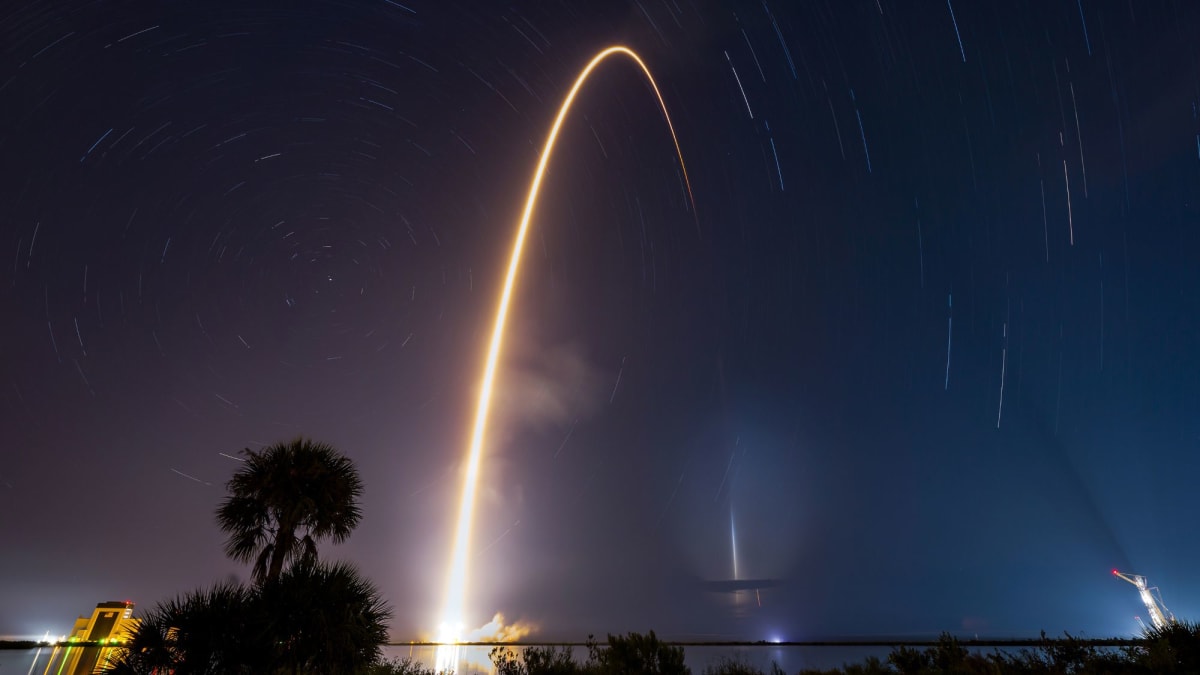
SpaceX Rocket Flies Record 37th Mission on 100th Launch
A SpaceX rocket just completed its 37th flight, shattering all reusability records and proving that spacecraft can work like airplanes. The milestone came during the company's 100th launch of 2026, a pace no one thought possible just a decade ago.
One SpaceX rocket just proved that the future of spaceflight looks a lot like catching a flight at the airport.
Early Tuesday morning, a Falcon 9 booster called B1067 completed its 37th successful mission, launching 29 internet satellites into orbit before landing safely on a drone ship in the Atlantic Ocean. No rocket in history has ever flown that many times.
The achievement came during SpaceX's 100th Falcon 9 launch of 2026, continuing a trend that's reshaping the entire space industry. Last year, the Falcon 9 flew 165 missions with a perfect success rate, more flights than all other rockets worldwide combined.
The secret isn't just building rockets. It's landing them, refurbishing them, and flying them again within weeks instead of throwing them away after every launch.
SpaceX now has six boosters that have each flown at least 30 missions. The closest competitor just successfully landed their first reusable rocket, but hasn't launched it a second time yet.
Why This Inspires
This milestone represents more than engineering excellence. It shows what happens when we stop accepting wasteful practices as inevitable.
Think about it: until recently, launching a rocket meant building a brand new one for every mission, like building a new airplane for every flight from New York to Los Angeles. SpaceX proved there's a better way.
The B1067 booster alone has carried astronauts to the International Space Station twice, launched critical communication satellites for countries around the world, and helped build Starlink, a network bringing internet to remote areas with no other options. Each flight cost dramatically less than traditional single-use rockets.
This approach is opening space to projects that couldn't afford it before. Research satellites, climate monitoring systems, and communication networks are launching faster and cheaper than ever.
The company isn't stopping here. Their next-generation Starship rocket is designed to be completely reusable, with each vehicle potentially flying multiple times per day. If that sounds impossible, remember people said the same thing about landing a 15-story rocket on a floating platform in the ocean.
The race is now on globally, with competitors working to match SpaceX's reusability achievements. That competition means better technology, lower costs, and more innovation for everyone.
Thirty-seven flights for a single rocket turns science fiction into routine operations, proving that sustainable spaceflight isn't just possible—it's the new standard.
More Images

Based on reporting by Google News - Science
This story was written by BrightWire based on verified news reports.
Spread the positivity!
Share this good news with someone who needs it