Spain Discovers World's Smallest Ornithopod Dinosaur
Scientists in Spain have unearthed the tiniest ornithopod dinosaur ever found, standing just 12 inches tall and reshaping our understanding of how herbivorous dinosaurs evolved. The 125-million-year-old discovery reveals surprising secrets about how these ancient creatures adapted over time.
A tiny dinosaur no bigger than a house cat is rewriting the story of how herbivorous dinosaurs evolved millions of years ago.
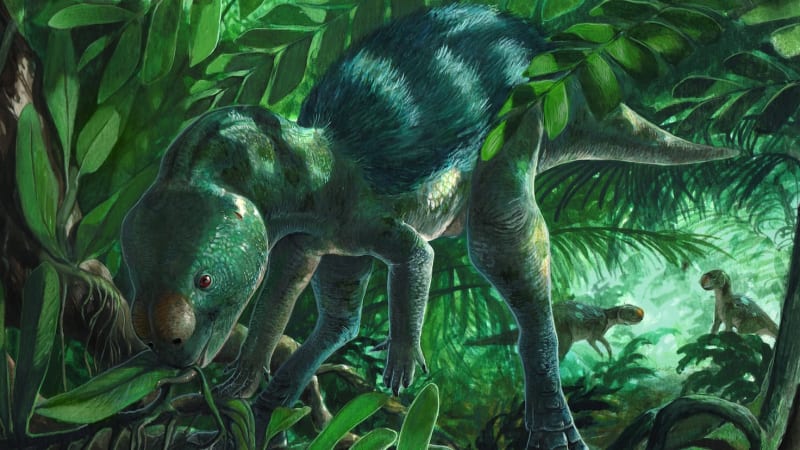
An international team of paleontologists has discovered Foskeia pelendonum, the smallest known ornithopod dinosaur in the world. The pint-sized herbivore measured just 20 to 24 inches long and stood no taller than a ruler at 12 inches high.
The fossils were recovered from the Vegagete site near Villanueva de Carazo in Burgos, Spain. The species lived approximately 125 million years ago during the Early Cretaceous period, when much larger dinosaurs roamed the earth.
The discovery came from analyzing more than 800 fossilized bones, with around 350 belonging to six individuals ranging from juveniles to adults. This treasure trove of remains allowed researchers to reconstruct significant portions of the dinosaur's anatomy in remarkable detail.
Despite its tiny stature, Foskeia had a robust jaw and a skull measuring about 2 inches long. The skull shows clear adaptations for chewing vegetation, proving that good things really did come in small packages.
The species name honors the Pelendones, a Celtiberian tribe that once inhabited the region where the fossil was found. Lead paleontologist Paul Émile Dieudonné published the findings in the journal Papers in Palaeontology this month.
The Bright Side
This little dinosaur is teaching scientists big lessons about evolution. Foskeia provides crucial insights into rhabdodontids, a group of ornithopods that thrived millions of years after this tiny ancestor walked the earth.
The discovery has sparked a fascinating new hypothesis about dinosaur evolution. Scientists now believe rhabdodontids may have gradually grown larger over time, possibly because predator pressure decreased toward the end of the Cretaceous period.
This pattern suggests that as the ancient world changed, so did the survival strategies of herbivorous dinosaurs. When threats diminished, staying small became less important than growing bigger to access more food sources.
The find proves that even the smallest fossils can fill the biggest gaps in our understanding of prehistoric life. Every discovery adds another piece to the puzzle of how life on Earth evolved and adapted across millions of years.
More Images


Based on reporting by Google News - Scientists Discover
This story was written by BrightWire based on verified news reports.
Spread the positivity!
Share this good news with someone who needs it