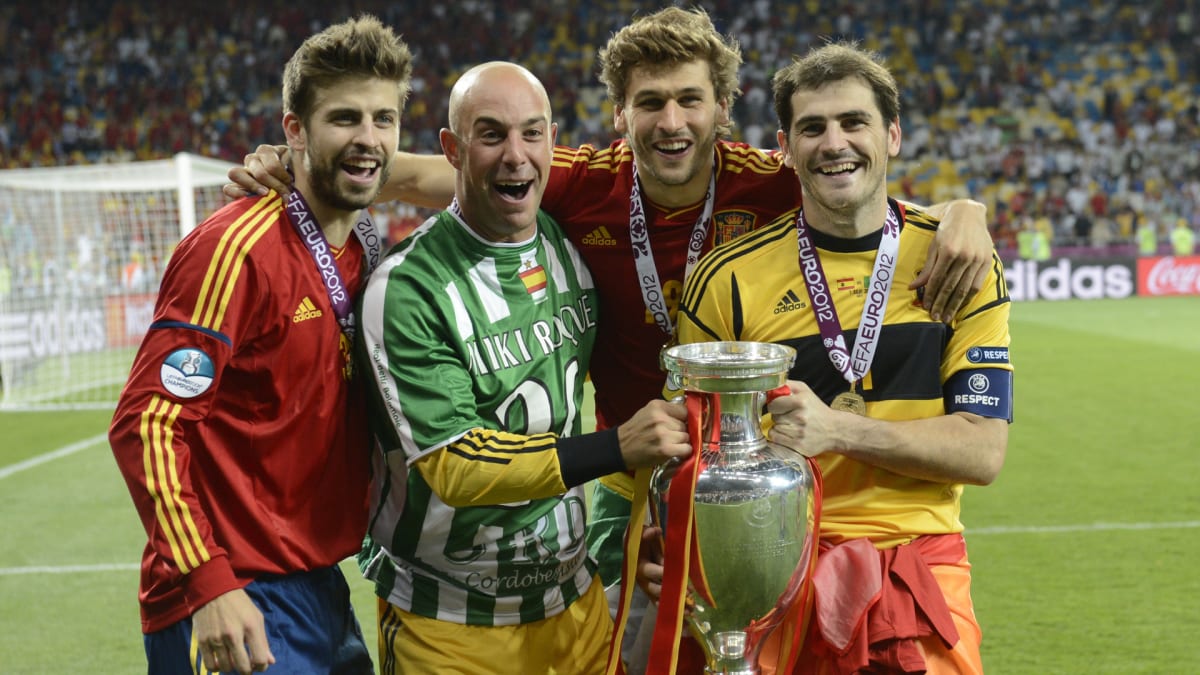
Spain's Secret: How Barcelona Core Won 3 Major Titles
World Cup winner Fernando Llorente reveals the chemistry that powered Spain's historic run of three consecutive tournament victories. Seven Barcelona starters gave the national team a game-changing advantage.
Spain's golden generation didn't dominate world soccer by accident. World Cup champion Fernando Llorente just shared the secret ingredient behind one of the greatest runs in international soccer history.
Between 2008 and 2012, Spain won three straight major tournaments: the European Championship twice and the FIFA World Cup once. That level of sustained excellence had never been seen before in international soccer.
Llorente, who played on Spain's 2010 World Cup and 2012 Euro Championship teams, credits an unexpected advantage. Seven of the starting 11 players came from FC Barcelona, meaning the national team showed up already knowing each other's every move.
"When seven of the starting 11 are from Barcelona, it's like having a ready-made team, which is the hard part with a national team," Llorente told Heavy Sports. National teams typically struggle because players only gather for short training camps between club seasons.
The Barcelona core included legends like Xavi, Andres Iniesta, Carles Puyol, and Gerard Pique. They had spent years perfecting tiki-taka under coach Pep Guardiola, a possession-based style built on quick passes and constant movement.
That club chemistry translated directly to the international stage. "A lot was already done, many set pieces and moves were already known by heart from Barcelona," Llorente explained. The rest of the squad just had to adapt to the system the Barcelona players had mastered.
Why This Inspires
Llorente's insights offer a blueprint for future success that any national team can follow. He points to Barcelona's famous youth academy, La Masia, as the foundation for building world-class teams.
"Copy a bit of what Barcelona are doing," Llorente said. "La Masia is a factory for producing players who have been playing this way since they were very small, so when they reach the first team they are prepared."
The key is starting young and building strong habits early. Players trained in the tiki-taka style from childhood don't get nervous under pressure because the movements become second nature.
But Llorente acknowledges the approach requires patience and commitment. "It requires a lot of work because it's a very delicate style," he noted. Building from the back and maintaining possession demands players of enormous quality who can handle high-pressure situations.
Spain's success proves that investing in youth development and creating a unified playing philosophy pays off at the highest level.
More Images


Based on reporting by Google News - Spain Success
This story was written by BrightWire based on verified news reports.
Spread the positivity!
Share this good news with someone who needs it
%3Amax_bytes(150000)%3Astrip_icc()%3Afocal(749x0%3A751x2)%2FPrincesses-Leonor-Sofia-Royal-palace-2010-Zarzuela-Palace-2026-World-Cup-072026-c9feb51af89b4da6b22b300f4c42da9e.jpg)