%2Fhttps%3A%2F%2Ftf-cmsv2-smithsonianmag-media.s3.amazonaws.com%2Ffiler_public%2Ff8%2F2a%2Ff82aae37-3a31-4995-b8f3-4be66db320c8%2Fmembers_of_the_research_team_during_the_documentation_and_analysis_work.jpeg)
Spanish Cave Reveals 2,000-Year-Old Women's Sanctuary
Archaeologists discovered 110 Roman inscriptions in a Spanish cave revealing where women worshipped a mysterious goddess called "the Lady" 2,000 years ago. The find represents the largest collection of Latin inscriptions ever found in a Roman cave sanctuary.
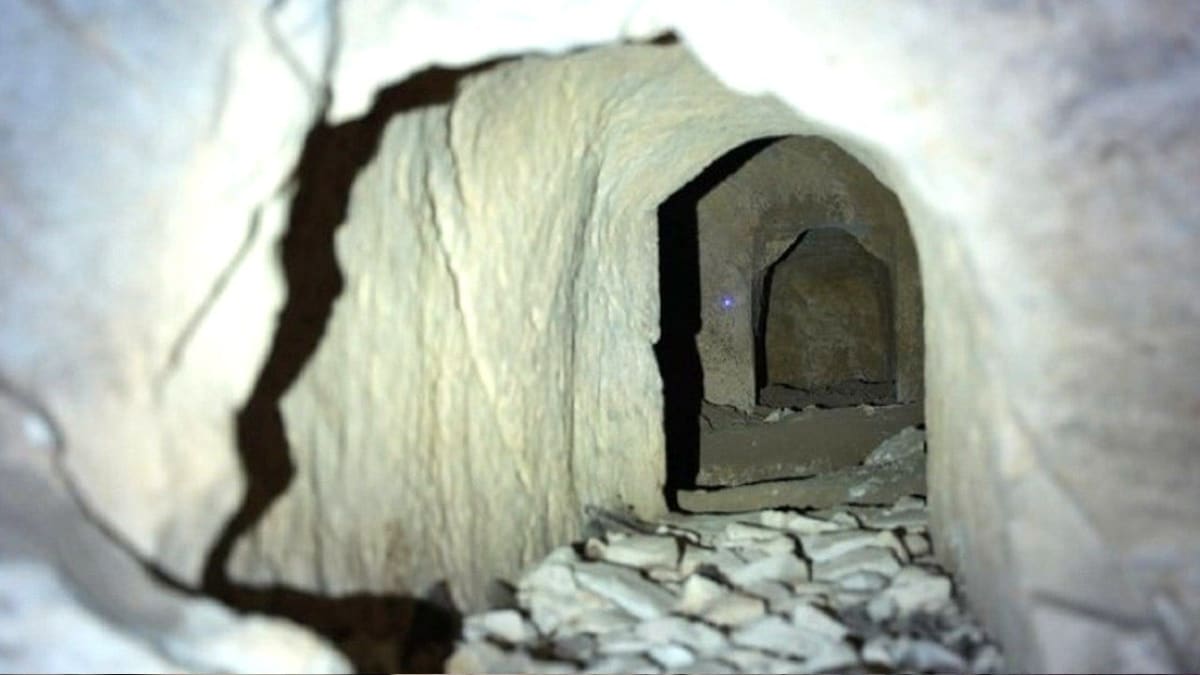
Deep inside a Spanish mountain, researchers have uncovered evidence of a sacred space where Roman women gathered to worship a goddess whose name has been lost to time.
Cova de les Dones, or the Cave of the Women, sits near the small town of Millares in Valencia's mountainous interior. More than 650 feet from the entrance, archaeologists documented 110 Latin inscriptions carved into the walls and ceilings of a hidden chamber, making it the largest known concentration of such inscriptions in any Roman cave sanctuary.
Five of the inscriptions are dedications to a goddess called Domina, meaning "the Lady." Three also contain the mysterious term MALACI, a word researchers had never encountered before and believe may be connected to the cave's abundant water.
The chamber tells a rare story of women's active participation in Roman religious life. Researchers found several female names carved into the walls alongside offerings that paint a picture of who gathered here: jewelry, chalice-shaped vessels, ceramic fragments, and spindle whorls used in textile work.
The location of the inscriptions concentrated in one defined area so far from the cave entrance suggests this wasn't casual worship. Researchers believe it was an organized cult dedicated to their female deity, a space where women could gather away from the outside world.
A first-century bronze coin from Emperor Claudius's reign helps date the sanctuary to about 2,000 years ago. Two bronze rings found in the chamber add to the evidence of devotion practiced in this underground temple.
Why This Inspires
This discovery offers a window into the spiritual lives of everyday Roman women, whose voices are often missing from ancient history. While we know women participated in Roman religion as worshippers and sometimes priestesses, finding physical evidence of their devotion preserved for two millennia reminds us that women have always sought sacred spaces of their own.
The cave's modern name may even preserve ancient memory. An 18th-century naturalist documented the site as Cova de les Dones, and researchers now wonder if local tradition kept alive the knowledge of women gathering here across thousands of years.
The site has revealed layers of human connection spanning ages: Paleolithic art over 24,000 years old depicting red deer and wild horses, Iron Age artifacts, and now this Roman women's sanctuary. Each generation found something sacred in the same stone walls, leaving traces of hope and devotion for us to discover.
More Images
%2Fhttps%3A%2F%2Ftf-cmsv2-smithsonianmag-media.s3.amazonaws.com%2Ffiler_public%2Ff8%2F2a%2Ff82aae37-3a31-4995-b8f3-4be66db320c8%2Fmembers_of_the_research_team_during_the_documentation_and_analysis_work.jpeg)
%2Fhttps%3A%2F%2Ftf-cmsv2-smithsonianmag-media.s3.amazonaws.com%2Ffiler_public%2Ff8%2F2a%2Ff82aae37-3a31-4995-b8f3-4be66db320c8%2Fmembers_of_the_research_team_during_the_documentation_and_analysis_work.jpeg)
%2Fhttps%3A%2F%2Ftf-cmsv2-smithsonianmag-media.s3.amazonaws.com%2Ffiler_public%2F62%2F06%2F62068bb3-0040-4165-9106-3829c5dc7ac4%2Ftwo_bronze_rings_located_on_the_surface_of_the_sanctuary_area_under_the_rock_inscriptions.jpeg)
%2Fhttps%3A%2F%2Ftf-cmsv2-smithsonianmag-media.s3.amazonaws.com%2Ffiler_public%2F42%2F28%2F422871d8-20fe-4535-8013-7c2127cc34ba%2Fdomina_votum.jpeg)
Based on reporting by Smithsonian
This story was written by BrightWire based on verified news reports.
Spread the positivity!
Share this good news with someone who needs it