Spanish Scientists Block Hospital Superbug's Deadliest Weapon
Researchers created an antibody that shields immune cells from a toxin produced by a highly drug-resistant bacterium that kills thousands yearly. This breakthrough could fight superbugs without creating more antibiotic resistance.
Scientists in Spain just found a clever way to fight one of the world's most dangerous hospital bacteria without using antibiotics at all.
Researchers at the Institute of Advanced Chemistry of Catalonia developed a special antibody that protects immune cells from a deadly toxin. The toxin comes from Pseudomonas aeruginosa, a bacterium the World Health Organization calls highly dangerous because it resists nearly every antibiotic we have.
The bacterium thrives in hospitals and kills thousands of vulnerable patients each year. Its secret weapon is a toxin called pyocyanin that destroys the body's immune cells and disrupts natural defenses.
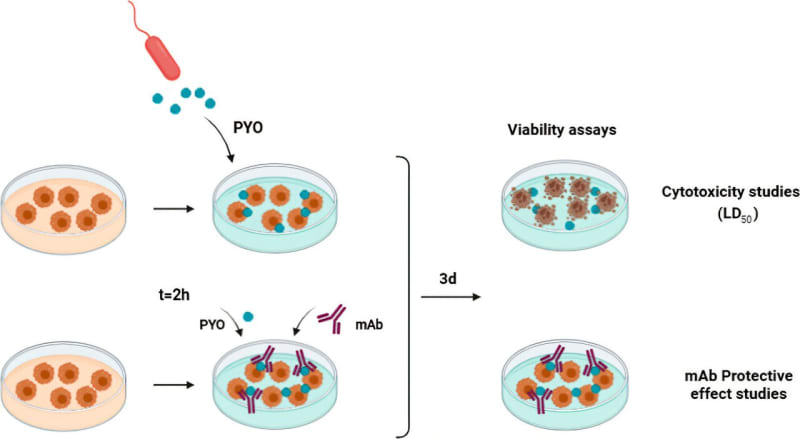
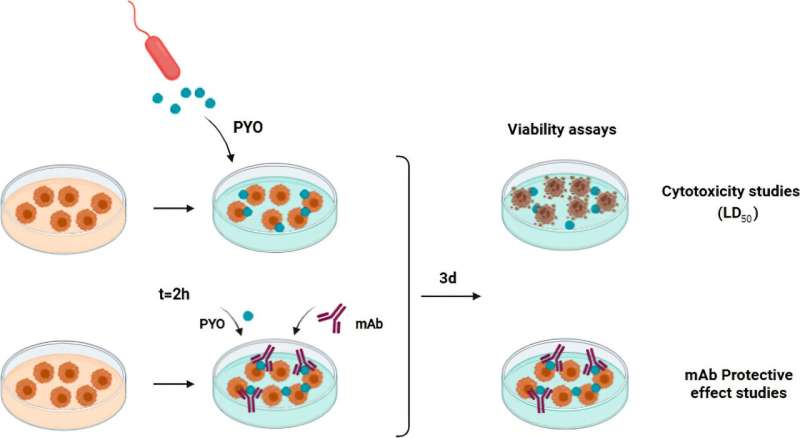
Instead of trying to kill the bacterium directly, the team took a different approach. They created a laboratory-made protein called mAb122 that grabs onto the toxin and stops it from working.
The researchers tested their antibody on immune cells exposed to different amounts of the toxin. The results showed that mAb122 significantly reduced cell damage and helped far more immune cells survive the attack. Even better, the antibody caused no harmful effects when given alone.
Lead researcher Lluïsa Vilaplana explains why new approaches are so urgent. "Due to its high adaptability, this bacterium has developed strong resistance to conventional antibiotics," she says. Finding alternatives has become a top priority worldwide.
The Bright Side
This strategy offers something antibiotics can't: a way to fight superbugs without making the problem worse. Traditional antibiotics kill bacteria, which creates pressure for resistant strains to evolve. This antibody doesn't touch the bacteria itself.
"Unlike conventional antibiotics, this strategy does not aim to directly eliminate the microorganism, but rather to neutralize one of its main virulence mechanisms," says Pilar Marco, who heads the research group. The antibody essentially disarms the bacterium instead of killing it.
This means doctors could potentially use lower doses of antibiotics or avoid them entirely in some cases. The approach reduces the chances that new drug-resistant strains will emerge.
The work is still early stage. The team tested the antibody only in cell cultures, not in living animals or people yet. They also need to study how it affects inflammation in the body more carefully.
The next steps involve testing the antibody in animal models to confirm it works safely in whole organisms. If those studies succeed, this could become a powerful new tool against drug-resistant infections, especially in hospitals where these bacteria cause the most harm.
For now, the research opens an exciting door: protecting patients by strengthening their defenses rather than racing to create new antibiotics that bacteria will eventually outsmart.
More Images


Based on reporting by Medical Xpress
This story was written by BrightWire based on verified news reports.
Spread the positivity!
Share this good news with someone who needs it
%2Fhttps%3A%2F%2Ftf-cmsv2-smithsonianmag-media.s3.amazonaws.com%2Ffiler_public%2F8e%2F83%2F8e837bc6-e2b3-4bb6-bb1c-4f1287b45a6f%2Fcastillo-39-rincon_de_los_signos.jpg)