Spanish Team Finds Golden-Tongued Mummies in Egypt Tomb
Archaeologists in Egypt uncovered Roman-era mummies adorned with golden tongues and a rare papyrus containing text from Homer's Iliad. The discovery sheds new light on ancient burial practices and the cultural richness of Greco-Roman Egypt.
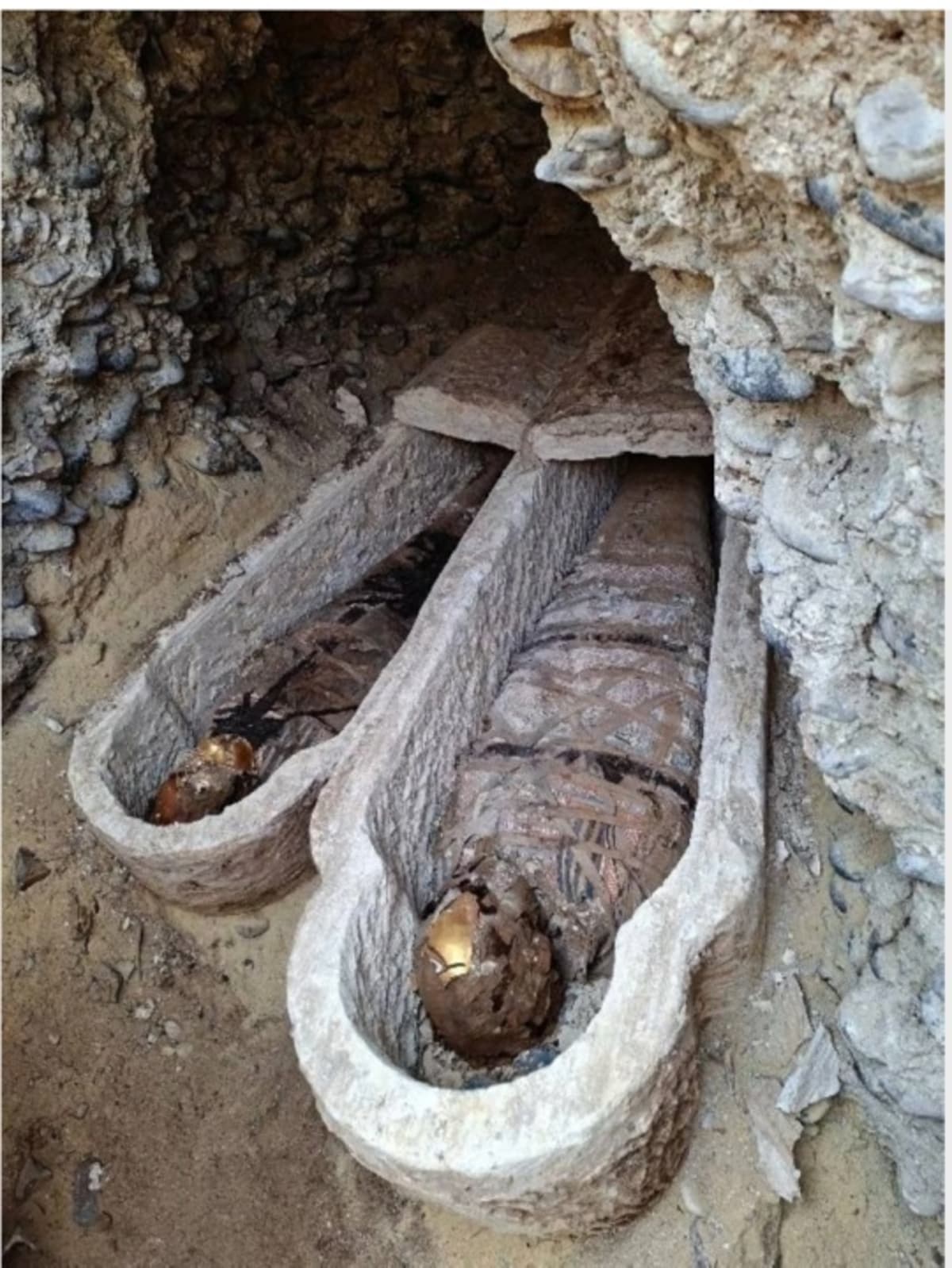
A Spanish archaeological team just unearthed a Roman-era tomb in Egypt filled with golden-tongued mummies and a 2,000-year-old copy of Homer's epic poetry.
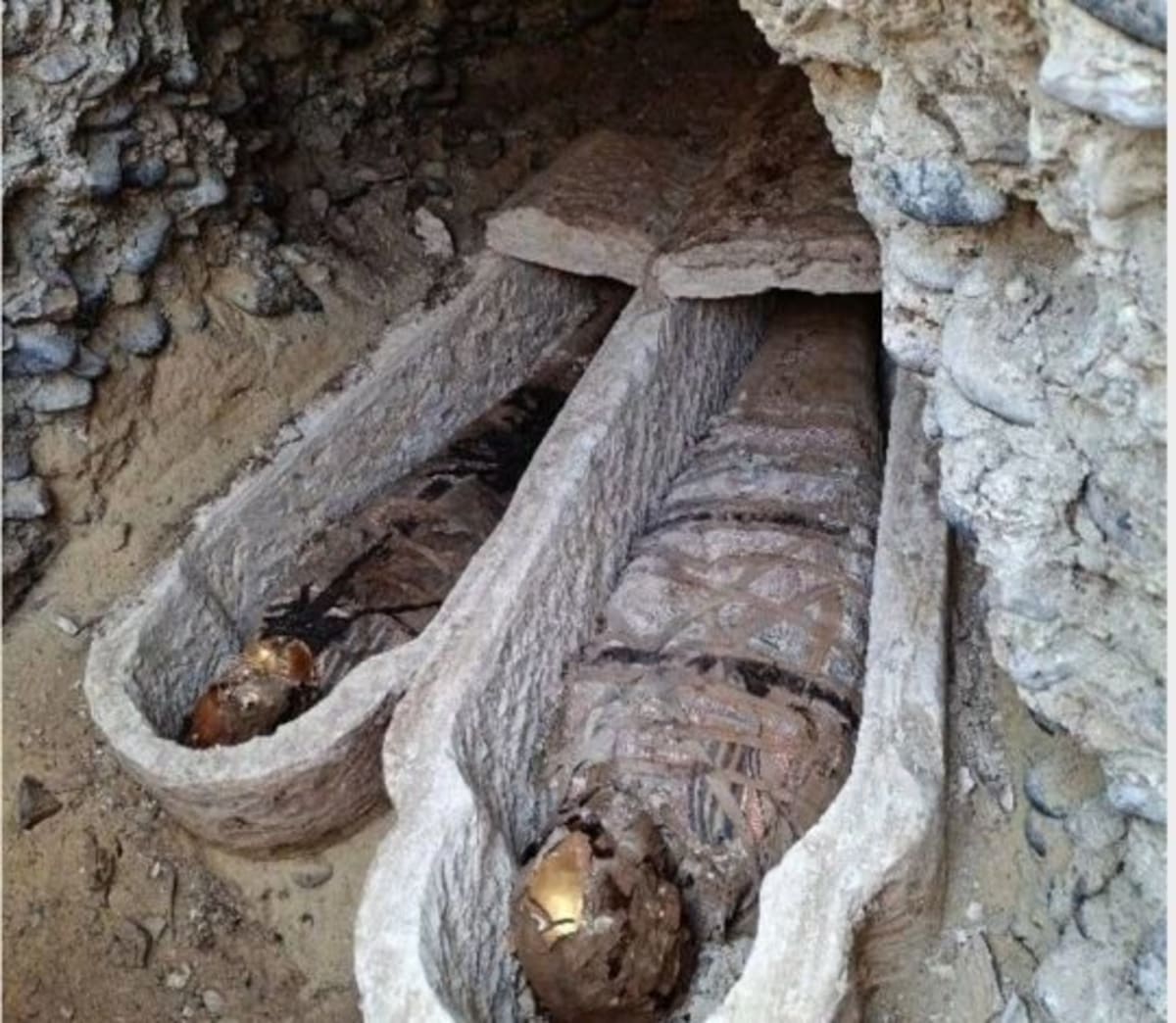
The University of Barcelona expedition discovered the tomb in Al-Bahnasa, a site in Minya Governorate about 150 miles south of Cairo. Led by researchers Maite Mascort and Esther Pons Mellado, the team found several mummies wrapped in linen decorated with geometric patterns, alongside wooden coffins and small bronze statues.
The most striking finds were three golden tongues and one copper tongue placed on the mummies. Ancient Egyptians believed these metal tongues would allow the deceased to speak in the afterlife, a practice that highlights the spiritual beliefs of the Greco-Roman period.
But the real surprise came from inside one of the mummies. Archaeologists found a papyrus containing text from the second book of Homer's Iliad, known as the "Catalogue of Ships." This section describes the Greek warriors who sailed to fight in the Trojan War, making it a significant literary discovery that connects ancient Greek and Egyptian cultures.
The excavation also revealed three limestone burial chambers. The first contained a stone jar with cremated remains of an adult and an infant, along with the head of a feline, all wrapped in textile. The second chamber held the cremated remains of two individuals alongside more feline bones, suggesting animals held special significance in burial rituals.
Nearby, the team discovered small terracotta and bronze statues, including depictions of Harpocrates (a Greco-Egyptian god of silence and secrets) as a rider and a small statue of Cupid. These artifacts show how Greek, Roman, and Egyptian religious traditions blended together during this period.
The Ripple Effect: This discovery adds to a growing collection of archaeological finds in Minya that reveal how different civilizations influenced each other in ancient Egypt. Minister of Tourism and Antiquities Sherif Fathy noted the find reflects the incredible diversity of Egyptian civilization throughout the ages. For researchers worldwide, the papyrus and burial practices offer fresh insights into how people honored their dead and preserved their culture 2,000 years ago.
Hassan Amer, excavation director and professor at Cairo University, acknowledged that some items showed deterioration from ancient looting. Still, the preserved artifacts provide valuable windows into daily life, spiritual beliefs, and literary traditions of the time.
This remarkable find reminds us that there are still countless stories buried beneath the sands, waiting to teach us about our shared human history.
More Images
Based on reporting by Egypt Independent
This story was written by BrightWire based on verified news reports.
Spread the positivity!
Share this good news with someone who needs it

%2Fhttps%3A%2F%2Ftf-cmsv2-smithsonianmag-media.s3.amazonaws.com%2Ffiler_public%2F15%2F3b%2F153b5427-10f9-4ad6-b039-8823a36efc6f%2Fhd100065orig.jpg)