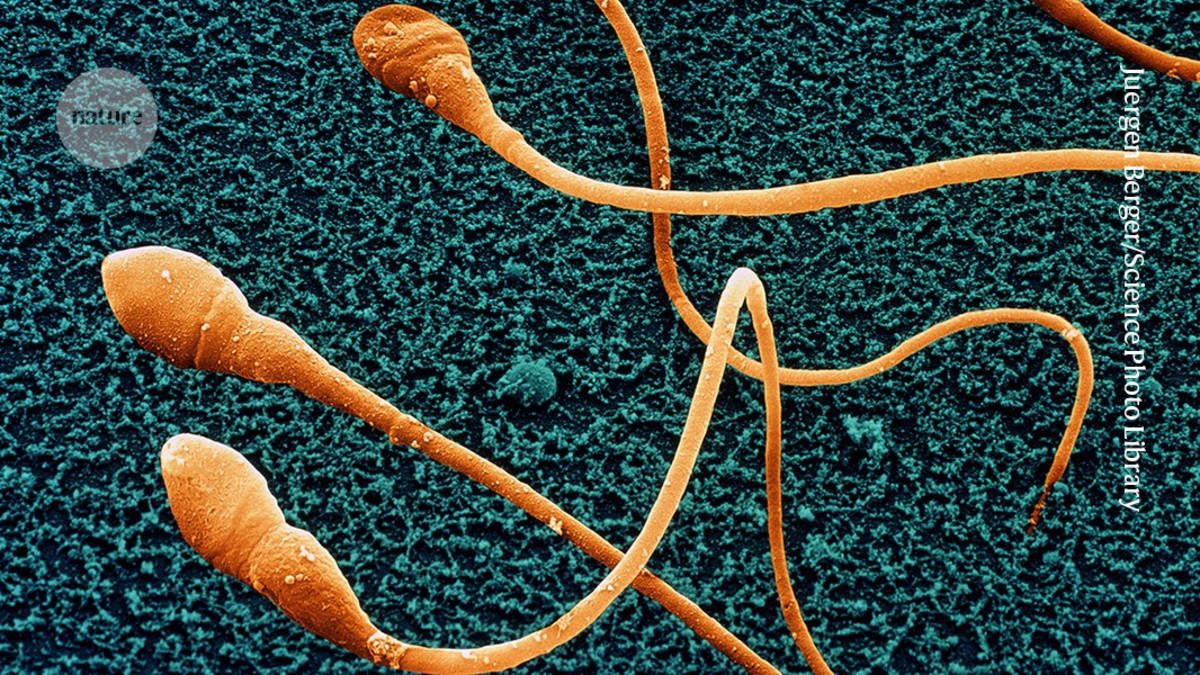
Sperm Use Teamwork to Win at Fertilization, Study Finds
Scientists discovered that millions of sperm don't always race alone. In many species, they work together as coordinated teams to reach the egg.
The classic story of fertilization just got a major rewrite, and it's surprisingly hopeful.
Researchers at Syracuse University and partner institutions across Europe discovered that in many species, sperm don't compete as solo racers. Instead, they join forces into organized teams that work together to reach and fertilize an egg. This cooperative strategy, called sperm conjugation, has evolved independently across hundreds of millions of years in insects, spiders, crabs, and other arthropods.
"Fertilization is often viewed as a competition among individual sperm, but in many species we see cells working together in ways that can influence reproductive success," says Steve Dorus, professor of biology at Syracuse University and study co-author.
Think of it like a rowing team moving in perfect coordination. Scientists first noticed this behavior over 100 years ago but assumed it was rare. The new study, published in Nature Communications, reveals it's actually widespread throughout the animal kingdom.
The secret to cooperation involves something called sperm-associated material, or SAM. This membrane-enclosed substance connects sperm cells to one another, creating organized groups that can navigate the complex female reproductive tract more effectively. Moving as a team may give sperm advantages in mobility and overall performance that individual cells can't match.
The research team traced this strategy back through 600 million years of evolution. They found that sperm cooperation appeared, disappeared, and reappeared many times across different species. The common ancestor of all insects likely had this ability.
"Evolution has effectively run the same experiment over and over again across different groups of arthropods," says lead author R. Antonio Gomez, a postdoctoral scholar at Syracuse. That pattern suggests teamwork offers real advantages worth evolving repeatedly.
Why This Inspires
This discovery changes how we think about one of life's most fundamental processes. Instead of pure competition, fertilization often depends on cooperation and collective effort. That's a powerful reminder that working together can be more effective than going it alone.
The findings could influence human fertility research too. Scott Pitnick, senior author of the study, describes fertilization as an obstacle course rather than a simple race. Understanding how sperm cooperate might eventually help scientists develop new approaches to reproductive challenges.
The research may even support pest control efforts. Scientists are exploring whether disrupting sperm cooperation in harmful invasive species could offer a targeted way to manage populations without broader environmental impacts.
Nature just taught us that even at the microscopic level, collaboration matters.
Based on reporting by Science Daily
This story was written by BrightWire based on verified news reports.
Spread the positivity!
Share this good news with someone who needs it