Sperm Whales Caught on Camera Helping Birth for First Time
Scientists witnessed something never seen before: a team of female sperm whales working together to help deliver and protect a newborn calf. The discovery reveals emotional intelligence once thought unique to humans and our closest primate relatives.
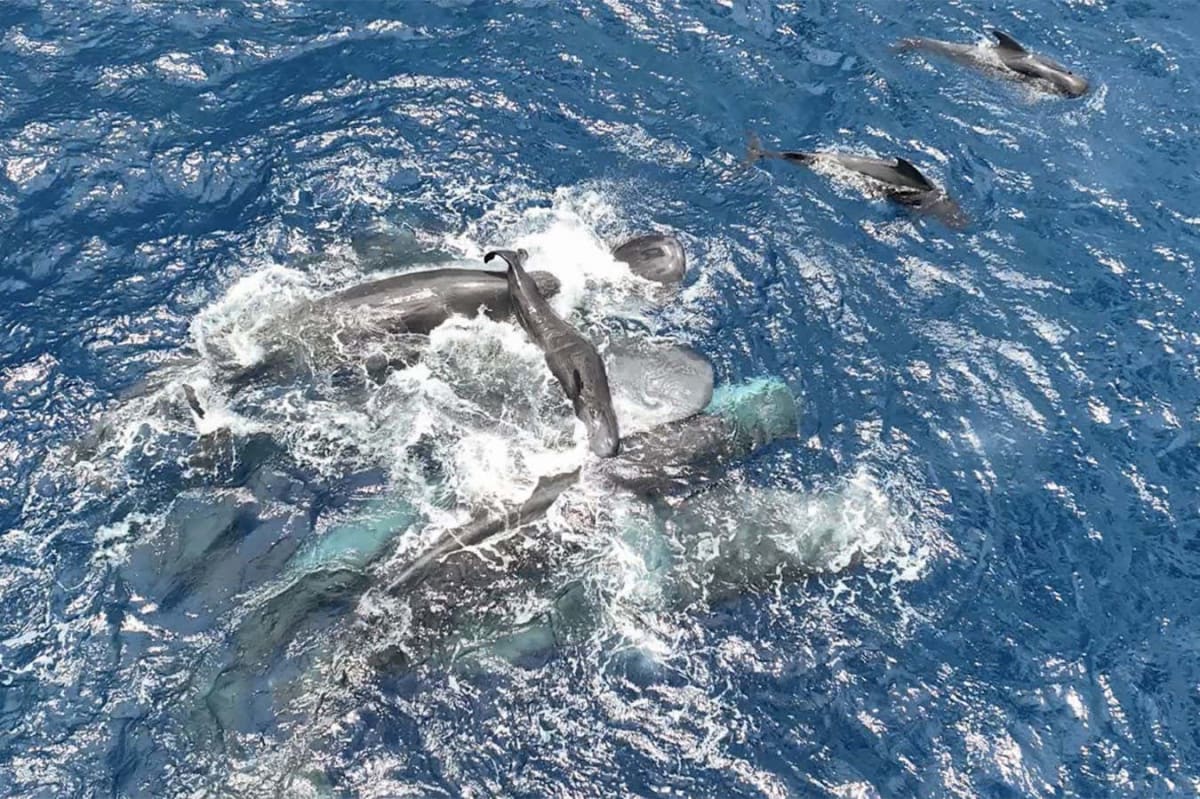
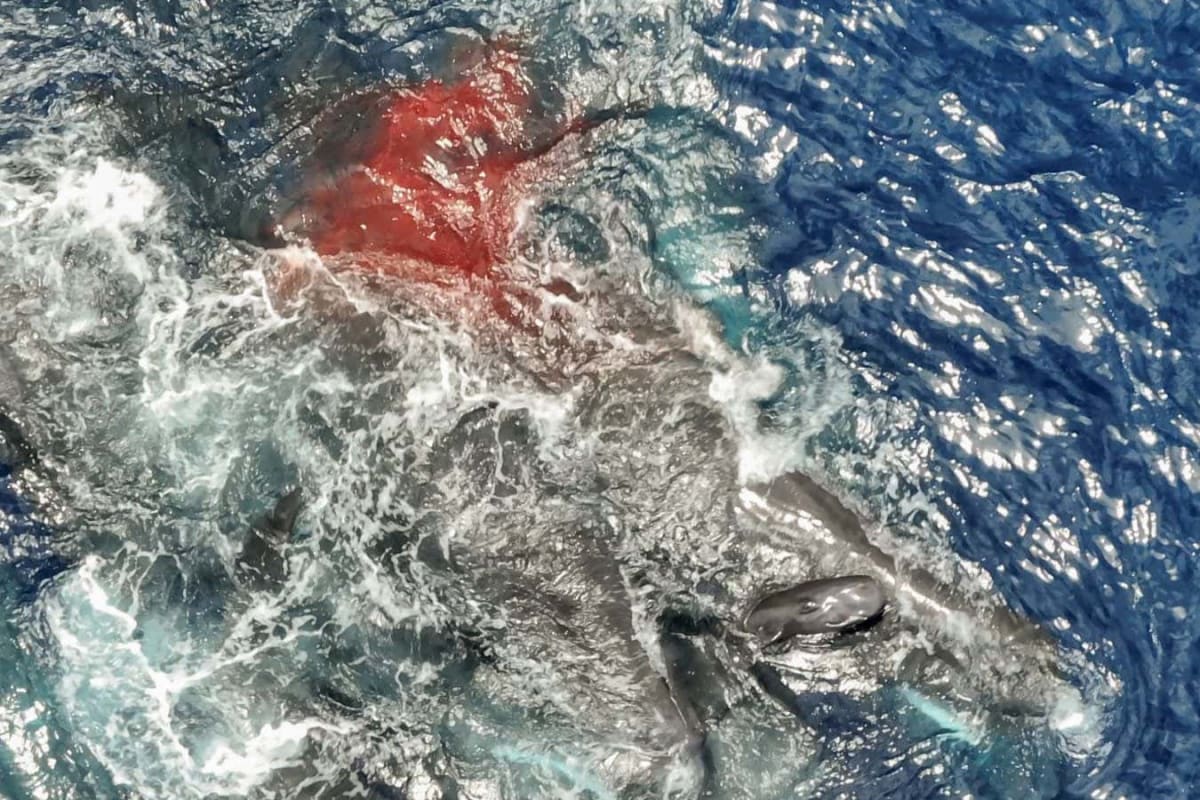
In July 2023, researchers monitoring Caribbean sperm whales got incredibly lucky when their drones captured the first-ever footage of a sperm whale birth, complete with 10 female "midwives" working in perfect coordination.
The birth took about 30 minutes, but what happened next amazed the scientists from Project CETI. As soon as the calf emerged, the adult females formed a synchronized protective circle and took turns lifting the newborn to the surface so it could breathe.
Newborn sperm whales can't float on their own for the first few hours of life. Without this team effort to keep the baby at the surface, calves would drown before their flukes fully unfurled and they learned to swim.
"This is the first evidence of birth assistance in non-primates," says researcher Shane Gero. Such complex cooperative behavior was once considered exclusive to humans and has only recently been observed in great apes.
The support came from multiple generations, including the grandmother helping her daughter through labor and unrelated females stepping in to protect the vulnerable newborn. This mirrors the strong female leadership structure that defines sperm whale society, where knowledge passes from one generation to the next.
About 18 minutes after the birth, short-finned pilot whales approached, and the protection intensified. The female sperm whales positioned themselves as shields between the newborn and potential threats, opened their jaws in warning, and changed direction to block the pilot whales' path.
Why This Inspires
The researchers had underwater microphones recording the whales' vocalizations during the entire event. They detected dramatic shifts in the group's communication style at two key moments: when labor began and when the pilot whales arrived.
Once the danger passed, the whales' vocal patterns returned to their normal social chatter. The team could literally connect "what these animals do with what they say," revealing emotional awareness we're only beginning to understand.
The calf survived its critical first year, when mortality rates run highest. The team hopes to spot the young whale again soon and give it an official name, adding another member to the family they've been studying since 2005.
This glimpse into sperm whale society shows us that compassion, teamwork, and intergenerational care aren't human inventions. They're ancient behaviors shared across species, connecting us to the ocean's giants in ways we never imagined.
More Images



Based on reporting by New Scientist
This story was written by BrightWire based on verified news reports.
Spread the positivity!
Share this good news with someone who needs it