Spider Monkeys Share Food Tips Like Forest Friends
Endangered spider monkeys in Mexico swap insider tips about the best fruit locations by constantly shuffling their social groups. Scientists discovered this clever information-sharing system helps the whole troop eat better than any solo monkey could manage.
Spider monkeys have figured out something remarkable: the best way to find food is to regularly switch up your lunch buddies and share what you know.
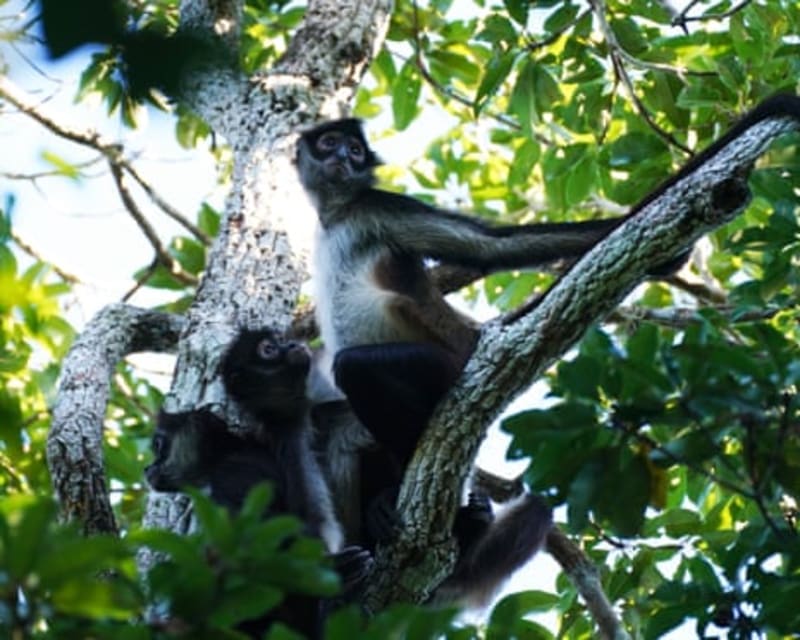
Scientists watching Geoffroy's spider monkeys in Mexico's Yucatán peninsula discovered these endangered primates run a sophisticated intelligence network. They constantly break into small groups of three or more, explore different parts of the forest, then regroup in new combinations to swap notes about where the ripest fruit is hiding.
The seven-year study revealed something even more impressive. The monkeys don't just share basic facts about food locations. They actually combine their knowledge to create entirely new information that no single monkey had before.
Here's how it works: one group of monkeys might know exactly where a promising fruit tree stands. Another group knows the perfect timing for when that tree will ripen. When these monkeys meet up in their ever-changing social shuffle, they pool their knowledge so everyone can show up at exactly the right place at the right time.
Dr. Matthew Silk from the University of Edinburgh explained it perfectly. "It isn't random social mingling. It's a clever system for sharing insider knowledge about where the best fruit trees are located across their forest home."
The research team mapped out each monkey's favorite haunts across the forest. Some areas are known by many monkeys, like popular hangout spots. Others are secret locations that only one or two individuals have discovered. This setup creates just enough overlap for information sharing while ensuring different monkeys scout different territories.
Ross Walker, a PhD student who developed the mathematical models for the study, found there's a sweet spot in how the system works. The monkeys need to spread out far enough to cover ground, but reconnect often enough to share what they've learned. Too much togetherness means missed opportunities. Too much separation means valuable tips never get shared.
The Ripple Effect
This discovery gives scientists fresh insight into collective intelligence in the wild. The research, published in the journal npj Complexity, shows these endangered primates have evolved a social system that makes the whole group smarter than the sum of its parts.
Professor Gabriel Ramos-Fernandez from the National Autonomous University of Mexico highlighted the bigger picture. By exploring their environment as a distributed network and regularly sharing unique information, the entire troop can know the forest better than any individual monkey could alone.
The findings came from detailed observations collected between 2012 and 2017, tracking the daily lives of these black-handed primates as they navigated their forest home.
This clever social strategy might be one reason spider monkeys have survived for so long, even as their habitats face increasing pressure and their species remains endangered.
More Images



Based on reporting by Guardian Environment
This story was written by BrightWire based on verified news reports.
Spread the positivity!
Share this good news with someone who needs it