Spider Silk Helps Surgeons Repair Severed Nerves
A UK surgeon is using golden orb-web spider silk to help damaged nerves heal across gaps too large for the body to repair on its own. The natural material acts as a scaffold that lasts 150 days instead of just 10, potentially eliminating the need for painful donor nerve grafts.
When Helen Hide-Wright crashed her car in 2022, breaking almost every bone in her body, surgeons faced a problem modern medicine still struggles to solve: how to reconnect the severed nerves in her right arm.
The solution required taking healthy nerves from behind her foot, leaving that area permanently numb. It worked, but it created a second injury to fix the first.
Dr. Alex Woods believes there's a better way. The NHS trauma surgeon co-founded a startup called Newrotex that's turning to an unlikely source: spider silk from golden orb-web spiders native to Madagascar.
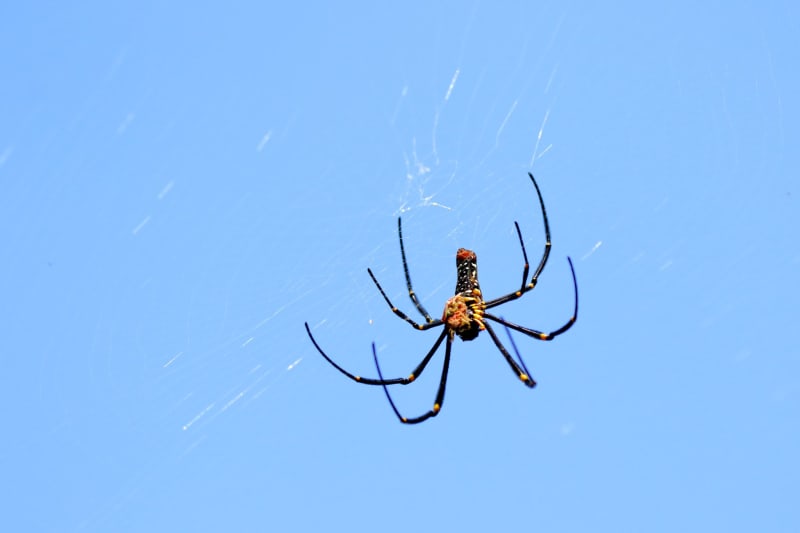
About 30 of these harmless spiders now live in individual terrariums in a humid Oxford lab, spinning the threads that could revolutionize nerve repair. Woods describes it simply: "It acts like a scaffold for nerves to grow along like a rose on a trellis."
The spiders aren't special because they're exotic. They're special because their drag-line silk, the thread they use to dangle and anchor themselves, mimics what the human body already tries to do when repairing nerve damage.
When a nerve gets severed, the body creates a temporary scaffold to guide regeneration. The problem is that scaffold only lasts about 10 days before breaking down, and nerves regenerate at just one millimeter per day.
Spider silk solves the timing problem. It performs the same function but lasts 150 days, giving nerves plenty of time to cross larger gaps before the support structure disappears.
The silk gets implanted inside a vein or hollow conduit, guides the nerve to reconnect, then gradually degrades without leaving anything permanent behind. No second surgery site, no lasting numbness from donor nerves, and potentially lower costs for healthcare systems.
Why This Inspires
Woods isn't just solving a surgical puzzle. He's addressing nerve injuries that happen during cancer surgeries like mastectomies and prostate procedures, where nerves get damaged accidentally and patients live with the consequences for years.
Hide-Wright, who lived through the traditional approach, sees the potential immediately. "The surgery was brilliant," she says, "but what Alex is offering would appear to be far more beneficial, a very exciting opportunity."
The device is now in its first human safety study in Panama, with UK and US trials planned next. Woods admits the road from "works in principle" to "available in hospitals" is long, expensive, and uncertain.
But he's confident enough that if his own nerve got severed tomorrow, he'd choose the spider silk implant. Sometimes the best new technology isn't new at all, just nature's ancient solution finally getting the chance to prove itself in an operating room.
Based on reporting by Optimist Daily
This story was written by BrightWire based on verified news reports.
Spread the positivity!
Share this good news with someone who needs it