Spiti's Silver Jewellery Passes Through Generations
In the high Himalayan valley of Spiti, mothers pass down intricate silver jewellery to their eldest daughters, keeping centuries of craftsmanship and family stories alive. Local artisans called garhs still handcraft each piece using traditional techniques learned from their fathers.
When a bride walks through Kaza market during a Spiti wedding, silver covers her from crown to wrist, each piece carrying stories hammered into metal by skilled hands.
These craftsmen are called garh or zoe, metalworkers who train for years before creating jewellery for a bride. Working mostly from Kaza in the high Himalayan valley of Spiti, they hammer, file, and set turquoise, coral, amber, and pearl into silver using techniques passed down through generations.
The dhagloo tells the strongest story of all. These thick silver bangles stack high on a bride's wrist, gifted only by her own family at marriage, never the groom's. Her arms carry permanent proof of where she comes from.
Around her neck hangs the gawoo, a small silver pendant box often passed through families. This personal ornament connects directly to Spiti's deepest traditions.
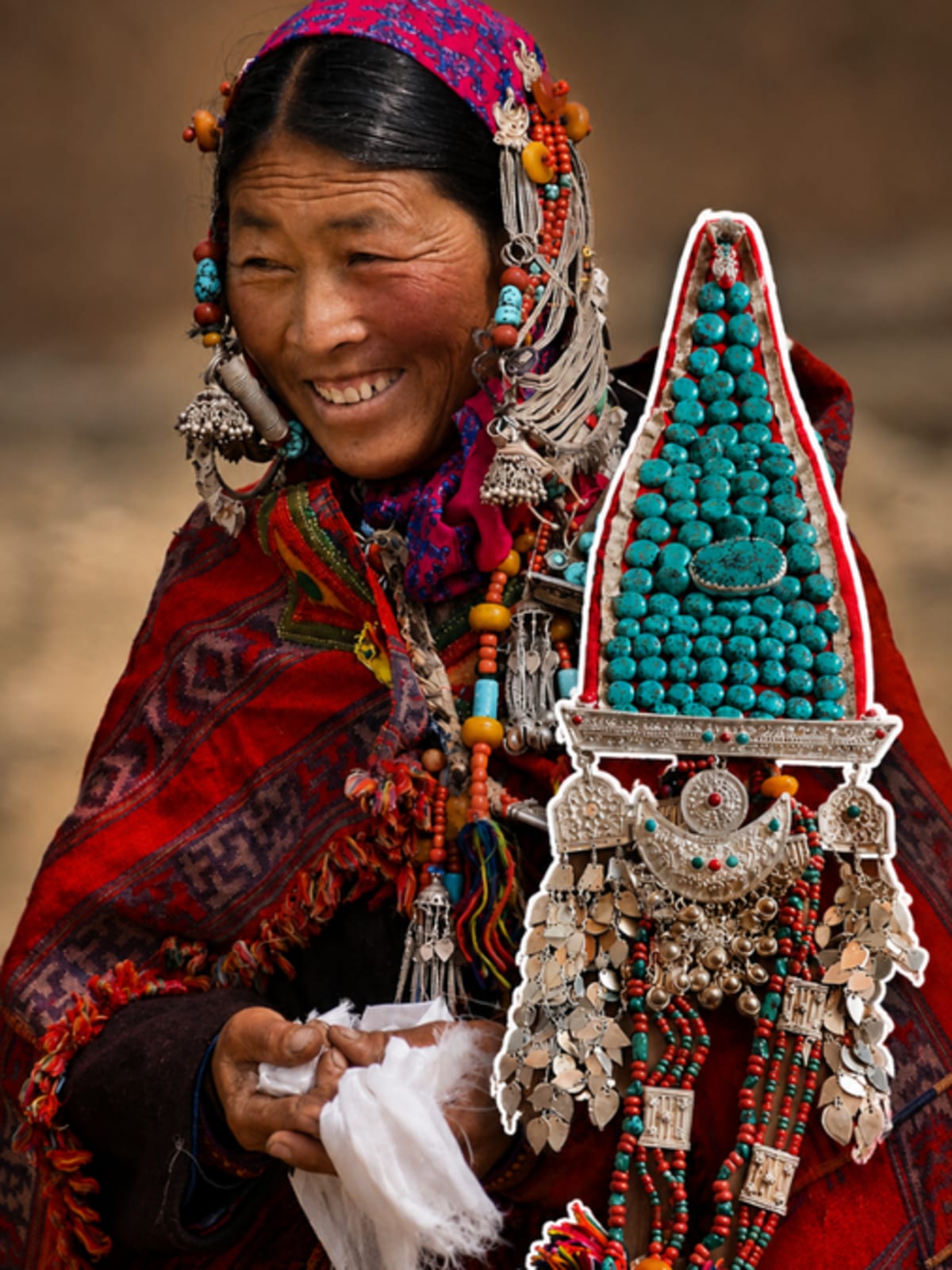
The boldest piece crowns her head. The berag, a turquoise-studded headdress, drapes over crown and shoulders with enough weight to feel instantly. Married women wear it during important community gatherings, and it stays theirs for life.
Then comes the inheritance rule that shapes every generation. Only the eldest daughter receives her mother's complete set, while younger sisters get freshly made pieces. No two sisters wear identical inheritance.
History once divided families through their silver. Wealthy Khangchen households could afford full sets with genuine Tibetan turquoise, while poorer Khing Chung families wore sparser versions of the same designs. That old hierarchy has faded, but the craft continues.
Why This Inspires
A handful of garhs still work through Kaza's short summer, some migrating to Kinnaur each winter to keep their ancient craft alive. They preserve an entire vocabulary written in silver, maintaining skills their fathers taught them by hand.
Every dhagloo, gawoo, and berag in Kaza speaks of wealth, protection, and lineage without words. As Spiti changes, these pieces connect daughters to mothers, mothers to grandmothers, in an unbroken chain of silver stories.
The tradition survives on a fragile scale, kept alive by dedicated craftsmen and families who understand that some inheritances matter more than gold.
Based on reporting by The Better India
This story was written by BrightWire based on verified news reports.
Spread the positivity!
Share this good news with someone who needs it