Stanford Launches Free Tool to Study Phone Use and Health
Stanford researchers just released a free platform that helps scientists understand how our phone habits affect our mental and physical health while keeping our privacy safe. The tool could lead to personalized health interventions delivered right when people need them most.
Your smartphone knows more about you than almost anyone in your life. It counts your steps, tracks where you go, records what you read, and watches how you spend every digital moment.
Now Stanford researchers have created a free tool that turns all that silent data into insights about our health. The Stanford Screenomics platform helps scientists study how our digital lives shape our mental and physical wellbeing without compromising privacy.
"We want to understand people's digital lives and help them negotiate their way through these environments in beneficial ways," says Nilam Ram, a professor of communication and psychology at Stanford who leads the project. His team spent five years perfecting the approach before releasing it to the research community.
The platform collects over 20 different types of data, from screenshots to location to typing patterns. Early studies have already revealed fascinating connections between smartphone patterns and week-to-week mental health changes. Researchers even found digital signals that appear in the days and hours before a mental health crisis.
Other studies using the tool showed how switching between apps reflects how people create meaning in their lives. Scientists discovered that viewing nature images on screens supports wellbeing, and they tracked how young adults stay connected with their parents through digital touchpoints.
The Bright Side
Privacy concerns usually make this kind of research nearly impossible. But Stanford built multiple safeguards into the system that go far beyond what tech companies typically offer.
Study participants read detailed explanations of every data type collected and must acknowledge understanding before joining. A pause button lets people turn off tracking during private moments like financial transactions or personal texts. They can also shut down the entire app whenever they choose.
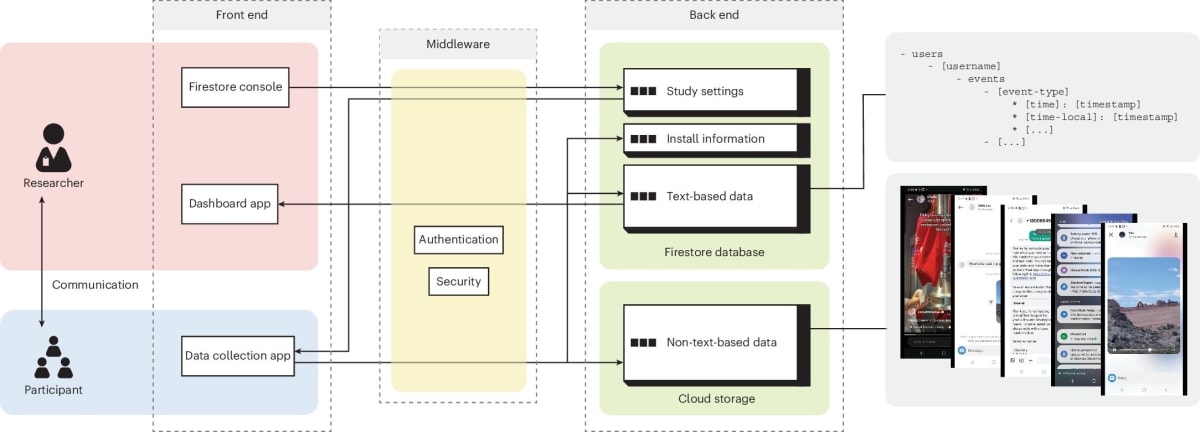
Researchers need both university ethics approval and Google Play Store approval to use the platform. All data gets stored in databases that meet strict medical privacy standards.
The real promise lies in what comes next. Postdoctoral fellow Ian Kim is using the platform to identify specific digital triggers that improve health outcomes. The goal is creating personalized interventions that reach people at exactly the right moment, whether that means a gentle nudge to move more or timely mental health support.
The team designed the platform so researchers with zero coding experience can customize studies using simple drag and drop controls. Backend infrastructure sets itself up automatically, removing technical barriers that previously limited this kind of research to well-funded labs with engineering teams.
This breakthrough means smaller research teams worldwide can now explore how digital environments shape human health and find new ways to help people thrive in an increasingly screen-filled world.
More Images


Based on reporting by Medical Xpress
This story was written by BrightWire based on verified news reports.
Spread the positivity!
Share this good news with someone who needs it