Stanford's Room-Temperature Quantum Chip Skips Deep Freeze
Scientists created a tiny quantum device that works at room temperature instead of requiring extreme cold. This breakthrough could make quantum technology cheaper and small enough for everyday devices.
Quantum computers might not need massive freezers anymore, thanks to a breakthrough that could bring this futuristic technology into everyday life.
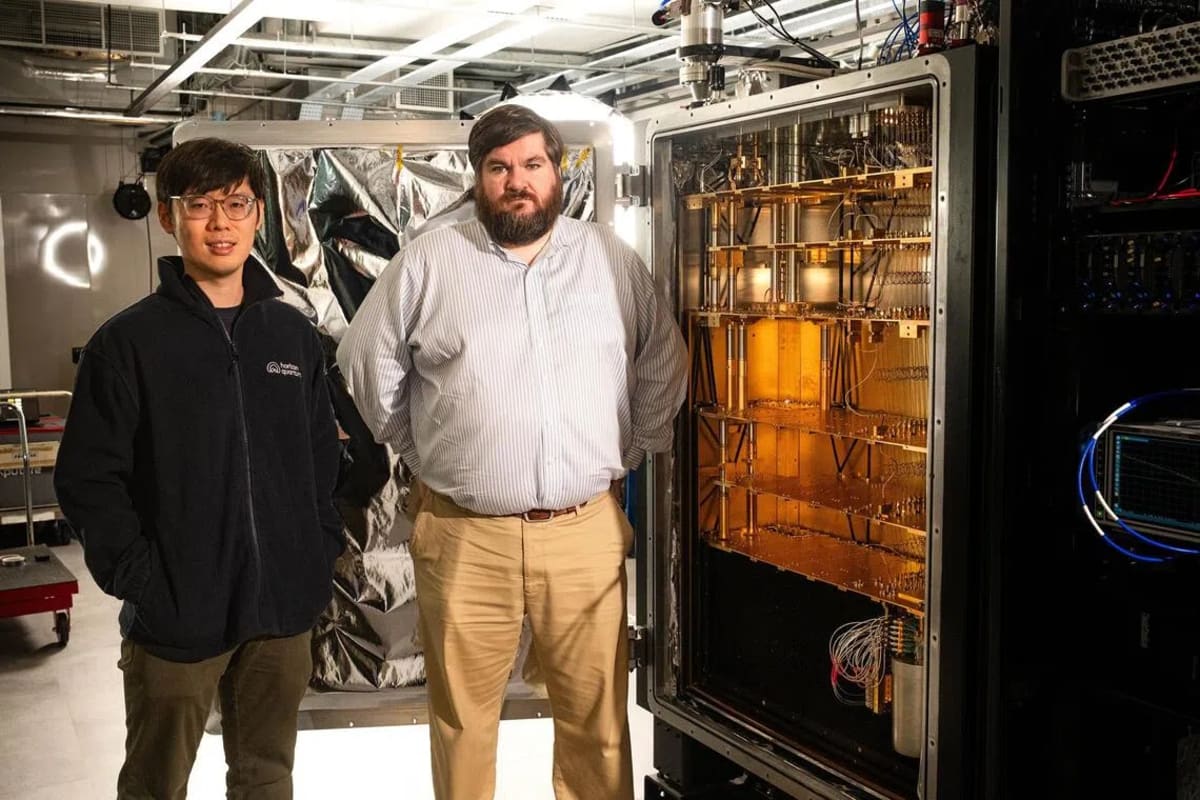
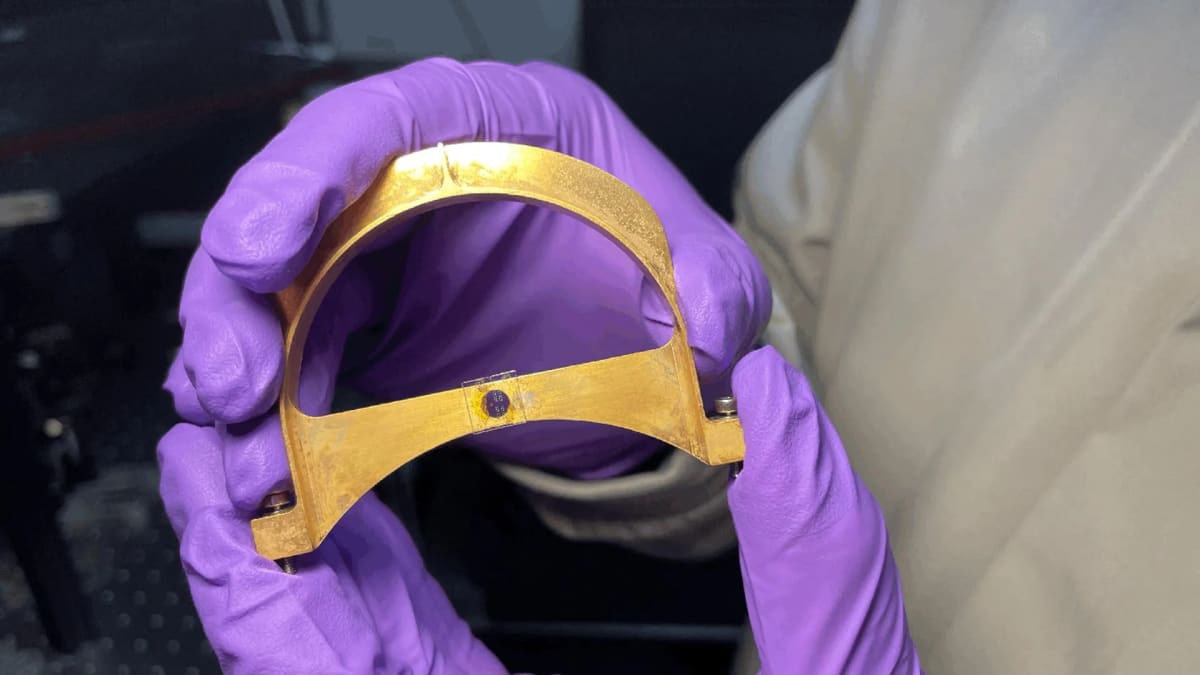
Researchers at Stanford University built a device smaller than the width of a human hair that performs quantum computing at room temperature. Most quantum systems today need temperatures near minus 459 degrees Fahrenheit to work, making them expensive and impractical for widespread use.
The team used twisted light to connect photons and electrons in a quantum state called entanglement. This connection forms qubits, the building blocks of quantum information, which could power everything from unhackable communications to advanced artificial intelligence.
"The material in question is not really new, but the way we use it is," says Jennifer Dionne, a materials science professor at Stanford who led the research published in Nature Communications. The device layers a material called molybdenum diselenide onto a patterned silicon chip that makes light spiral like a corkscrew.
These spinning photons transfer their spin to electrons, creating stable quantum connections without extreme cooling. The silicon patterns are so small they're invisible to the naked eye, roughly the size of a light wavelength, but they give scientists precise control over how photons twist and turn.
First author Feng Pan explains that the combination of materials efficiently confines and enhances the twisting light. This creates a strong coupling between photons and electrons that keeps the quantum state stable at normal temperatures, solving one of quantum technology's biggest challenges.
Why This Inspires
This advance doesn't just make quantum computing cheaper. It opens doors that seemed locked for decades.
Room-temperature quantum devices could eventually fit inside smartphones, enabling perfectly secure messaging and computing power that makes today's processors look like pocket calculators. Medical sensors could detect diseases earlier, and AI systems could tackle problems currently impossible to solve.
The Stanford team is already testing new material combinations to boost performance even further. They're also exploring quantum capabilities that only emerge at room temperature, potentially discovering entirely new applications.
Pan acknowledges the timeline is long, joking that quantum phones are "a 10-plus-year plan," but the foundation is now solid. The device proves quantum technology doesn't need to stay locked in specialized labs cooled to near absolute zero.
Every transformative technology starts with making the impossible practical, and that's exactly what happened here.
Based on reporting by Science Daily - Technology
This story was written by BrightWire based on verified news reports.
Spread the positivity!
Share this good news with someone who needs it