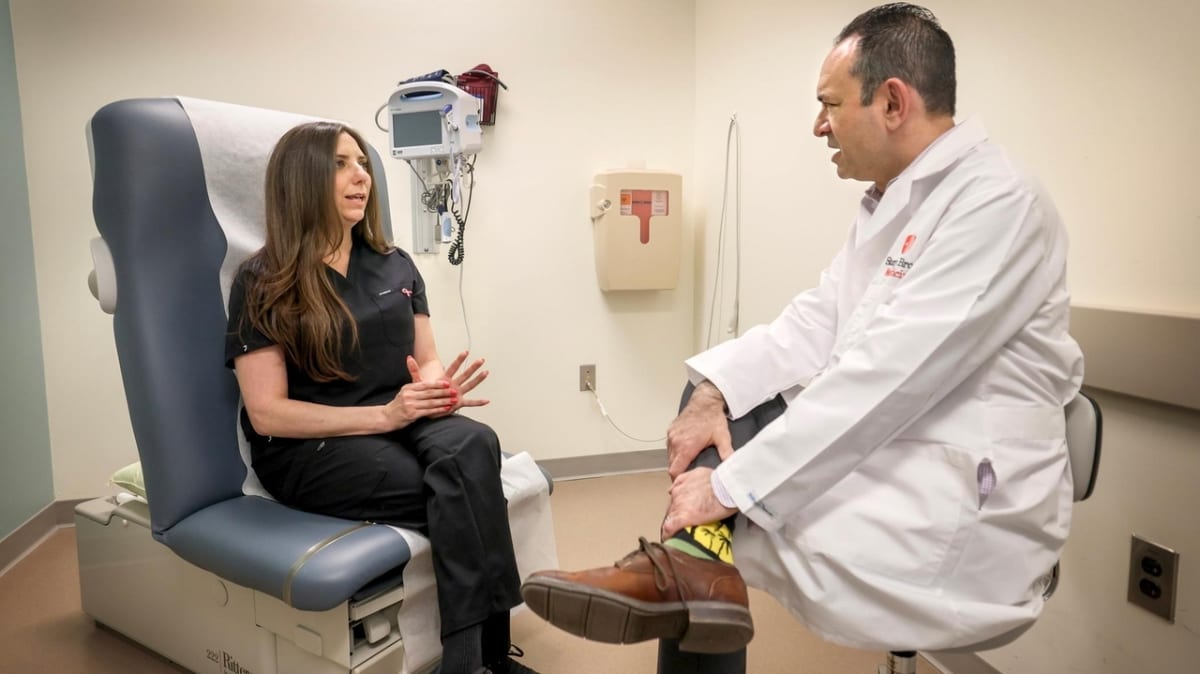
Stony Brook Tests Vaccine to Stop Breast Cancer Return
A groundbreaking clinical trial at Stony Brook Medicine is testing a vaccine designed to prevent breast cancer from coming back and spreading throughout the body. Survivors like Christina Amitrano are volunteering to help make this breakthrough treatment available to future patients.
Christina Amitrano was just 35 when doctors found breast cancer in her left breast, far younger than most women get their first mammogram.
After two grueling years of chemotherapy, surgery, and radiation, she made a decision that could help thousands of other women. She enrolled in a clinical trial testing an experimental vaccine that could stop her cancer from ever returning.
"Research is the most important thing that people can volunteer for," said Amitrano, now 41 and cancer-free. She knows the treatments that saved her life only exist because other patients took the same leap of faith years ago.
Stony Brook Cancer Center is one of 160 sites worldwide testing this tumor vaccine, specifically designed for people with HER2-positive breast cancer. The trial gives participants six injections over six months, followed by five booster shots spaced six months apart.
The goal isn't just to treat cancer. It's to prevent it from becoming the kind of metastatic disease that spreads to the liver, lungs, bones, or brain.
Dr. Jules Cohen, a medical oncologist treating Amitrano, explained why this matters so much. "When they develop disease in the liver, lungs or bone, or worse, in the brain, they will ultimately die of their disease," he said. "We're looking for ways to try to reduce the risk of metastatic recurrence in these early stage patients."
Amitrano's early diagnosis probably saved her life. Her mother, a nurse who was adopted and knew nothing about her biological family's medical history, urged her daughter to get a mammogram years before the standard age of 40.
Doctors told Amitrano that if she'd screened earlier, the lumps might not have been visible yet. But if she'd waited any longer, her cancer would have been far more advanced.
Why This Inspires
The experience transformed Amitrano's entire career path. She switched from being a physical education teacher to becoming an MRI X-ray tech, inspired by the radiation therapy that helped save her life.
Now she's on the other side, helping detect cancer early in other people. "It is so important to get diagnosed early and I like to be in a field that helps people," she said.
Cohen emphasized that every cancer treatment available today exists because of trial participants like Amitrano. "Step by step, treatments have gotten better and better, so that more patients with cancer are cured," he said.
Some people worry about the risks of clinical trials, but Cohen points out that participants actually receive more careful monitoring than regular patients. The clinical trials team watches everything closely, and participants come in for more frequent checkups.
Stony Brook is still enrolling people diagnosed with HER2-positive breast cancer, and it's the only center offering this specific trial on Long Island.
For Amitrano, the choice to participate was simple: the treatments that gave her a future came from people who volunteered before her, and now it's her turn to help create that future for someone else.
Based on reporting by Google News - Cancer Survivor
This story was written by BrightWire based on verified news reports.
Spread the positivity!
Share this good news with someone who needs it