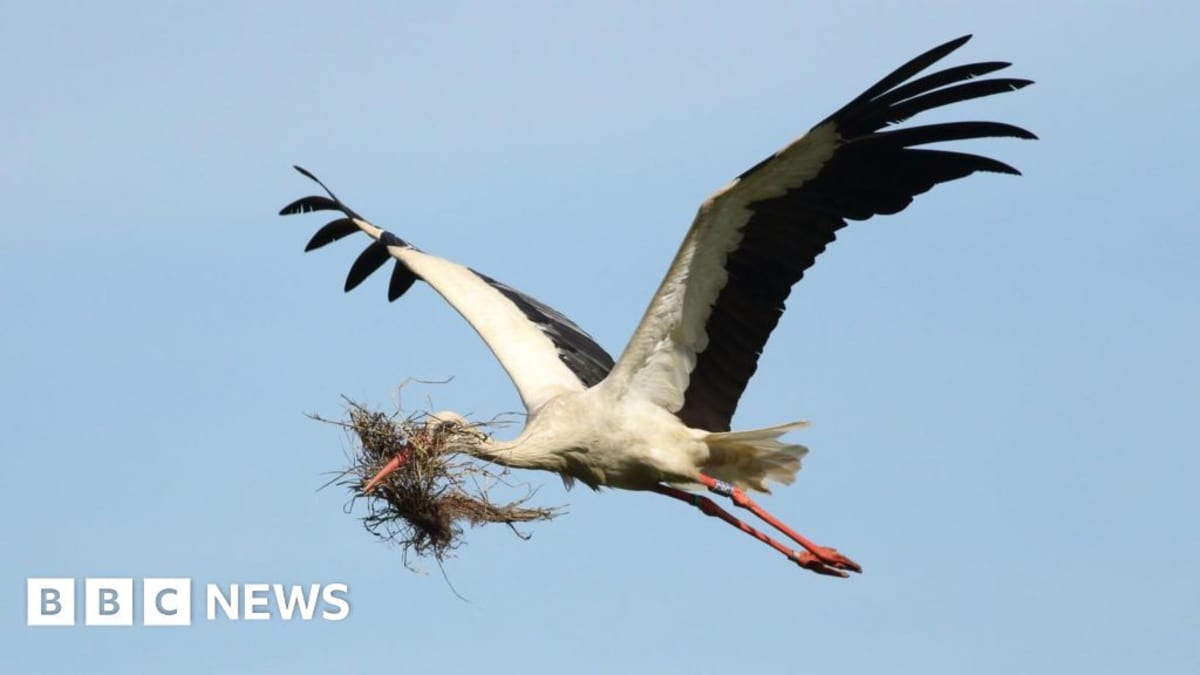
Storks Build First Nest in 600 Years on Industrial Estate
Young storks from a rewilding project are building their first nest on a Surrey industrial estate, marking a major milestone in bringing these birds back to Britain after six centuries. The birds are practicing now and could raise chicks next spring.
Storks are making history in the most unexpected place: a Surrey industrial estate near Guildford.
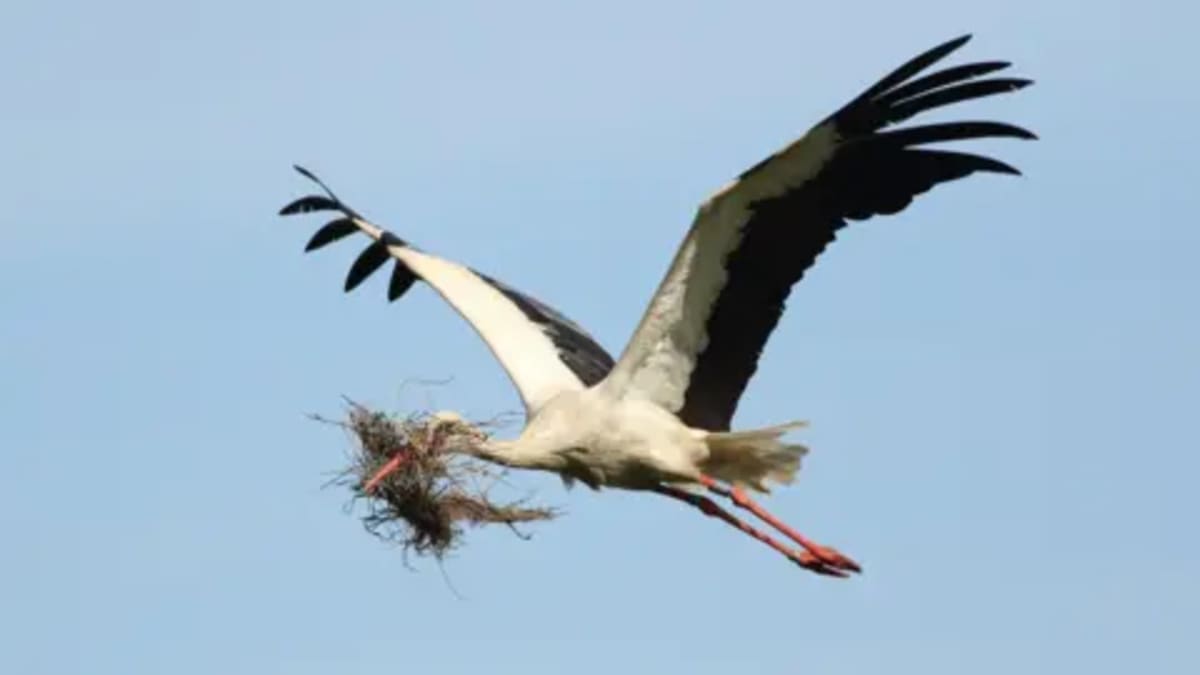
A group of young white storks from a rewilding project have built a nest on the industrial site, marking the first time these majestic birds have nested in Britain in 600 years. The storks hatched at the Knepp Estate in West Sussex, where conservationists have worked since 2016 to bring the species back to British skies.
Laura Vaughan-Hirsch, manager of the White Stork Project, called the nest a major milestone. The young birds are around three years old and typically start breeding at four, so experts believe this is a practice run.
"We really want these birds to do well, and to spread and thrive," Vaughan-Hirsch said. This winter, the storks will likely migrate south again, but next spring they could return to rear chicks on this very nest.
The choice of an industrial estate might seem strange, but storks are adaptable birds that nest on tall structures. In Europe, they famously build nests on rooftops and chimneys.
Eight of the ten storks at the Guildford site came from the rewilding project. Two birds wear no identification rings, meaning they arrived from wild populations in Europe, a sign that Britain is becoming attractive to storks again.
The birds have already proven they can handle long migrations. Some have traveled as far as North Africa and successfully returned to southeast England.
Stephen Casson from the Surrey Bird Club said birdwatchers are lining up to see the historic nest. "They are spreading their wings all over the South East," he said.
The Ripple Effect
The storks' return to Britain after 600 years represents more than one species coming home. Their presence signals that rewilding efforts are working and that southeast England's ecosystems are recovering enough to support large migratory birds.
As these young storks spread across the region, they could establish breeding populations throughout Britain. Each successful nest means more chicks, more migrations, and more storks filling British skies.
The industrial estate nest shows that nature can thrive even in unexpected places. While conservationists work to restore wild habitats, these adaptable birds are finding their own way, building futures in spaces between the wild and human worlds.
Next spring, if all goes well, Britain could hear the clatter of stork beaks and see chicks in a nest for the first time since the 1500s.
More Images

Based on reporting by BBC Science
This story was written by BrightWire based on verified news reports.
Spread the positivity!
Share this good news with someone who needs it

%2Ffile%2Fattachments%2F2998%2F14147038_376896.jpg)