Students Discover Universe's Oldest Star on Spring Break
Ten undergraduates hunting through telescope data found a 13-billion-year-old star that wandered into our galaxy from a neighboring cosmic neighbor. Their classroom project turned into one of astronomy's most significant discoveries of the decade.
A spring break astronomy trip just rewrote what we know about the early universe, and the scientists behind it haven't even graduated yet.
Ten University of Chicago students were combing through massive sky survey data for a class project when they spotted something extraordinary. Hidden among thousands of stars was SDSS J0715-7334, a cosmic time capsule made almost entirely of hydrogen and helium.
Professor Alex Ji knew immediately they'd found something special. The star shone with a chemical purity that screamed "ancient," so the class abandoned their original plan to study 77 different stars. Instead, they spent three full hours at Chile's Las Campanas Observatory focused on this single celestial wanderer.
Student Natalie Orrantia watched the telescope camera all night, making sure every precious minute of data collection went perfectly. "We found it the first night, and it completely changed our plans for the course," Ji said.
The measurements revealed something stunning. This star contains just 0.005 percent of the heavy elements found in our Sun, making it the most metal-poor star ever observed. That matters because heavy elements only form in supernova explosions, so a star with almost none must have formed before most supernovas occurred.
The star turned out to be roughly 13 billion years old, born when the universe was still in its infancy. But here's the twist: it didn't form in our Milky Way galaxy at all.
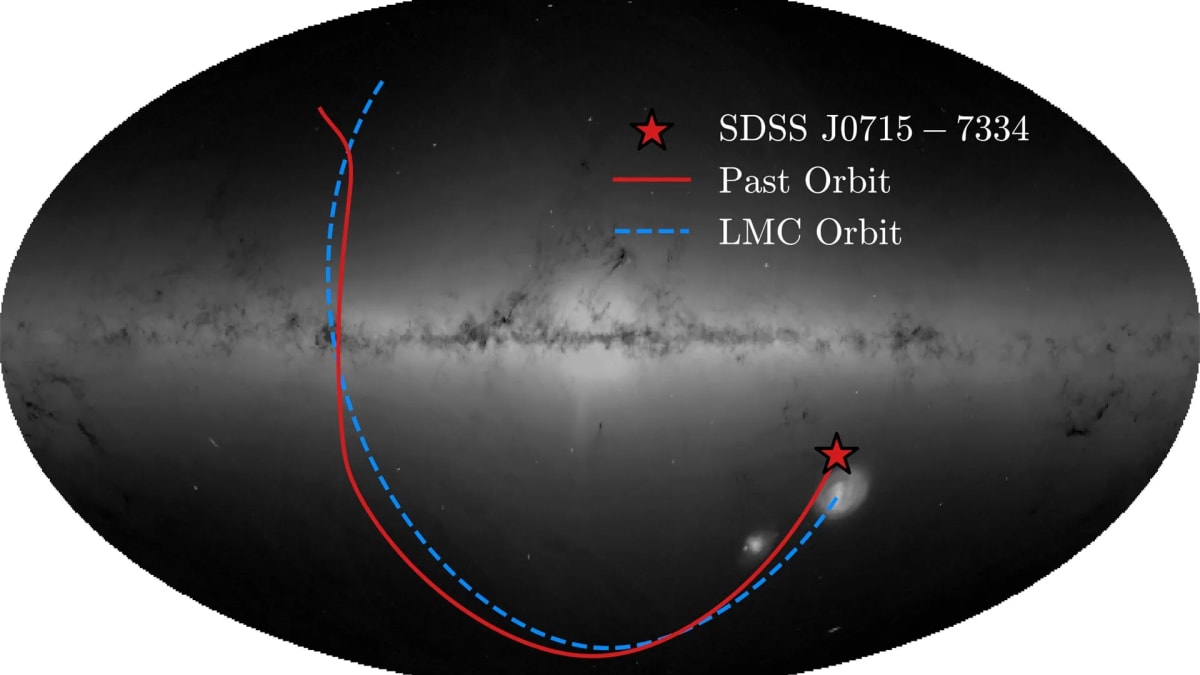
By tracing its path backward through space using data from Europe's Gaia mission, the team discovered this ancient traveler was born in the Large Magellanic Cloud, our galaxy's largest companion. Billions of years ago, it drifted across the cosmic void and settled into the Milky Way. Ji calls it an "ancient immigrant."
Student Ha Do led the team analyzing the star's carbon content. They found so little carbon that it suggests an incredibly rare formation process, one only observed once before in astronomical history.
Why This Inspires
This discovery shows how modern astronomy has democratized space exploration. The Sloan Digital Sky Survey makes 25 years of telescope data freely available online, meaning students anywhere can make world-changing discoveries from their laptops.
Both Orrantia and Do now plan to pursue graduate studies in astronomy, inspired by finding a star older than almost anything else in the known universe. Their professor put it perfectly: "Big data projects like SDSS make it possible for students to get directly involved in these important discoveries."
The universe's oldest known resident just taught us that groundbreaking science doesn't require decades of experience—sometimes it just takes fresh eyes and spring break dedication.
Based on reporting by Science Daily
This story was written by BrightWire based on verified news reports.
Spread the positivity!
Share this good news with someone who needs it