
Students from 15 Nations Build Can-Sized Satellites
Young engineers from 15 countries built working satellites small enough to fit inside a soda can, then launched them into the sky over Uzbekistan. The program is training the next generation of space engineers through hands-on missions that mirror real satellite operations.
Imagine building a functioning satellite that fits inside a drink can, launching it into the sky, and watching it collect real data on the way down.
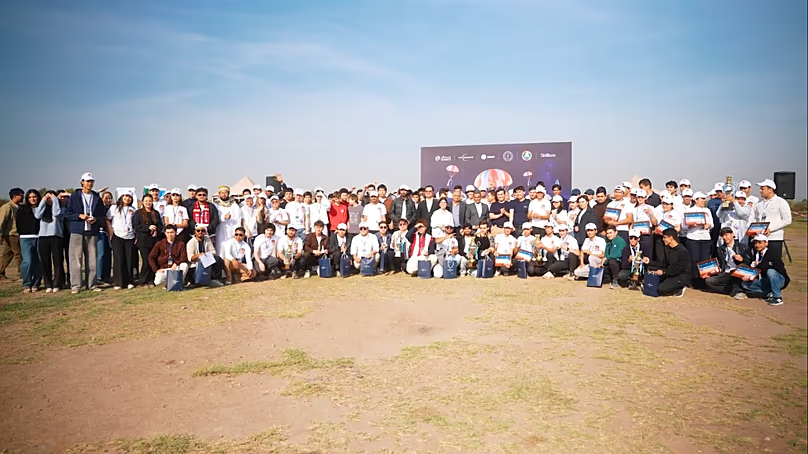
That's exactly what 150 young engineers from 15 countries just accomplished at an airfield outside Tashkent, Uzbekistan. Their miniature satellites, called CanSats, packed sensors, electronics, and communication systems into containers the size of a soda can.
Unlike typical satellites that take years and millions of dollars to build, these student creations took just days to assemble. Teams worked at Turin Polytechnic University in Tashkent, programming sensors, configuring electronics, and preparing their devices for launch.
The CanSats rode rockets into the sky before deploying parachutes for their descent. During the flight, they operated independently, measuring temperature and air pressure while transmitting data to ground stations below.
One Uzbek team even added a camera to attempt live video transmission. "The main challenge here is to make sustainable telemetry. It should connect the ground station and the CanSat itself," said team member Ahmadkhon Latipov.
The devices also stored data onboard in case transmission failed, mirroring how real satellites operate. "In the real satellite project, there is a satellite which sends the data to ground station and also stores inside, which we also do," explained Baris Beynek, an instructor from Istanbul Technical University.
After landing, teams recovered their creations and analyzed how their predictions matched reality. Fourteen teams competed in the final stage, with Team Nebula claiming first place, followed by Pegasus and Sky Lab.
The Ripple Effect
The competition represents more than student fun. As satellite technology expands into agriculture, climate monitoring, and food security, demand for space engineers is skyrocketing worldwide.
Dr. Muhammad Sharif from ICESCO noted that Earth observation, satellite communications, and artificial intelligence applications all need skilled workers. For Uzbekistan's developing space sector, training young engineers now means building the teams that will launch tomorrow's missions.
The program also emphasizes international collaboration, bringing together students who must combine their skills and work across cultures. "In space, international cooperation is the most important thing," Beynek said.
Muhiddin Ibragimov, Deputy Director of Uzbekistan's space agency Uzcosmos, stressed that even the most advanced space projects ultimately depend on having the right people with the right training. By giving students real engineering challenges that simulate actual satellite operations, the program is preparing them for careers that didn't exist a generation ago.
From classroom calculations to rocket launches in just a few days, these young engineers proved that space technology is becoming more accessible than ever before.
More Images


Based on reporting by Euronews
This story was written by BrightWire based on verified news reports.
Building Something New? Try the BrightWire Tech Stack Advisor
Compare modern frameworks, cloud hosting, and AI tools tailored to your project budget and scale.
Spread the positivity!
Share this good news with someone who needs it


