Students Spend 4 Years Reviving Punjabi Weave Lost Since 1947
Two design students tracked down a forgotten textile tradition that vanished during Partition, finding it alive across the border in Pakistan. Their four-year quest turned a classroom assignment into the most detailed record of Majnu Khes ever created.
When Arjunvir Singh's mother pulled a treasured fabric from an old family trunk in Jalandhar, she solved a mystery her son had been chasing across all of Punjab.
The textile design student and his classmate Rashi Sharma had spent months searching for Majnu Khes, a complex handwoven cotton fabric mentioned in historical records. Not a single weaver they met in 2018 had heard of it.
The two National Institute of Design students had started researching Khes, an ordinary Punjabi bedcover, only because their faculty rejected their first choice. They considered it too plain to be worthy of study.
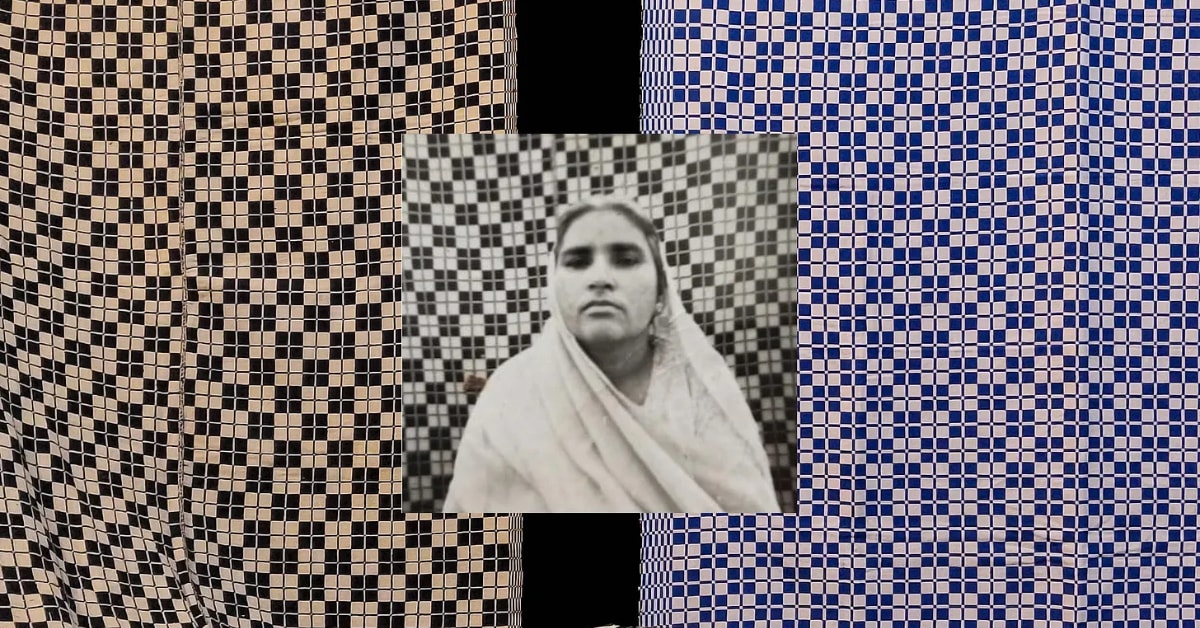
Then they stumbled across references to Majnu Khes, woven in a compound double-cloth structure they'd never seen on a traditional Punjabi loom. The pattern was intricate enough that families couldn't weave it at home and had to buy it from professional weavers.
Arjunvir's family piece proved older than Partition itself. His grandfather had kept it safe for decades, never letting anyone use it.
A pattern emerged as they reached out to neighbors and extended family. Every single person who owned a Majnu piece had migrated from West Punjab to East Punjab during the 1947 exodus.
The classroom project ended in November 2018, but the discovery wouldn't let them go. They resumed the work as their graduation thesis in January 2020, calling it The Khes Project.
Interviews with Partition survivors like Satinder Kaur, Joginder Kaur, and Tejinder Kaur filled in what fabric alone couldn't tell. Majnu was considered "khas," meaning special, reserved for honored guests and important occasions.
Through textile researchers in Pakistan, they confirmed what the evidence suggested. Majnu Khes still exists in Lahore, Multan, and Sindh, though mostly on power looms now instead of handwoven.
Weavers there agreed to create fresh samples based on old motifs the students sent. Because no direct courier route exists between the countries, packages traveled via Dubai and London to cross a border just a few hundred kilometers wide.
Why This Inspires
The pandemic canceled their planned exhibition, but their archive stands as the most detailed documentation of Majnu Khes anywhere. They proved with evidence, not just folklore, exactly how a living craft tradition disappeared from one side of a border while surviving on the other.
Their work shows what's possible when curiosity outlasts a deadline. Before any craft can be revived, someone has to first prove it existed and map where it went.
What started as a reluctant assignment became proof that some threads, even when separated by history and borders, never fully break.
More Images
.png)
%2Fenglish-betterindia%2Fmedia%2Fmedia_files%2F2026%2F06%2F25%2F1-2026-06-25-18-17-17.png)

%2Ffilters%3Aformat(webp)%2Fenglish-betterindia%2Fmedia%2Fmedia_files%2F2026%2F06%2F25%2F3-2026-06-25-18-18-12.png)
Based on reporting by The Better India
This story was written by BrightWire based on verified news reports.
Spread the positivity!
Share this good news with someone who needs it