Students Uncover 1,000-Year-Old Viking Church in Scotland
Ten students from Gordonstoun school discovered what could be a Viking-era church and altar during a six-day archaeological dig on a remote Scottish island. The find may unlock secrets about Viking life in Orkney from 1,000 years ago.
Ten students just made the archaeological discovery of their lives on a tiny, abandoned Scottish island.
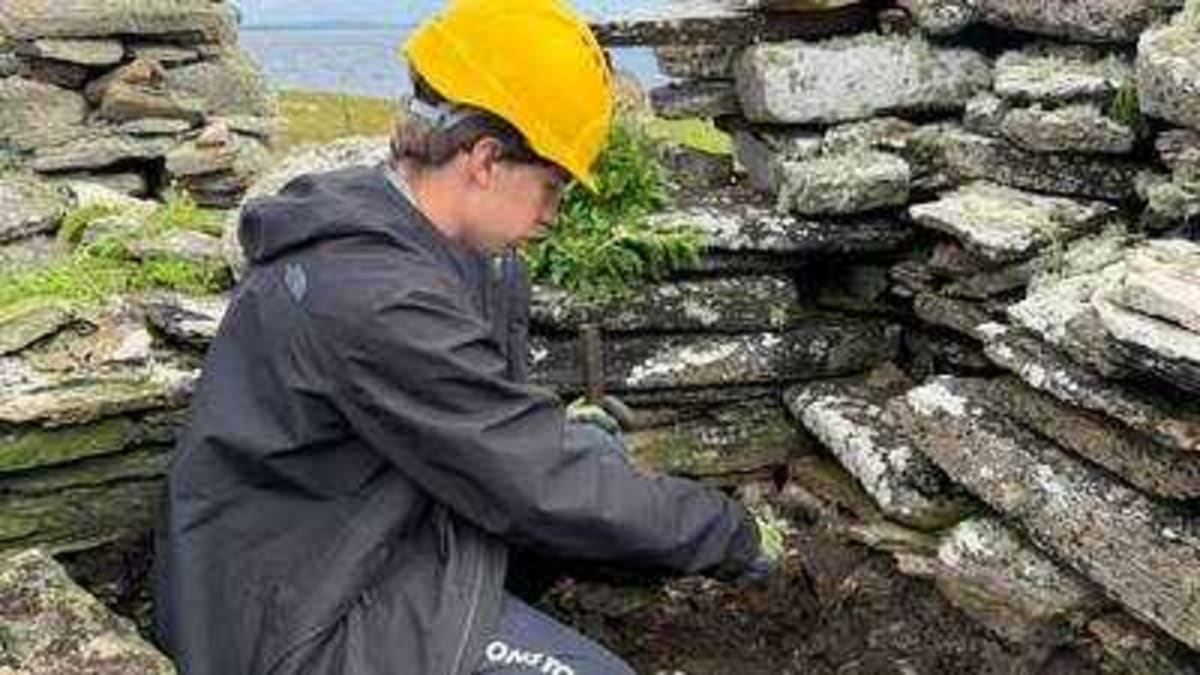
During a six-day expedition to Swona in Orkney, pupils from Gordonstoun school unearthed what researchers believe could be a 1,000-year-old Viking church. Working alongside professional archaeologists from the Orkney Research Centre for Archaeology, the teenagers discovered stone steps leading to what appears to be an ancient altar foundation.
The find solves a local mystery that has puzzled historians for decades. The site was only known through a vague map reference to ruins called the "Twinly Kirk," with no concrete evidence that a church ever existed there.
Dan McLean, the teacher who organized the expedition, initially thought the visible walls belonged to a much newer building. But when students cleared away vegetation and dug a test pit, they discovered the hidden structure just beneath the surface.
"Being able to discover history in real time was incredible," said 17-year-old student Archie Maclean. The team worked eight to ten hours daily under hot sun, excavating carefully to preserve the ancient materials.
Radiocarbon samples collected during the dig are now being analyzed to determine the structure's exact age and purpose. If confirmed as Viking-era, the church would provide valuable insights into religious life in Orkney around 1,000 years ago, when Vikings were among the island's first settlers.
The Ripple Effect
The expedition gave students far more than textbook learning. They lived in an abandoned cottage without electricity, drew water from an ancient well, and helped restore the floor of their temporary home.
The experience connected them to Swona's unusual history. The island was abandoned in 1974 when its last two residents left, leaving behind only feral cattle that still roam there today.
Beyond the church, students explored a prehistoric settlement and a possible Viking warning beacon site. They worked on an island that's now a Site of Special Scientific Interest, home to puffins, Arctic terns, and surrounding waters where orcas and dolphins swim.
For these teenagers, summer break meant trading their phones for trowels and uncovering history that had been buried for a millennium.
More Images



Based on reporting by Google: archaeological discovery
This story was written by BrightWire based on verified news reports.
Spread the positivity!
Share this good news with someone who needs it