Sudanese Scroll Proves Legendary King Qashqash Was Real
A tiny scrap of paper discovered in Sudan just transformed a mythical ruler into a real person who managed livestock trades and textile exchanges. King Qashqash, known only from legends, left behind his shopping list.
A small piece of paper no bigger than a Post-it note just pulled an African king out of legend and into history books.
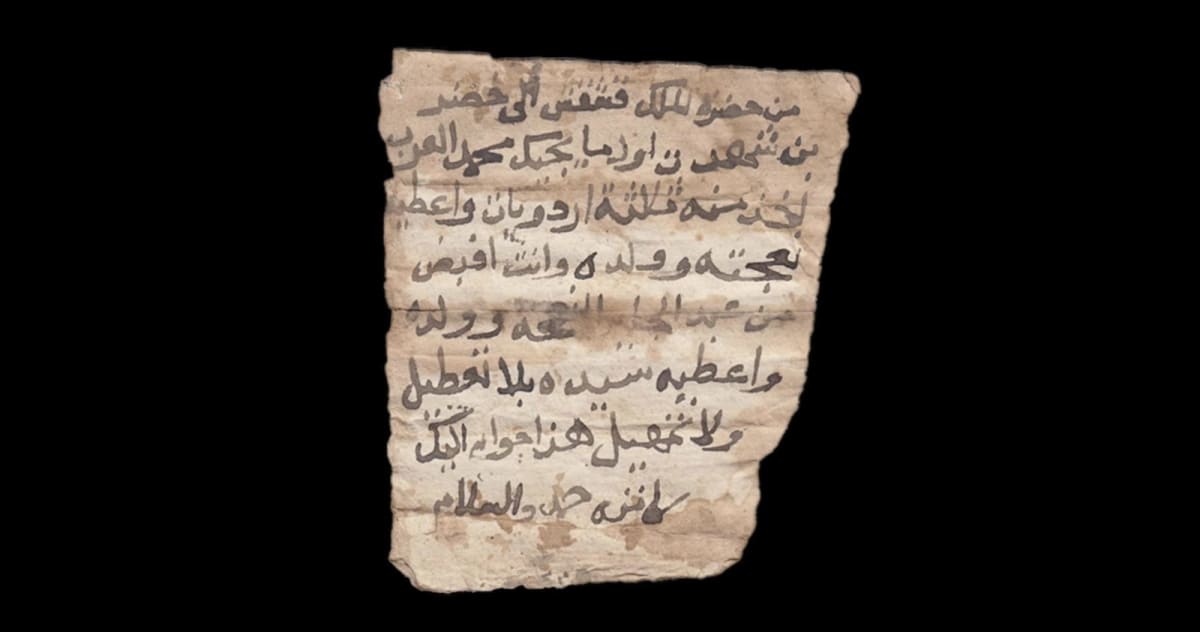
Archaeologists working in Old Dongola, Sudan discovered a 400-year-old administrative note written by King Qashqash, a ruler previously thought to be semi-legendary. The document, published in Azania: Archaeological Research in Africa, is the first direct proof he actually existed.
The note itself reads like ancient middle management. King Qashqash instructed his subordinate Khidr to collect three pieces of fabric from a man named Muhammad al-Arab, then give him a sheep and her lamb in exchange. Khidr was told to grab the animals from someone else and deliver them promptly.
It's wonderfully mundane, and that's exactly what makes it extraordinary.
Old Dongola sits on the Nile's eastern bank in modern Sudan. During medieval times, it thrived as the capital of Makuria, one of the powerful Christian kingdoms that once dominated the region. But by the 1300s, Makuria had collapsed, and the following centuries remain frustratingly mysterious to historians.
This gap in the historical record runs so deep that scholars call it a "dark age." Written records vanished. What survived came mostly from legends, oral traditions, and occasional notes from foreign travelers passing through.
Until now, King Qashqash appeared only in Kitāb al-Tabaqāt, a Sudanese biographical work compiled centuries later that collected stories about Islamic scholars and holy men. He showed up indirectly in these tales, making historians wonder if he was real or just a storytelling device.
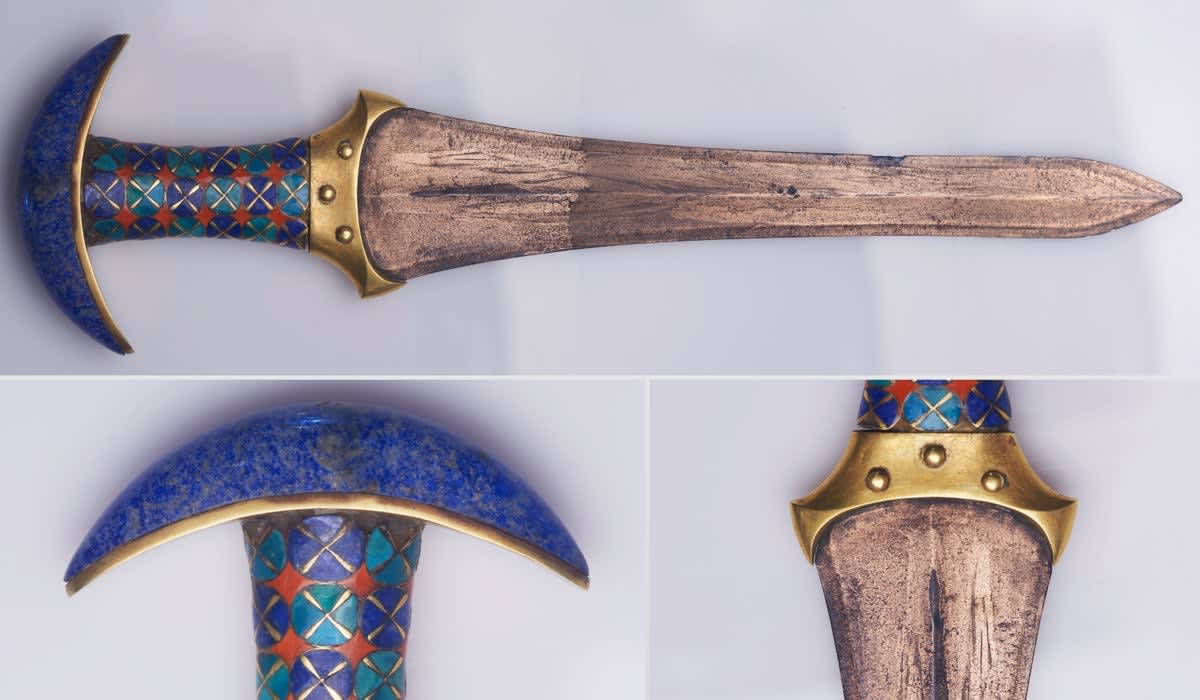
The document was found inside "Building A.1," a large structure in Dongola's citadel that locals call the "House of the Mekk." Excavations revealed it housed elite residents. Archaeologists uncovered luxury silk textiles, jewelry, leather shoes, and an ivory dagger handle. They also found more than twenty paper documents, including letters, legal records, and this royal order.
Coins discovered in the same room help date the find. They were minted in Egypt during Ottoman Sultan Murad IV's reign between 1623 and 1640. Radiocarbon analysis suggests the document was written in the late 1500s or early 1600s, then discarded when the building's occupants tossed their trash.
Why This Inspires
This discovery does something rare in archaeology. It transforms absence into presence, silence into voice.
The document captures a moment when Nubia was changing rapidly. Islam and Arab culture were spreading along the Nile Valley, reshaping societies that had been Christian for centuries. King Qashqash governed during this transformation, managing his kingdom's day-to-day business while navigating massive cultural shifts.
The researchers note that these documentary sources "provide invaluable insights into the network of connections in Dongola before the colonial era." They offer a unique window into linguistic changes and cultural interactions that shaped Nubia over time.
What started as a legend in a religious text is now a person who coordinated textile trades and livestock exchanges, who employed scribes and managed subordinates, who left behind proof of his existence in the form of ordinary administrative work.
Sometimes history hides in the most human places.
Based on reporting by Google: archaeological discovery
This story was written by BrightWire based on verified news reports.
Spread the positivity!
Share this good news with someone who needs it