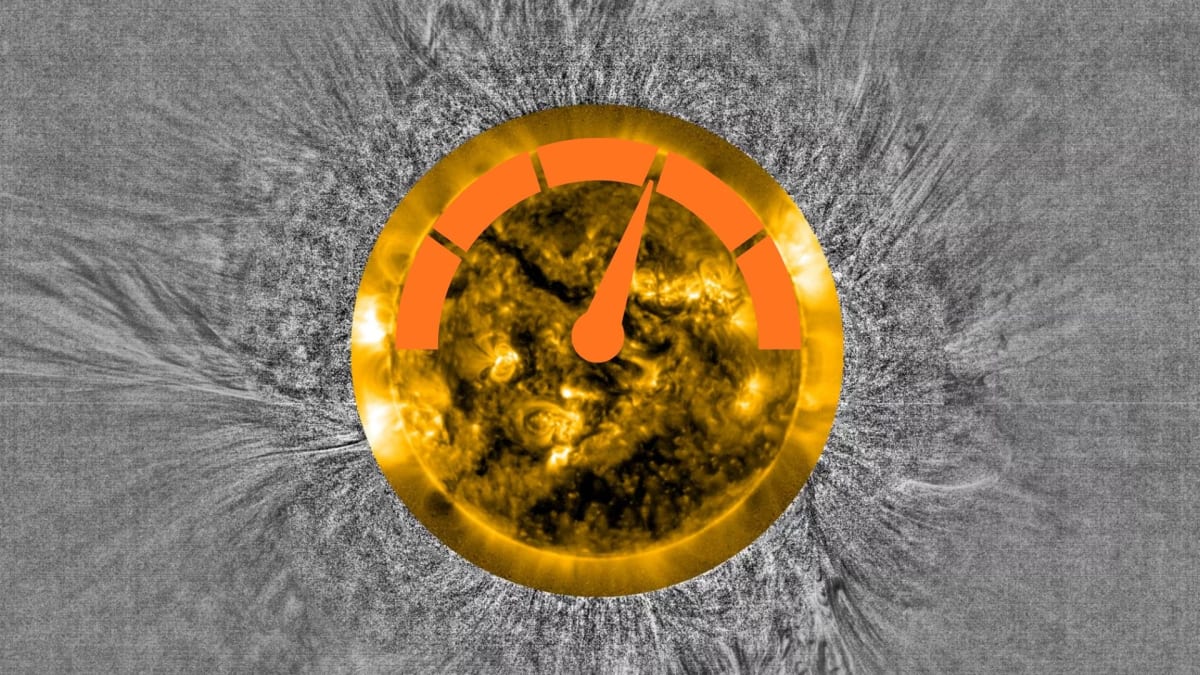
Sun's Wind Flows 4X Faster Than Scientists Expected
A groundbreaking spacecraft just revealed that solar wind near the sun's surface moves up to four times faster than scientists thought possible. The discovery could help us better predict space weather that affects Earth.
Scientists just got a major surprise about the sun, and it could help protect our planet's technology from dangerous space weather.
The European Space Agency's Proba-3 mission discovered that slow solar wind near the sun's surface moves up to 300 miles per second. That's four times faster than the 60 miles per second scientists had measured before.
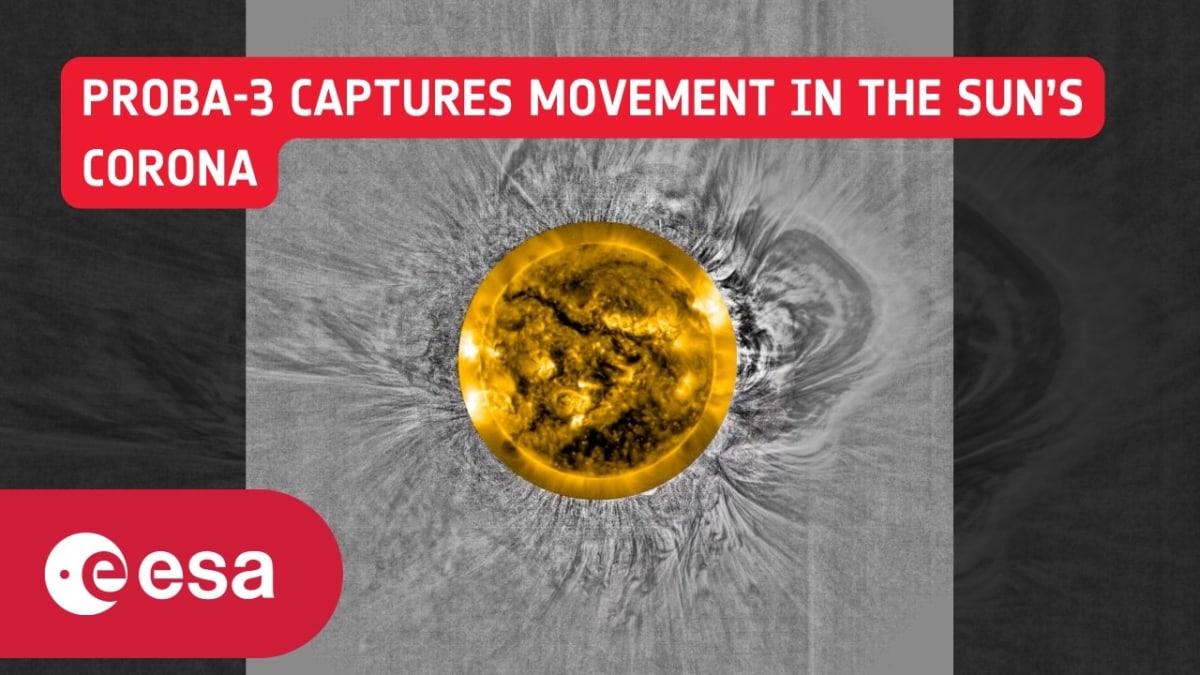
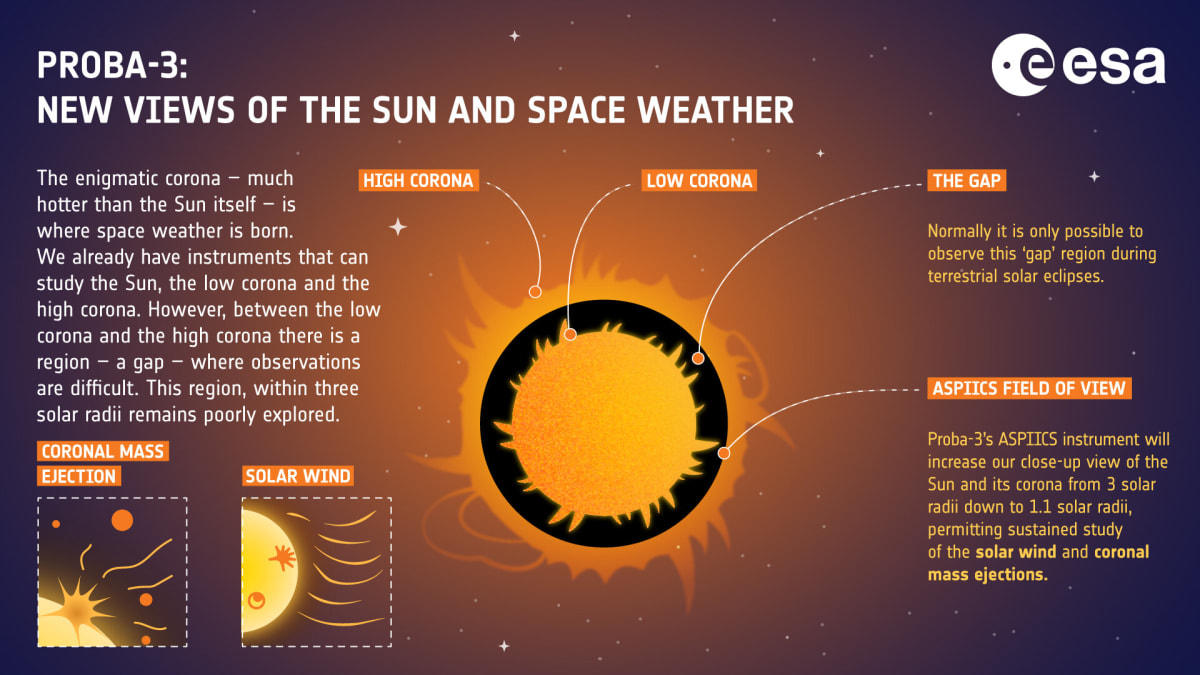
The discovery happened thanks to an ingenious solution to a tricky problem. The sun's corona, where solar wind forms, is a million times fainter than the sun's bright disk, making it nearly impossible to study except during rare total solar eclipses.
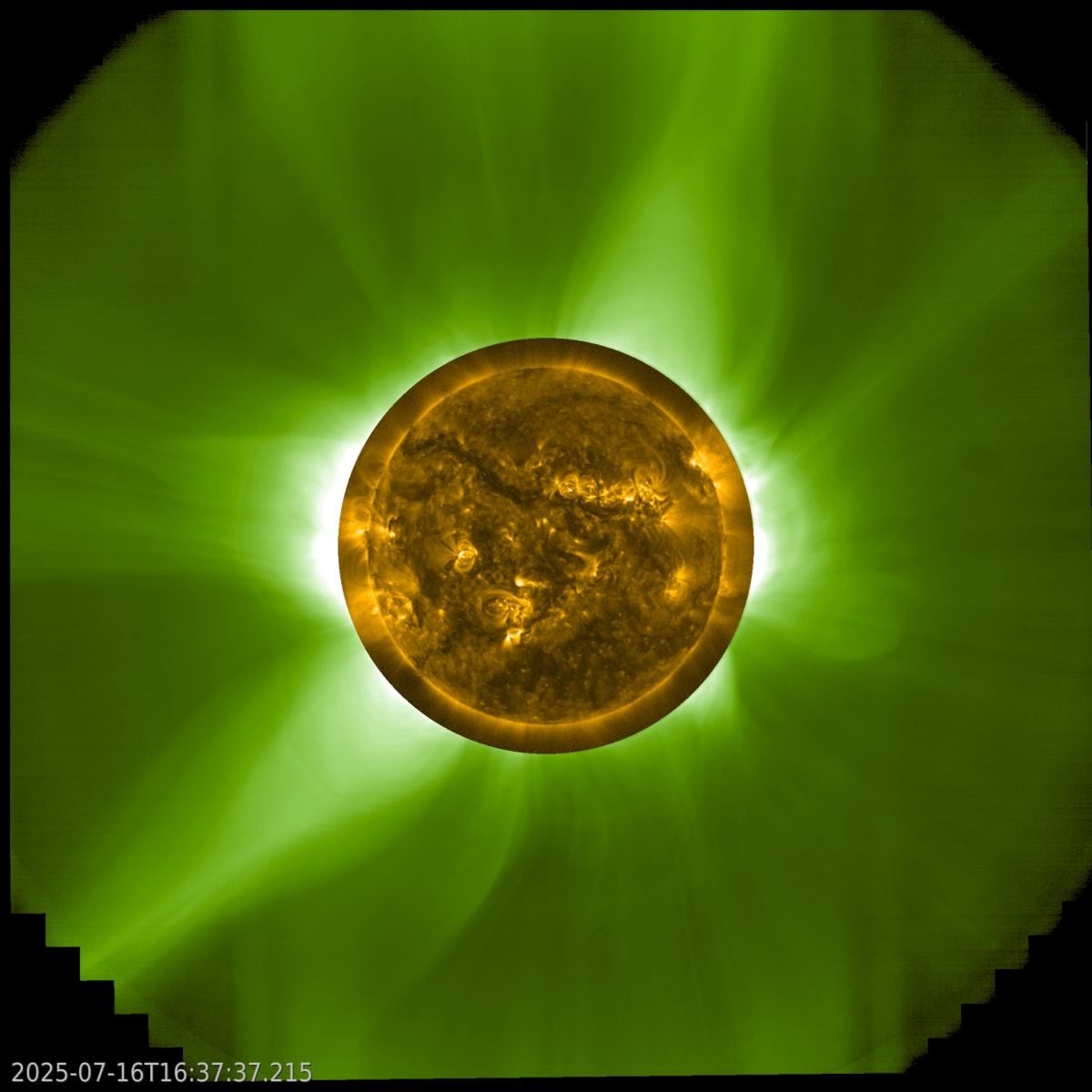
Proba-3 creates artificial eclipses on demand. The mission uses two spacecraft flying 490 feet apart, with one blocking the sun's light for the other like a giant curtain in space.
Since launching in December 2024, the spacecraft duo has already created 57 artificial eclipses and captured 250 hours of high quality video. That's far more observation time than scientists could ever get from natural eclipses, which last only a few minutes and happen less than once a year.
"In the inner corona, a region very difficult to observe, we saw slow solar wind gusts moving three to four times faster than expected," said Andrei Zhukov, a solar physicist at the Royal Observatory of Belgium who led the study.
The findings matter because solar wind affects us here on Earth. These streams of charged particles cause geomagnetic storms that can disrupt satellites, power grids, and communication systems.
Why This Inspires
This discovery shows how creative engineering can unlock secrets the universe has kept hidden for billions of years. By teaching two spacecraft to dance together in perfect formation, scientists created a tool that turns a fleeting natural phenomenon into something they can study whenever they need.
The images reveal that slow solar wind doesn't flow smoothly like its faster cousin from coronal holes. Instead, it bursts out in gusty blobs that appear as bright rays in the corona.
Understanding how solar wind accelerates so quickly near the sun's surface could help scientists better predict when dangerous space weather might head toward Earth. That means better protection for the technology our modern world depends on.
"This first dataset is just the beginning of the much longer journey to fully understand what's happening," said Joe Zander, Proba-3's project scientist.
The sun still holds many mysteries, but now scientists have the perfect tool to solve them.
More Images
Based on reporting by Space.com
This story was written by BrightWire based on verified news reports.
Spread the positivity!
Share this good news with someone who needs it