%2Fhttps%3A%2F%2Ftf-cmsv2-smithsonianmag-media.s3.amazonaws.com%2Ffiler_public%2F55%2F3e%2F553e7c37-9a43-4b83-8a24-3f2df64ae8b4%2Foct_4926.jpg)
Swiss Lake Hides 2,000-Year-Old Roman Treasure Trove
Divers pulled 1,200 ancient Roman artifacts from a Swiss lake, including swords, chariot wheels, and pristine pottery that reveal daily life 2,000 years ago. The accidental shipwreck may have saved the crew while preserving a time capsule for modern science.
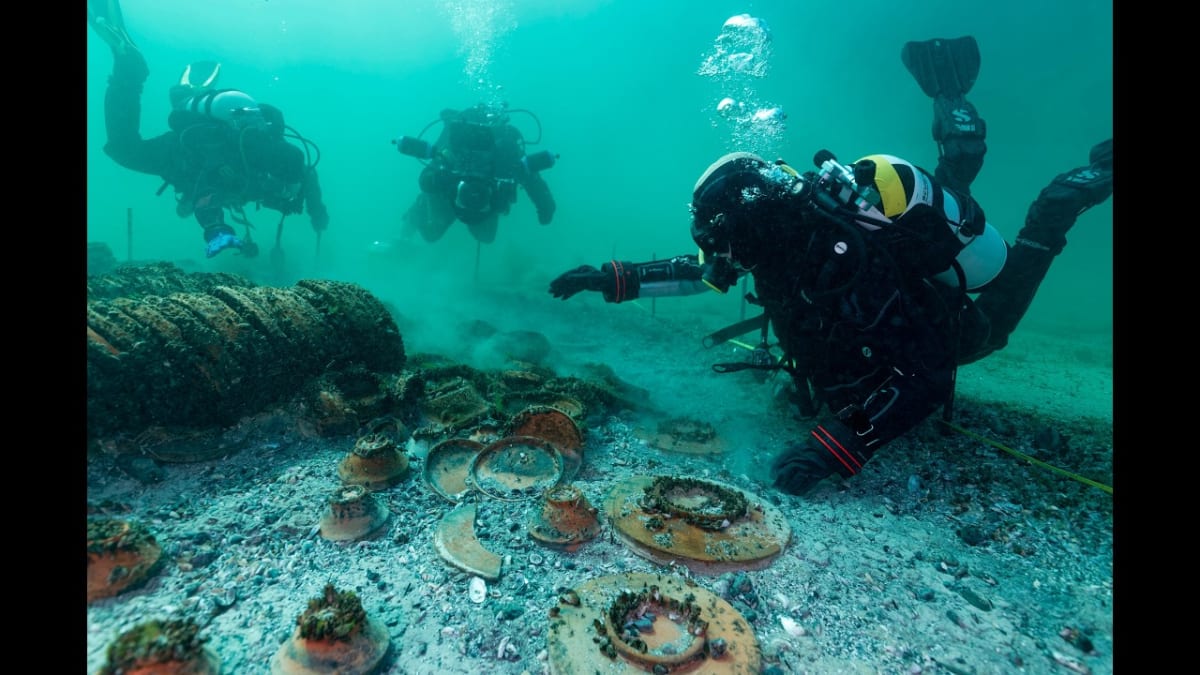
Imagine losing your entire cargo in a lake and having it tell stories two thousand years later. That's exactly what happened when a Roman ship scattered supplies across Lake Neuchâtel in what is now Switzerland, creating an archaeological treasure trove that researchers discovered last November.
Divers working with the Octopus Foundation and local archaeology offices have recovered 1,200 artifacts from the lakebed. The haul includes ceramic plates and goblets made on the Swiss Plateau, wine and olive oil jugs, two swords (one still in its scabbard), chariot wheels, metal tools, and even a wicker basket.
The objects are in remarkable condition because they sank rather than being used and discarded. "Here, the accident is providing us brand new objects that very probably will become a reference for this specific time period," says Julien Pfyffer, founder of the Octopus Foundation.
Researchers believe the ship was a civilian merchant vessel with military escorts on board, likely transporting equipment to Roman soldiers stationed at Vindonissa camp between 16 and 45 CE. These troops from the 13th Legion were tasked with preventing Germanic tribes from advancing south through Alpine passes.
The ship probably departed from an ancient port now called Yverdon-les-Bains and sailed north across the lake. Archaeologists think a sudden gust of wind scattered the cargo near the entrance to the Thielle Canal, which connects Lake Neuchâtel to Lake Biel.
Why This Inspires
What makes this discovery special isn't just what was lost but what might have been saved. The ship itself remains missing, and Pfyffer believes the crew may have survived once the heavy cargo fell overboard.
That means this story has two happy endings. Roman sailors and soldiers potentially made it home safely 2,000 years ago, and today their lost supplies are teaching us about ancient life in ways perfectly preserved artifacts rarely can.
The recovered treasures will likely be displayed at the Laténium archaeology museum after conservation work is complete, letting visitors see everyday Roman objects frozen in time at the moment they were brand new.
More Images
%2Fhttps%3A%2F%2Ftf-cmsv2-smithsonianmag-media.s3.amazonaws.com%2Ffiler_public%2F55%2F3e%2F553e7c37-9a43-4b83-8a24-3f2df64ae8b4%2Foct_4926.jpg)
%3Afocal(4184x2769%3A4185x2770)%2Fhttps%3A%2F%2Ftf-cmsv2-smithsonianmag-media.s3.amazonaws.com%2Ffiler_public%2F55%2F3e%2F553e7c37-9a43-4b83-8a24-3f2df64ae8b4%2Foct_4926.jpg)
%2Fhttps%3A%2F%2Ftf-cmsv2-smithsonianmag-media.s3.amazonaws.com%2Ffiler_public%2F8f%2F1d%2F8f1db506-19d4-4004-8a4c-6f251a7bf2d6%2Foct_4847.jpg)
Based on reporting by Smithsonian
This story was written by BrightWire based on verified news reports.
Spread the positivity!
Share this good news with someone who needs it