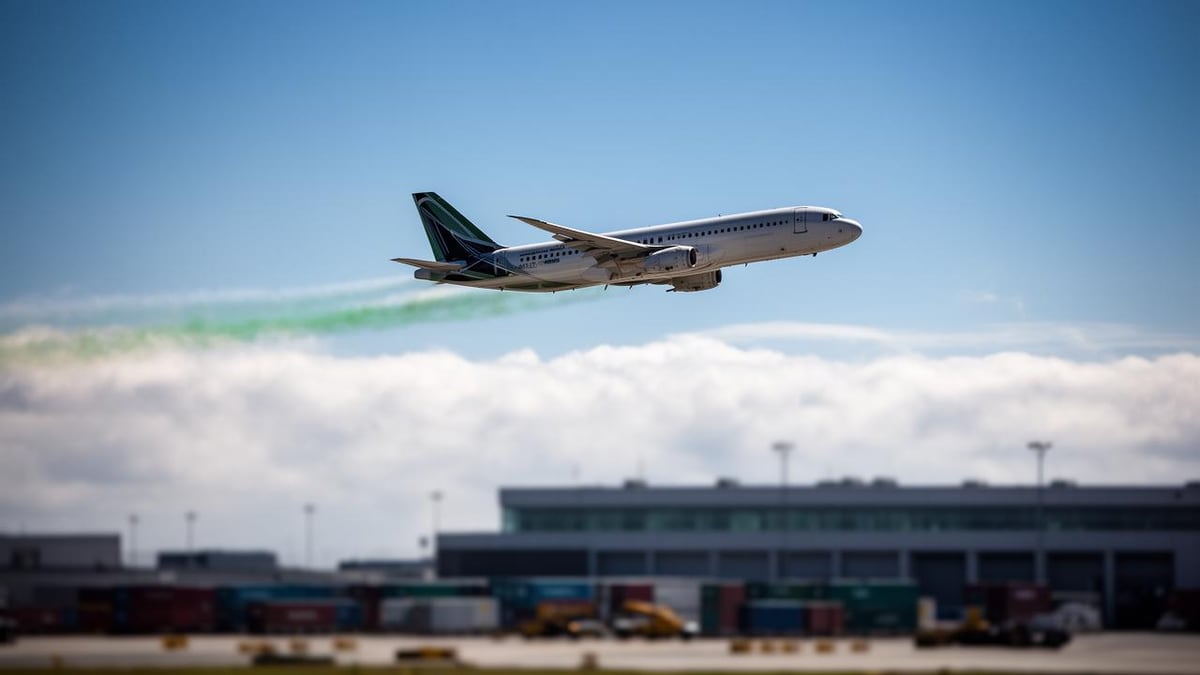
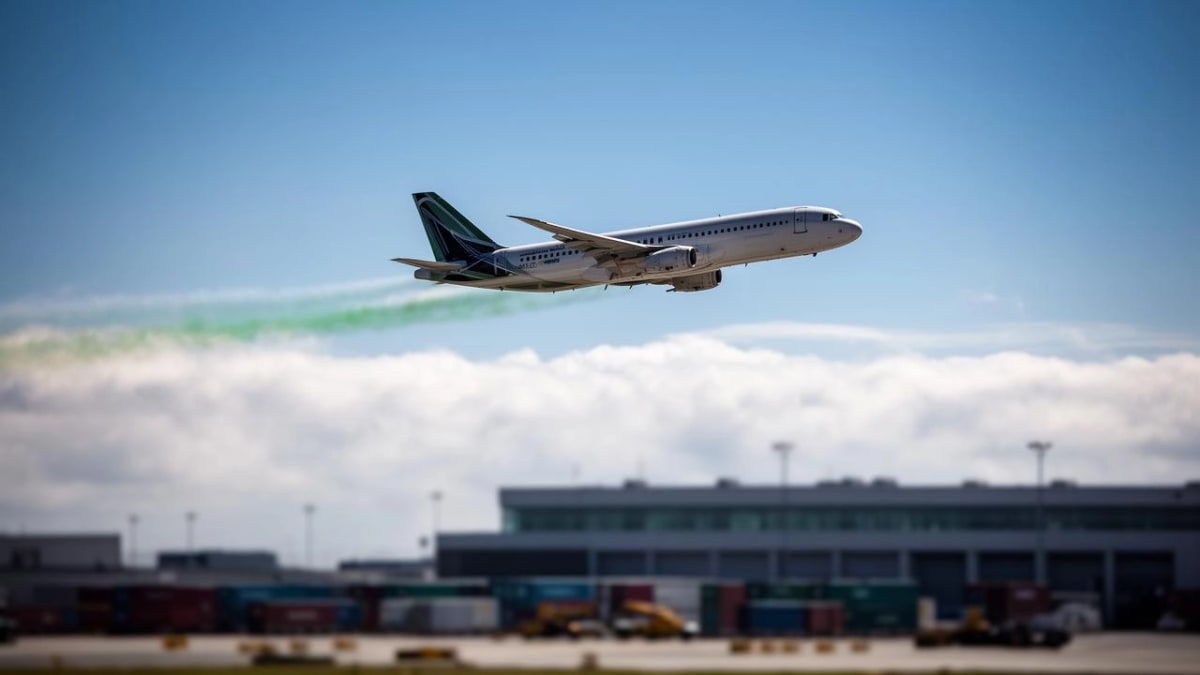
Taiwan Airlines Cut 15,000 Tonnes Carbon with Cooking Oil Fuel
EVA Air just launched Asia's largest sustainable aviation fuel partnership, turning waste cooking oil into jet fuel that slashes emissions by 80%. Microsoft, a freight giant, and Taiwan's energy sector joined forces to prove green air travel can work at scale.
A Taiwanese airline just proved that flying greener is possible today, not someday in the distant future.
EVA Air signed a groundbreaking agreement with Microsoft and global freight forwarder AIT Worldwide Logistics on August 25 that will eliminate 15,000 tonnes of carbon emissions in its first year. That's the equivalent of taking about 3,200 cars off the road for an entire year.
The secret ingredient? Waste cooking oil transformed into sustainable aviation fuel by Formosa Petrochemical.
The fuel, certified under international sustainability standards, produces roughly 80% fewer greenhouse gas emissions across its entire lifecycle compared to conventional jet fuel. EVA Air will use it on flights departing from Taiwan, specifically for Microsoft's cloud device shipments.
EVA Air President Sun Chia-ming called the partnership a model for the industry's future. "When corporate demand and industry resources are connected, we can accelerate the development of the sustainable aviation fuel market," he said.
The collaboration bridges four major industries: aviation, logistics, technology, and energy. AIT's Chief Strategy Officer Greg Weigel emphasized that decades of trust between the companies made this ambitious project possible.
Since 2025, EVA Airways has been adding sustainable fuel to flights departing from Asia, Europe, and the Americas. The airline has also locked in a five-year procurement agreement with Formosa Petrochemical to keep the momentum going.
The Ripple Effect
This partnership could transform how Asia-Pacific companies approach supply chain emissions. Microsoft will use the carbon reductions to lower its Scope 3 emissions, the hardest category for tech companies to address because it includes their entire supply chain.
The model shows other corporations a clear path forward. As more companies face pressure to decarbonize their operations, proven partnerships like this one make green logistics a practical reality rather than an aspiration.
EVA Airways has been recognized in the Sustainability Yearbook for five consecutive years and became the only Taiwanese airline in the Dow Jones emerging markets sustainability index.
The challenge ahead is supply. Taiwan currently produces only about 6,000 tonnes of sustainable aviation fuel annually, and EVA Air isn't the only airline seeking to buy it.
Formosa Petrochemical President Lin Ko-yen acknowledged the need for continued investment and called on government support for securing feedstock and certification. Sun Chia-ming noted that while the fuel carries a price premium and domestic supply remains tight, growing corporate demand will drive the market forward.
The 15,000-tonne contract will take several years to fulfill given current production limits, but both companies view this as a starting point rather than a ceiling.
When airlines, energy producers, freight companies, and tech giants work together, the impossible becomes routine.
More Images


Based on reporting by Google News - Emissions Reduction
This story was written by BrightWire based on verified news reports.
Spread the positivity!
Share this good news with someone who needs it


