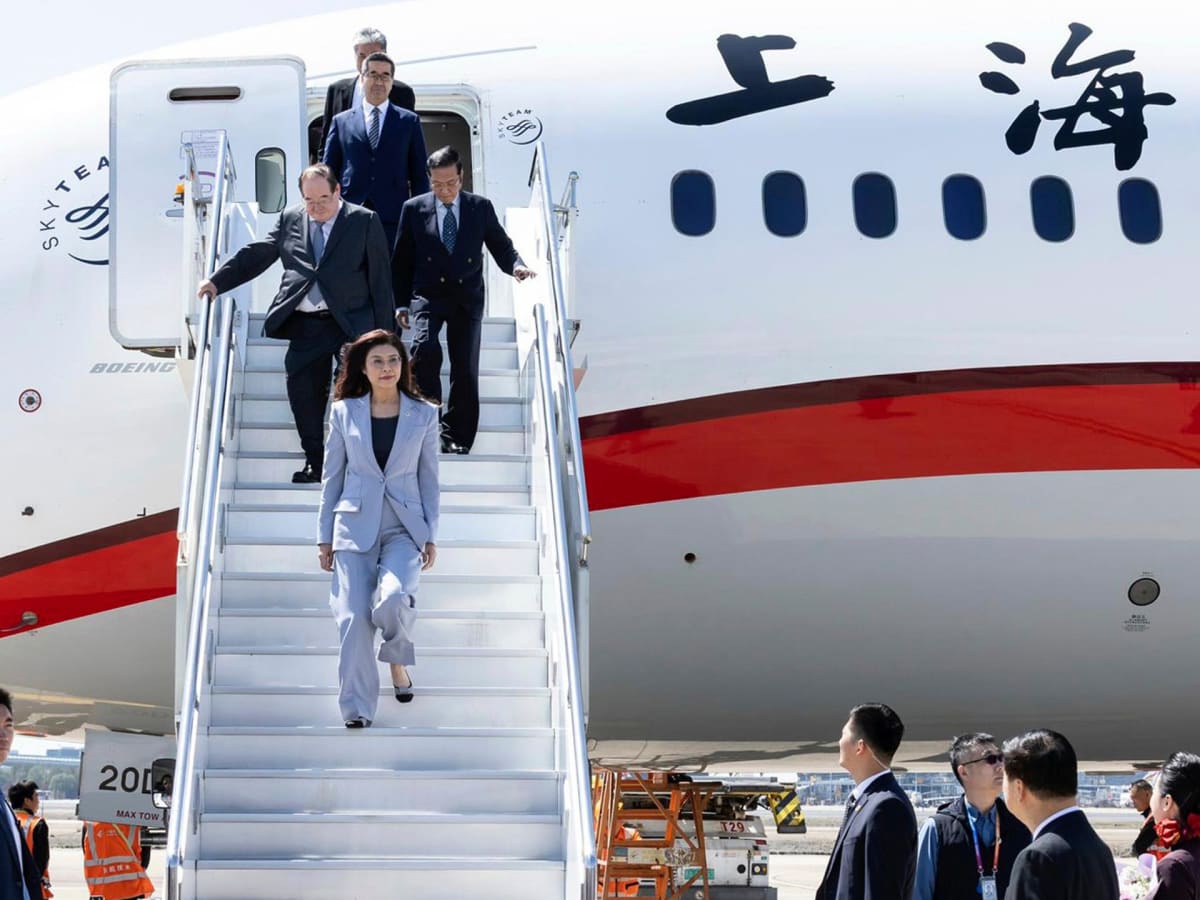
Taiwan Opposition Leader Visits China Seeking Peace Talks
Taiwan's main opposition leader traveled to China this week calling for dialogue and reconciliation, marking the first such visit in a decade. The historic trip offers a potential bridge between the two governments amid rising tensions.
Taiwan's opposition leader is reaching across one of the world's most tense political divides with a message of hope and dialogue.
Cheng Li-wun, chairwoman of Taiwan's Kuomintang (KMT) party, arrived in China this week for the first visit by a KMT leader in ten years. She laid a wreath at a historic revolutionary monument in Nanjing and called for "reconciliation and unity" between the two governments.
"We should work together to promote reconciliation and unity across the Strait and create regional prosperity and peace," Cheng said during remarks broadcast live on Taiwanese television. Her words invoked Sun Yat-sen, a revolutionary figure respected on both sides of the divide, emphasizing values of equality and inclusiveness.
The timing matters deeply. Beijing and Taipei have minimal official contact, and China refuses to engage with Taiwan's current president, whom it labels a separatist. Tensions have grown as global conflicts leave many Taiwanese wondering about their security partnerships.
Cheng hopes to meet with Chinese leader Xi Jinping during her visit. If successful, the meeting could represent the highest-level dialogue between the two governments in years.
The Bright Side
While political divides remain deep, Cheng's trip shows that communication channels haven't completely closed. The visit demonstrates that some leaders still believe dialogue offers more promise than confrontation.
Wen-ti Sung, a fellow at the Atlantic Council's Global China Hub, noted that many Taiwanese voters still find appeal in reducing tensions with their powerful neighbor. The symbolic gestures and public calls for peace could help rebuild trust that has eroded over years of political friction.
Cheng acknowledged both Taiwan's democratic progress and China's economic development during her remarks. This balanced approach suggests room for mutual respect even amid profound disagreements about governance and sovereignty.
The path forward remains uncertain and controversial, with Taiwan's governing party criticizing the visit. But the willingness to meet, talk, and seek common ground offers a glimmer of hope in a relationship that affects regional stability for millions of people.
Sometimes the bravest step toward peace is simply showing up to talk.
Based on reporting by Google News - Reconciliation
This story was written by BrightWire based on verified news reports.
Spread the positivity!
Share this good news with someone who needs it