Tamil Nadu Turns Pilgrimage Plastic Into Forest Furniture
Sacred hills in Tamil Nadu faced tons of plastic waste from pilgrims. Now that trash becomes desks, sofas, and shelters serving the community.
Each year, thousands of pilgrims climb the sacred Vellingiri Hills in Tamil Nadu, leaving behind something more than prayers: tons of plastic wrappers, bottles, and food packets scattered along the forest trails.
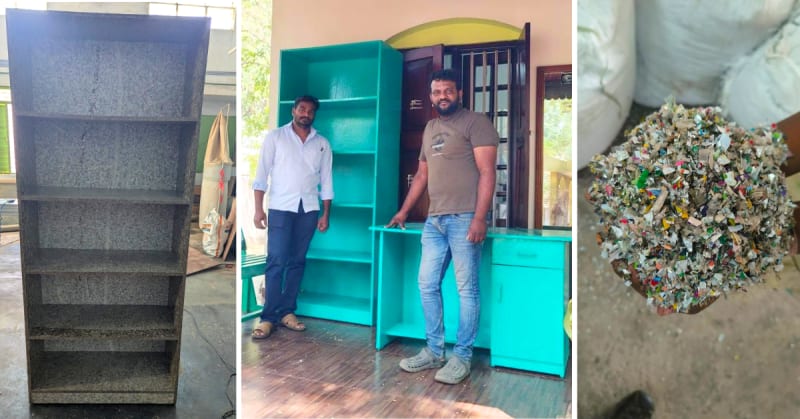
This year, that waste is coming back to serve the hills in an unexpected way. The furniture inside the Forest Range Office in Booluvampatti, including an almirah, desk, and three-seater sofa, is made entirely from plastic collected along those same trekking routes.
The Tamil Nadu Forest Department partnered with Recompose Recycling, a Coimbatore-based startup, to tackle one of recycling's toughest challenges: multi-layered plastic. These snack wrappers and sachets combine different materials that can't be separated through normal recycling, so they usually end up in landfills forever.
Instead, Recompose collects the plastic from the hills, cleans it, and transforms it into roofing sheets, paver blocks, and furniture materials. The finished pieces now furnish the very offices that manage the sacred site, creating a visible loop from waste to reuse.
The model works because it happens right where the problem exists. Pilgrims can see the impact of their waste, and forest staff gain practical furniture while keeping plastic out of the ecosystem.
The Ripple Effect
The Vellingiri project isn't happening in isolation. In nearby Kittampalayam village, Recompose built a bus shelter using 1,908 kg of multi-layered plastic collected over nine months, replacing a damaged structure with something durable and weatherproof.
Village President V M C Chandrasekar says residents learned to separate their waste at the source, turning organic material into farm compost while saving the troublesome plastic for construction. Of the 800 kg of waste the village generates, the plastic portion now builds infrastructure instead of piling up.
Similar efforts are emerging across India. Banyan Nation converts discarded plastic into manufacturing-grade recycled granules. Bengaluru's PotHoleRaja uses plastic waste to repair roads and make them more water-resistant. The technology exists and works.
What makes Vellingiri special is the location: a sacred site where faith meets environmental responsibility. The same landscape pilgrims come to revere now benefits directly from managing what they leave behind.
The startup proved that the hardest-to-recycle plastics can become the longest-lasting products when collection and processing systems work together. What once littered a holy mountain now shelters forest rangers and villagers waiting for the bus.
More Images
%2Fenglish-betterindia%2Fmedia%2Fmedia_files%2F2026%2F02%2F19%2Frecycled-furniture-2026-02-19-15-51-47.png)

%2Ffilters%3Aformat(webp)%2Fenglish-betterindia%2Fmedia%2Fmedia_files%2F2026%2F02%2F19%2Frecycled-furniture-1-2026-02-19-15-52-41.png)
%2Ffilters%3Aformat(webp)%2Fenglish-betterindia%2Fmedia%2Fmedia_files%2F2026%2F02%2F19%2Fbus-stand-made-of-recycled-plastic-2026-02-19-12-58-37.png)
Based on reporting by The Better India
This story was written by BrightWire based on verified news reports.
Spread the positivity!
Share this good news with someone who needs it