Tamil Nadu Village Beats Cyclones With Mangroves and Solar
A coastal village in Tamil Nadu transformed from disaster victim to climate champion. Killai built India's first complete climate-resilient village using mangroves, solar power, and community action.
For years, the fishing families of Killai watched the sea take a little more each time. Cyclones battered their homes, saltwater poisoned their fields, and the ocean crept closer with every storm.
This Tamil Nadu village sits right beside the Pichavaram Mangrove Forest, but even that natural shield couldn't protect them from relentless flooding and coastal erosion. Fishing became unpredictable, farming nearly impossible, and rebuilding after each disaster felt like trying to hold back the tide with bare hands.
Then the state government tried something different. Instead of just cleaning up after disasters, they decided to prepare Killai before the next one hit.
Under Tamil Nadu's Climate Change Mission, working with WRI India, Killai became the testing ground for a complete Climate-Resilient Village model. The project started where life does, with water.
Workers cleared a 3-kilometer stretch of the Buckingham Canal, removing years of silt and plastic waste. The cleaner waterway improved tidal flow, revived nearby wetlands, and gave the surrounding mangroves room to breathe again.
Those mangroves became the village's first line of defense. The restored forests now act as living walls against cyclones and storm surges, absorbing wave energy that would otherwise slam into homes.
But the mangroves do more than just protect. They create breeding grounds for fish, store carbon from the atmosphere, and support the livelihoods of fishing families who depend on healthy coastal ecosystems.
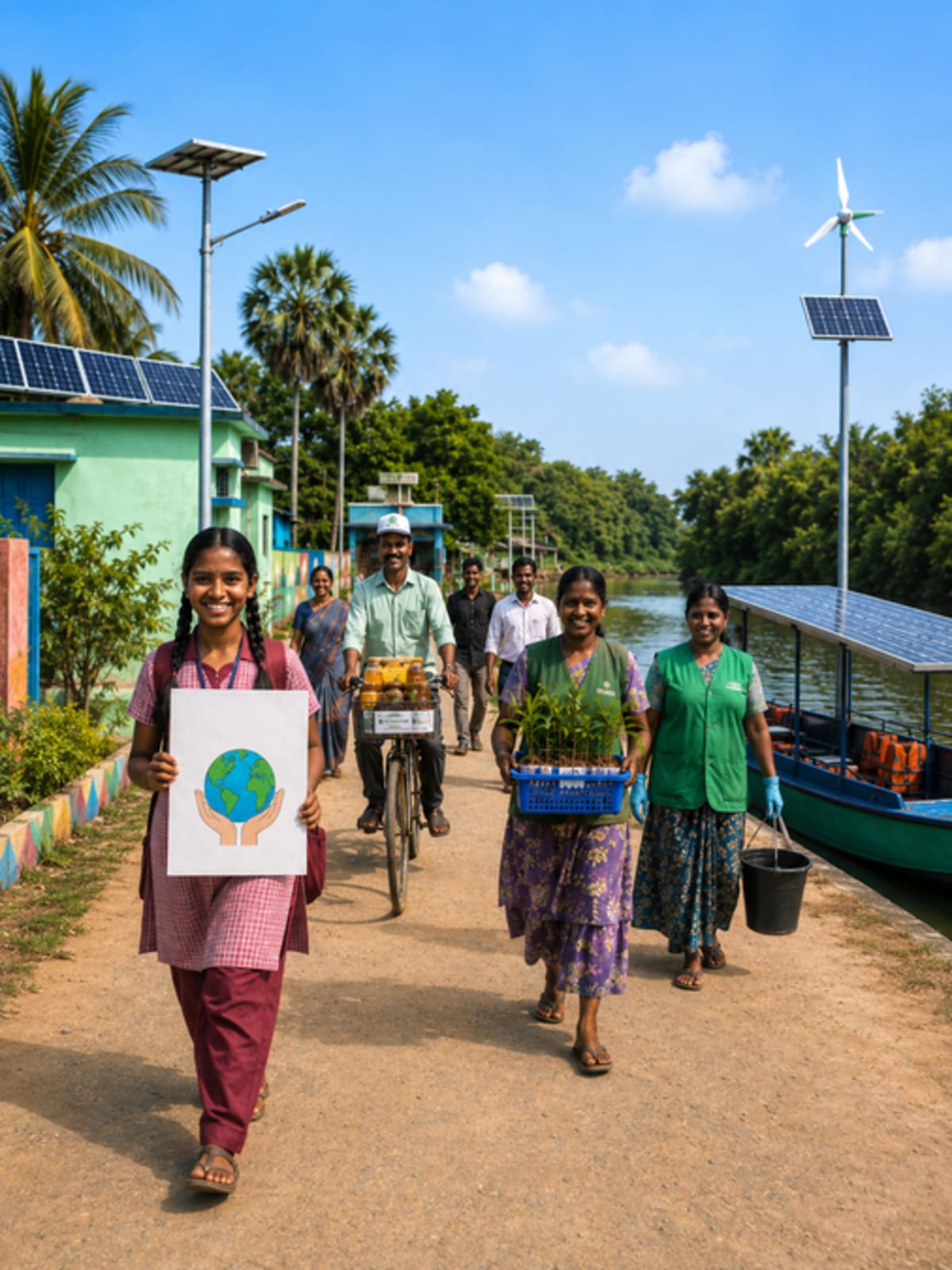
The village also embraced clean energy. Solar panels now power public buildings, cutting electricity costs and carbon emissions at once.
Even tourism got a green makeover. A new solar-powered electric boat glides silently through Pichavaram's waterways, replacing noisy fuel-powered rides and proving that conservation and visitor experiences can enhance each other.
The real transformation happened in the community itself. Local schools now teach climate stewardship, turning children into environmental champions. Residents learned scientific beekeeping, adding income while supporting local ecosystems.
The entire project cost 230.15 lakh rupees (about $277,000 USD), funded through climate mission budgets and corporate environmental programs. That investment bought protection, sustainability, and hope.
The Ripple Effect
Killai isn't just saving itself. The village became the blueprint for ten more Climate-Resilient Villages planned across Tamil Nadu's coastline.
Other coastal communities now have a proven model showing that climate adaptation works best when it combines nature-based solutions with community participation. The mangroves, solar systems, and restored waterways demonstrate that preparing for climate change costs less than constantly recovering from it.
Fishing families in neighboring villages are watching closely, seeing that resilience doesn't mean abandoning traditional livelihoods but rather protecting them for the next generation.
Tamil Nadu is proving that climate action doesn't require choosing between people and planet when you invest in solutions that strengthen both.
Based on reporting by The Better India
This story was written by BrightWire based on verified news reports.
Spread the positivity!
Share this good news with someone who needs it