Tamil Nadu's Door-to-Door Health Program Reaches 80% of Adults
A government initiative in India brings diabetes and hypertension screening directly to people's homes, reaching 80% of adults and helping 30% switch from expensive private care to free public healthcare. The program especially succeeds in reaching women and rural communities who previously lacked access.
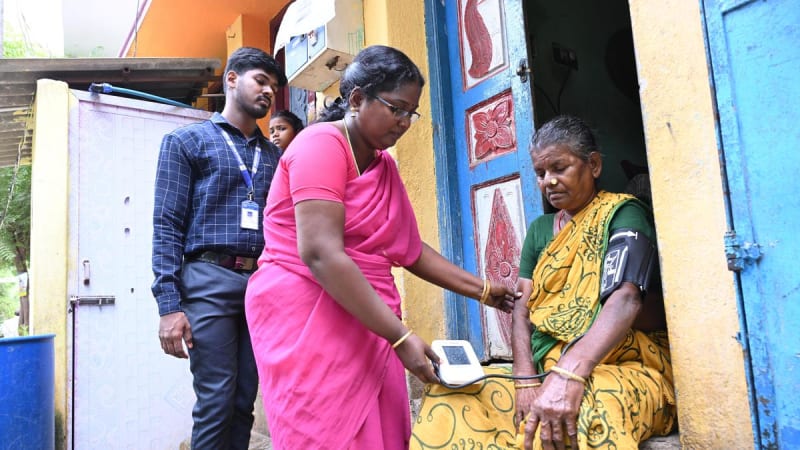
In Tamil Nadu, India, healthcare workers are knocking on doors instead of waiting for patients to come to clinics, and the results are transforming lives for millions.
The state's 'Makkalai Thedi Maruthuvam' program, which translates to 'Healthcare Seeking People,' has screened nearly 80% of adults over 30 for diabetes and hypertension. A study of 6,856 people across all 38 districts found that over two-thirds received their screening at home from dedicated field staff.
The impact goes beyond screening. Nearly 30% of participants reported switching from private healthcare to government services in the past year, saving families money while maintaining their treatment.
Women and rural residents benefit most from the doorstep model. About 80% of women and rural residents underwent diabetes screening, with field workers delivering most services directly to households.
Among those diagnosed, treatment rates exceed 95% for both diabetes and hypertension. More than half receive their medicines through the program, eliminating cost barriers that once kept them from consistent care.
The program identified 75% of new hypertension cases and about two-thirds of recent diabetes diagnoses. For communities in Scheduled Castes and Scheduled Tribes, who traditionally face healthcare discrimination, the program brings dignity along with treatment.
The Ripple Effect
The initiative fundamentally shifts how public health works in India's fourth most populous state. Instead of requiring sick people to navigate transportation, take time off work, and navigate unfamiliar medical facilities, trained health workers bring care to living rooms and doorsteps.
This matters especially for women who might not have independent mobility or for families in remote villages hours from the nearest clinic. The program proves that meeting people where they are removes invisible barriers that keep communities from getting care.
Professor Sudharshini Subramaniam from Government Vellore Medical College, one of the study's authors, explains the vision: "MTM has fundamentally shifted care from a facility-dependent model to a community-owned, doorstep model that actually reaches the most marginalised."
The program now aims to move beyond finding disease early toward preventing it entirely. Future phases will address lifestyle, behavior, and risk environments within households and communities.
Researchers identified areas for growth, including expanding cancer screening coverage, strengthening services in urban areas with evening visits for working men, and providing performance-based incentives for field workers. Urban coverage lags behind rural success, and cancer screening remains much lower than diabetes and hypertension testing.
Tamil Nadu's innovation shows that bringing healthcare to people's doors can reach those who need it most while reducing costs and improving access for entire communities.
Based on reporting by The Hindu
This story was written by BrightWire based on verified news reports.
Spread the positivity!
Share this good news with someone who needs it