Team Rescues 1920s Kolkata Bungalow Into Heritage Hotel
When Iftekhar Ahsan saw Kolkata's old architecture vanishing, he bought a crumbling 1926 bungalow and spent three years bringing it back to life. Today, the Calcutta Bungalow welcomes guests into a piece of living history.
When Iftekhar Ahsan walked through his hometown of Kolkata, he saw the city's soul quietly disappearing behind glass towers and new storefronts. The 44-year-old founder of Calcutta Walks knew that if he didn't act, the elegant bungalows and hidden courtyards that defined old Calcutta would vanish forever.
In 2013, while leading heritage tours through the city, Iftekhar realized something important. Walking people past historic buildings wasn't enough if those buildings kept disappearing.
He started searching for a property he could save. In the Shyam Bazar neighborhood, he found it: a 1926 bungalow where owls, mongooses, sparrows, and civets had made their home among the overgrown gardens.
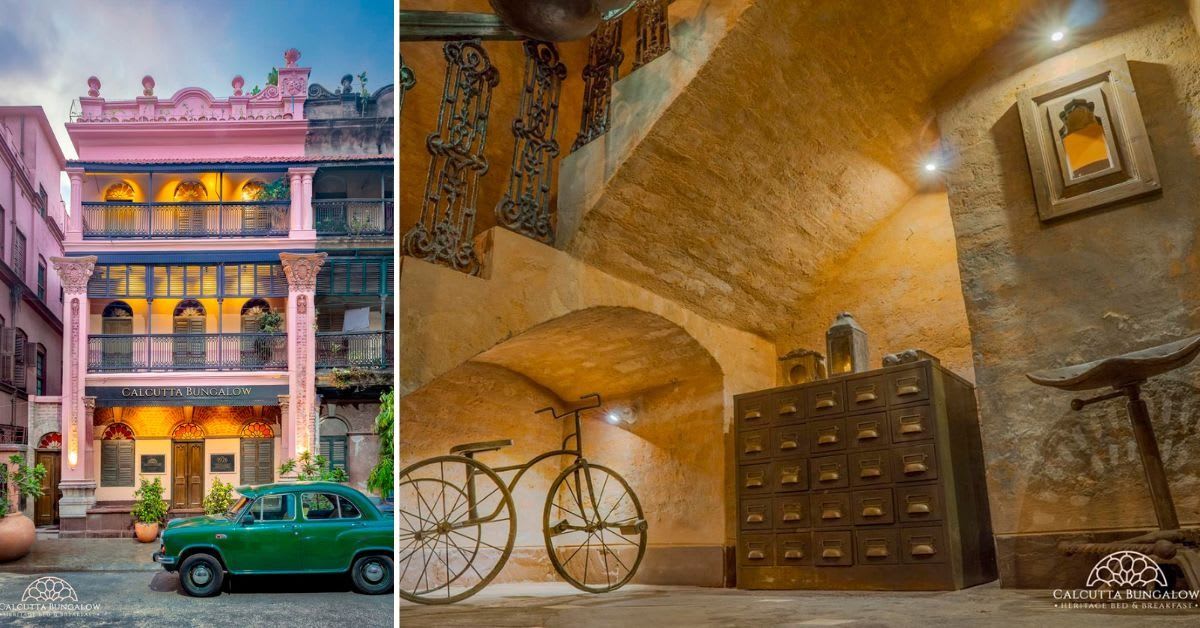
The building stood out because it was designed in the classical Bengali style, even though modern Art Deco was all the rage in the 1920s. Despite being 90 years old, it needed surprisingly little structural work compared to other heritage buildings he'd seen.
After two years of negotiations and three years of careful restoration, the Calcutta Bungalow opened as a heritage hotel in 2018. But this wasn't going to be a polished museum piece.
Iftekhar and his team deliberately kept things humble, recreating the feel of an upper-middle-class household from early 1900s Calcutta. They salvaged Burma teak wood from fallen buildings across the city and installed colored glass windows like the ones that once graced every Bengali home.
The walls tell their own story. Traditional raj mistries (brick layers) from Murshidabad mixed the plaster using a centuries-old recipe: jaggery, wood apple pulp, fenugreek seeds, and betel nuts, cured over weeks.
Old khorkhoris (painted Bengali windows) became bedside tables and courtyard art. Each room got a small typewriter, inviting guests to slow down and write by hand.
Why This Inspires
The Calcutta Bungalow proves that progress doesn't have to mean erasing the past. Iftekhar could have torn down the building and put up something modern, but instead he chose to honor the craftsmanship and character that made Kolkata special.
Outside, a yellow Ambassador taxi sits parked, another nod to the city's iconic past. Red mandana stone covers the floors, cast iron railings curve along the balconies, and reclaimed wood tells stories in every corner.
One room celebrates Boipara, the city's famous book-loving culture. Another honors jatra, Bengal's beloved folk theater tradition.
For Iftekhar, who comes from a family of cloth dyers in Rajasthan, this project represents a complete departure from his roots. But it also represents something deeply personal: a love letter to a city that "isn't in a mad rush to turn into something super modern and fancy."
The bungalow stands today as proof that you can choose what survives into the future.
More Images
%2Fenglish-betterindia%2Fmedia%2Fmedia_files%2F2026%2F04%2F17%2Fcalcutta-bungalow-7-2026-04-17-16-30-02.jpg)
%2Ffilters%3Aformat(webp)%2Fenglish-betterindia%2Fmedia%2Fmedia_files%2F2026%2F04%2F17%2Fcalcutta-bungalow-2026-04-17-15-47-25.jpg)

Based on reporting by The Better India
This story was written by BrightWire based on verified news reports.
Spread the positivity!
Share this good news with someone who needs it