Tech Pro Pays Women Dairy Farmers 40% Above Market Rate
A former engineer returned to his village near Mysuru and built a dairy enterprise that pays 50+ women farmers 40% more than market rates while delivering traceable milk to 300 families. His company now processes 500 liters daily and has 150 farmers on the waiting list.
When Kamalesh Mandya watched his grandmother sell the family's cows one by one because dairy farming no longer paid enough, he made a promise to himself. Someday, he would return to his village and fix the system that left rural women struggling to earn from their labor.
Growing up in Neelamane, 30 km from Mysuru, Kamalesh saw how cattle ownership gave the women in his family financial independence. His grandmother and great-grandmother owned eight to ten cows, selling milk and butter to support the household and make their own decisions. But rising input costs and stagnant milk prices made the business unsustainable.
After earning engineering degrees and teaching at a top college, Kamalesh cleared a prestigious government exam in 2016. The role required paying a bribe to accept it, so he walked away and chose a different path entirely.
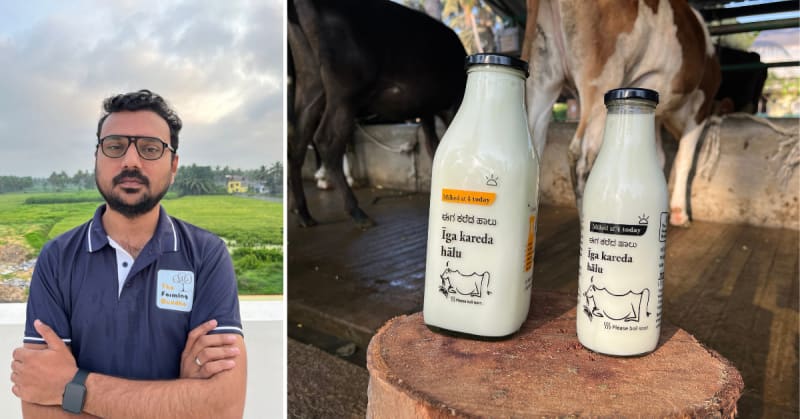
In 2022, he launched The Farming Buddha, a dairy enterprise designed to change how milk reaches consumers and how farmers earn from it. Today, the company works with over 50 farmers, 38 of them women, paying them 40% above prevailing market rates.
It took six months to convince the first farmer, Mangalamma, to trust him. But word spread quickly when other farmers saw the prices and timely payments she received. Within two months, more farmers approached him, and now 150 wait to join.
Mamatha, a 32-year-old farmer from Ballenalli village, has supplied milk for two years. "I get Rs 15 more per liter than before, and payments are regular," she says. The extra income helped pay her daughters' school and college fees, buy two more cows, and purchase a second-hand two-wheeler for her older daughter.
The enterprise also provides veterinary assistance when cattle fall ill and partners with the Bharatiya Agro Industries Foundation to train farmers on bovine nutrition and preventive health.
Kamalesh wanted consumers to know exactly where their milk came from, so he built an IoT-enabled tracking system. Milk is tested and recorded at every stage, from farm collection to bottling to home delivery. Subscribers receive daily adulteration test results through a web platform.
The company now processes over 500 liters daily and delivers to more than 300 families in Mysuru through monthly subscriptions. It also produces ghee, curd, paneer, and other dairy products.
The Ripple Effect
The model proves that paying farmers fairly doesn't require sacrificing quality or transparency. When Mamatha talks about buying cows and motorcycles from her dairy income, she's describing what happens when women control their earnings. When 150 farmers join a waiting list, they're voting for a system that values their work properly.
One engineer walked away from a government job and returned to his village with a better idea, and now hundreds of families on both ends of the supply chain are living proof it works.
More Images
%2Fenglish-betterindia%2Fmedia%2Fmedia_files%2F2026%2F02%2F18%2Ffeatured-img-2026-02-18-07-54-35.png)
%2Ffilters%3Aformat(webp)%2Fenglish-betterindia%2Fmedia%2Fmedia_files%2F2026%2F02%2F18%2F123-2026-02-18-08-13-57.png)
%2Ffilters%3Aformat(webp)%2Fenglish-betterindia%2Fmedia%2Fmedia_files%2F2026%2F02%2F18%2F123-2026-02-18-08-14-39.png)
Based on reporting by The Better India
This story was written by BrightWire based on verified news reports.
Spread the positivity!
Share this good news with someone who needs it