Telescopes Hunt for Alien Life on Distant Planets
Scientists now have the tools to detect signs of life on planets beyond our solar system by analyzing their atmospheres. New space telescopes launching through 2029 will help us answer one of humanity's oldest questions: are we alone?
We're living in an extraordinary moment where humanity might finally answer whether life exists beyond Earth.
In just 30 years, we've gone from knowing zero planets outside our solar system to discovering over 6,000 worlds orbiting distant stars. Now scientists are using powerful telescopes to search these alien planets for the chemical signatures of life.
The method is surprisingly elegant. When a planet passes in front of its star, starlight filters through the planet's atmosphere. Each gas molecule leaves a unique barcode-like pattern on that light, allowing astronomers to identify what's floating in alien skies from trillions of miles away.
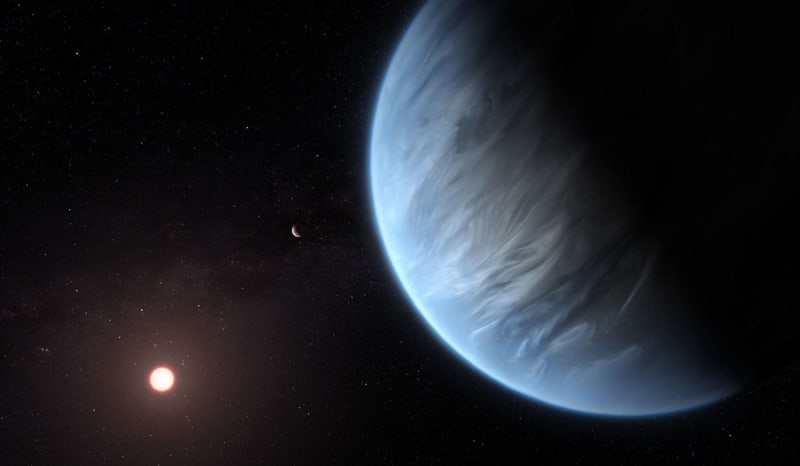
The James Webb Space Telescope has already detected simple molecules like methane, carbon dioxide and water on distant worlds. Last year, researchers claimed they found dimethyl sulphide on planet K2-18b, a gas produced by ocean microbes on Earth. Though other scientists questioned that finding, the fact that we can even attempt such detections is remarkable.
Earth-sized rocky planets are harder to study than larger worlds, but that's about to change. A fleet of new telescopes will dramatically expand our search capabilities.
Why This Inspires
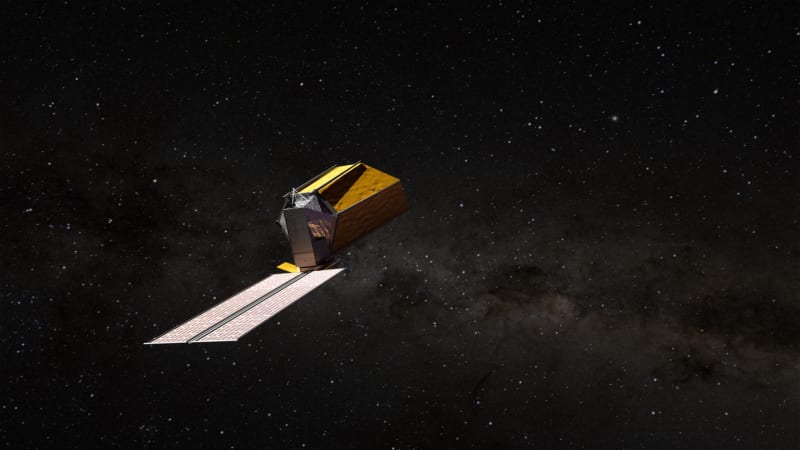
The European Space Agency's Plato telescope launches in 2026 to find Earth-like planets perfect for atmospheric studies. NASA's Nancy Grace Roman telescope follows in 2029 with technology to block out starlight and see dim planets directly. That same year, the Ariel telescope will launch specifically to analyze exoplanet atmospheres.
NASA is also planning the Habitable Worlds Observatory, designed to study planets where liquid water oceans might exist. These missions will examine worlds at the right temperature and distance from their stars to potentially support life as we know it.
What makes this search possible is quantum mechanics. Every molecule interacts with light in its own specific way, creating those telltale barcodes. Oxygen, ozone and water all have strong signatures, making them easier to spot even when they're not the most abundant gases present.
The discoveries won't happen overnight, and false alarms are part of science. But within the next decade, we'll have unprecedented ability to study worlds that might harbor life.
Our generation gets to witness humanity taking its first real steps toward finding out if Earth's story of life is unique or common across the cosmos.
More Images

Based on reporting by Space.com
This story was written by BrightWire based on verified news reports.
Spread the positivity!
Share this good news with someone who needs it