Tennessee Firm Turns Old Wind Turbine Blades Into New Products
A Knoxville company is transforming massive wind turbine blades into valuable glass fiber instead of burying them in landfills. The innovation solves a growing waste problem while creating a profitable new resource for manufacturing.
The giant white blades coming down from aging wind turbines are finding a second life in Tennessee instead of ending up buried in the ground.
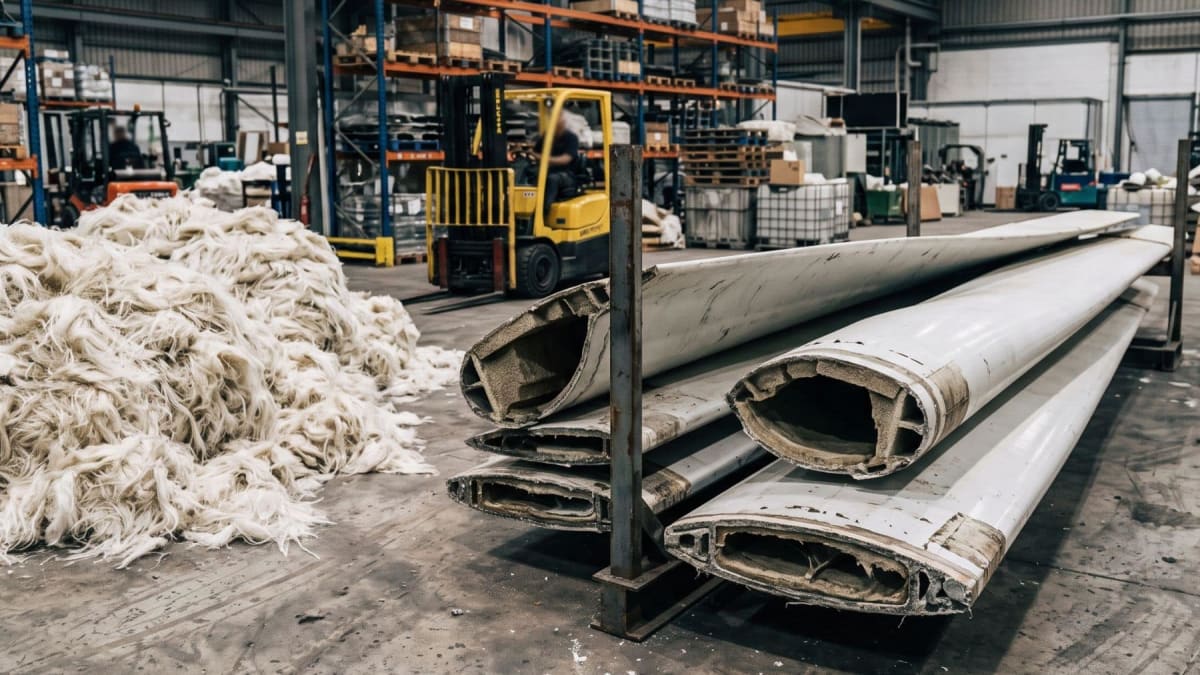
For years, the wind energy industry faced an uncomfortable truth. The same materials that made turbine blades nearly indestructible in the air made them nearly impossible to recycle on the ground. When first generation wind farms started retiring after 20 to 25 years of service, workers sawed blades into sections and buried them in long trenches that looked like giant fish bones sticking out of the earth.
Carbon Rivers, a Knoxville company backed by the U.S. Department of Energy, figured out how to extract something valuable from those blades. They use a heating process called pyrolysis to recover clean glass fiber, the material that makes up roughly half of every blade's weight.
That glass fiber is the same high performance material used in boat hulls, aircraft interiors and car panels. Manufacturing it new requires massive energy and expense. A single used turbine blade, which can stretch beyond 170 feet and weigh up to 10 tons, contains thousands of pounds of this valuable fiber that companies were paying to bury.
Carbon Rivers has already processed thousands of metric tons of old blades and is expanding capacity to handle over 50,000 metric tons each year. The recovered fiber goes directly into new manufacturing, creating car panels, building materials and even new turbine blades.
The timing matters because tens of thousands of turbines worldwide are expected to reach the end of their working lives by 2030. Each one carries multiple blades. What looked like an environmental embarrassment for the clean energy industry has transformed into a competition for valuable raw materials.
The Ripple Effect
Major turbine manufacturers now see the potential. Companies have announced zero blade to landfill targets by 2030, and engineers are designing future blades with materials that are even easier to recycle and reshape.
Landfilling still costs less per ton in places where it remains legal, but the financial case for recycling grows stronger every month as demand for lightweight, strong materials increases across automotive and construction industries. A blade that spent two decades generating clean electricity can now spend its second act as part of a car door, a building panel or the wing of the next turbine to rise.
The breakthrough proves that waste is often just a resource that nobody has figured out how to use yet.
Based on reporting by Google News - Wind Energy
This story was written by BrightWire based on verified news reports.
Spread the positivity!
Share this good news with someone who needs it