Texas Scientists Create Clean Way to Make Fertilizer
Researchers at Texas A&M University just solved one of agriculture's biggest pollution problems. Their new method produces ammonia fertilizer using just water, air, and renewable electricity instead of fossil fuels.
Scientists just figured out how to make fertilizer without destroying the planet in the process.
A team at Texas A&M University developed a breakthrough method to produce ammonia, the essential ingredient in fertilizers that feed half the world's population. Instead of burning coal and natural gas like current factories do, their process uses only water, air, and clean electricity.
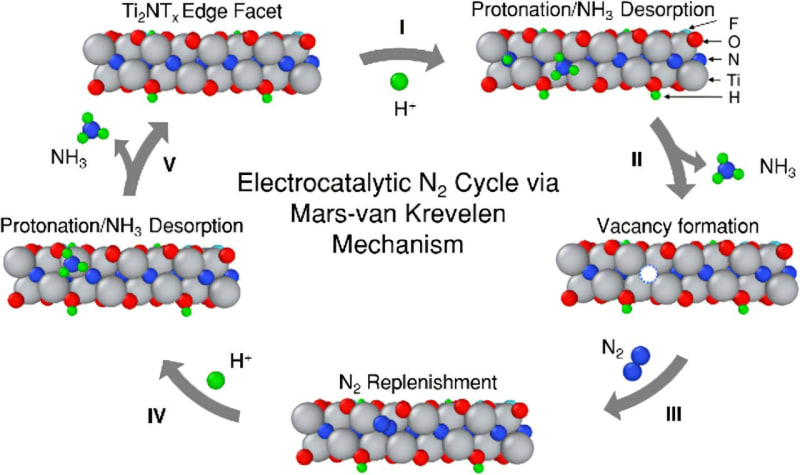
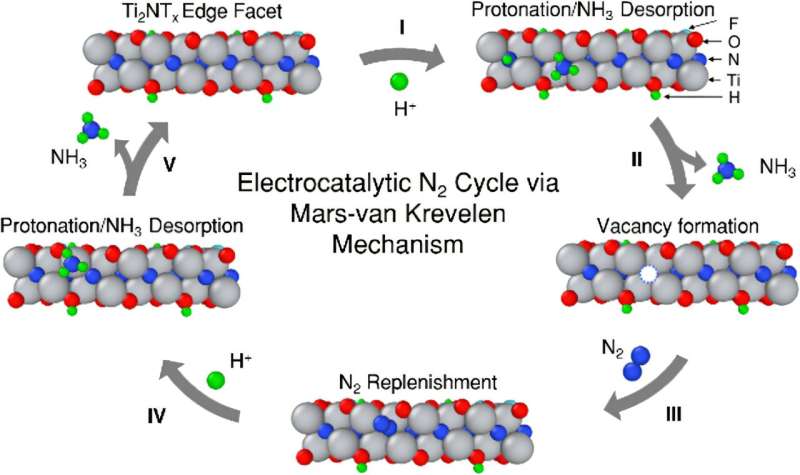
Dr. Abdoulaye Djire and his team created a special material called MNene that acts like a tiny chemical factory. It pulls nitrogen from the air and hydrogen from water, then combines them into ammonia powered by renewable energy. No greenhouse gases. No fossil fuels.
The secret lies in how the material works. Traditional ammonia production struggles because nitrogen molecules stick together with an incredibly strong triple bond. Breaking that bond currently requires massive amounts of heat and pressure from burning fossil fuels, releasing tons of carbon dioxide.
MNene solves this problem through a clever trick the team calls "proton trapping." The material contains tiny spaces that naturally attract and hold nitrogen molecules in just the right position. These spots weaken the stubborn bonds enough to break them apart without extreme heat.
Graduate student David Kumar explained the bigger picture. "This process uses Earth-abundant resources like water and atmospheric nitrogen," he said. "This is essential for building a sustainable future, especially for food production."
The team used advanced computer simulations to understand exactly what happens at the atomic level. They discovered that nitrogen molecules need to partially embed into tiny vacancies in the material, creating just enough instability to crack open those strong bonds.
Why This Inspires
This breakthrough tackles one of agriculture's toughest challenges. Current ammonia production accounts for nearly 2% of global energy use and produces over 400 million tons of carbon dioxide annually.
Switching to this electrochemical method could transform farming from a climate problem into a climate solution. Farms could potentially produce their own fertilizer using solar panels or wind turbines, eliminating transportation costs and emissions.
The technology also opens doors for developing countries. Small-scale, local ammonia production would reduce dependence on imported fertilizers and make food production more affordable and accessible.
The research appeared in the Journal of the American Chemical Society after rigorous peer review, confirming the science is solid. Now the challenge shifts from the lab to scaling up production for real-world farming.
Clean fertilizer could soon help feed the world without heating it up.
More Images



Based on reporting by Google News - Economic Growth
This story was written by BrightWire based on verified news reports.
Spread the positivity!
Share this good news with someone who needs it