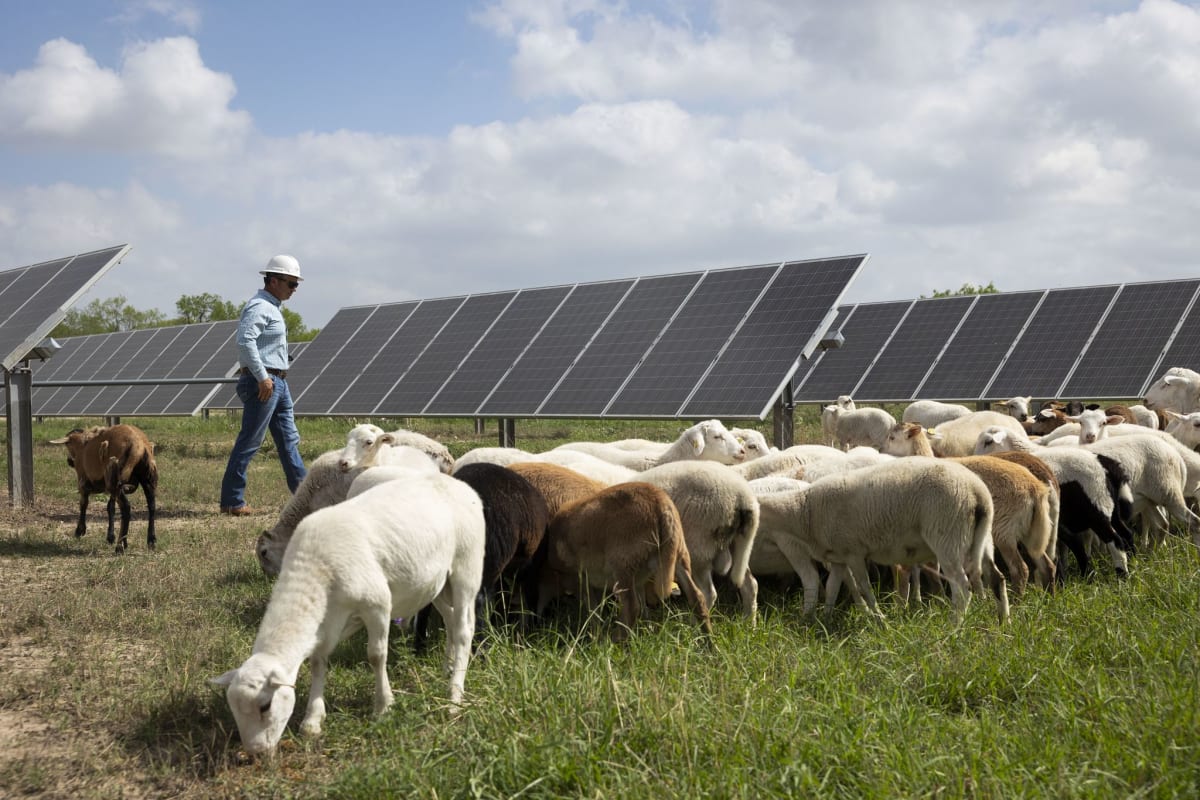
Texas Sheep Farmer Turns Solar Farms Into $1M Business
A Texas rancher facing layoffs transformed 27 sheep into a 10,000-strong flock by partnering with solar farms that pay him to graze their land. His innovation is now helping struggling farmers across three states keep their ranches alive.
Ely Valdez was about to sell his sheep when the solar farm across the road asked him a life-changing question: "How much would you charge us?"
Valdez had been getting laid off from oil field jobs every three months, and money was tight on his South San Antonio ranch. He thought maybe his 27 sheep could help maintain the solar farm's vegetation for free, just to keep his flock going.
That conversation 11 years ago sparked something bigger. Valdez realized solar farms needed his sheep more than he knew, and they were willing to pay for it.
Today, his flock has grown to 10,000 sheep grazing 40,000 acres of solar farms across Texas, Alabama, and Louisiana. He founded EVA Ranch and Solar Farm Services, creating a business model that helps both industries thrive.
The timing couldn't be better. Texas is facing unprecedented electricity demand, and solar farms now make up 77% of new generation sources being built. Rural Texas, with its affordable land, hosts most of these projects.
But some farmers worried this growth meant losing farmland forever. Valdez saw opportunity instead.
Solar panels are perfect for sheep, he discovered. Traditional mowers can damage panels and kick up debris, but sheep are small and agile enough to graze underneath without causing harm. Their waste fertilizes the soil, keeping the land healthy for future farming.
Valdez now subcontracts with struggling ranchers who don't want to sell their flocks during droughts. He maintains their sheep on solar farms, helping them preserve their investments until conditions improve.
Farmers can also lease unused portions of their land to solar developers, creating guaranteed income regardless of weather or market prices. The contracts typically last 25 years, ensuring the land stays in agricultural use instead of being sold to developers.
The Ripple Effect
John Davis near Menard initially hated the idea of "ugly turbines with red blinking lights" on his 1,300-acre ranch. It took three pitches before he agreed to host seven wind turbines alongside his sheep, goats, and cows.
Now renewable energy provides 40% of his income, money he reinvests into his ranch. More importantly, it keeps his land in the family instead of being sold to wealthy city buyers looking for recreational hunting properties.
"We're going to have a lot more farmers out there not having to sell their livestock or their ranches," Valdez said. The model is spreading as more rural families discover they can work alongside renewable energy instead of against it.
For farmers facing droughts, market volatility, and urban encroachment, solar and wind projects offer something rare in agriculture: stability and a second chance to keep doing what they love.
Based on reporting by Google News - Wind Energy
This story was written by BrightWire based on verified news reports.
Spread the positivity!
Share this good news with someone who needs it