This Family Grows 7-Pound Mangoes Worth $18 Each
In Madhya Pradesh, the Jadav family nurtures five trees producing rare Noorjahan mangoes that weigh over seven pounds and sell for up to $18 each. They're keeping alive a centuries-old fruit variety that almost disappeared.
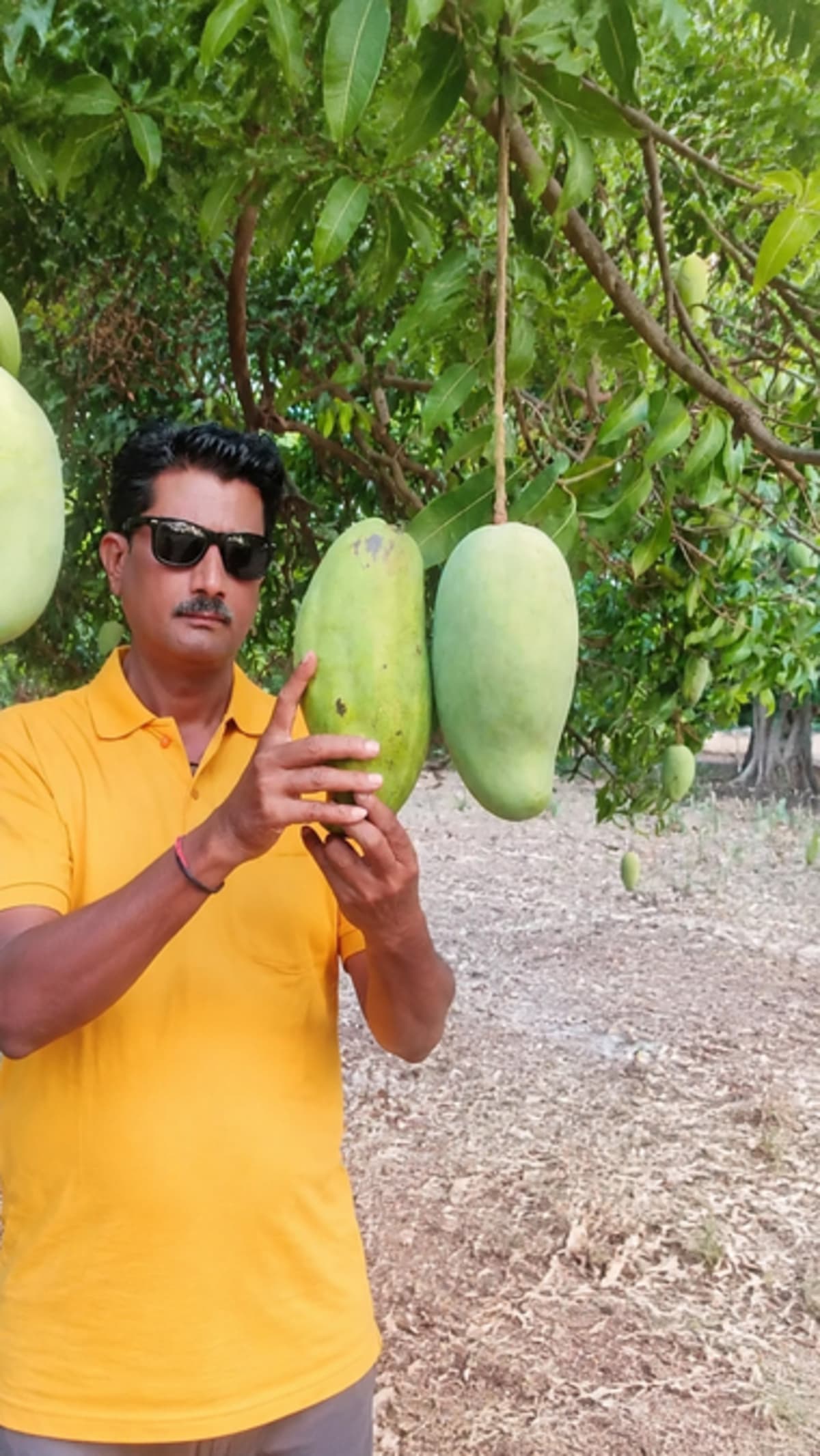
Imagine a mango bigger than a newborn baby, weighing up to seven pounds and stretching a foot long. That's the Noorjahan mango, and one Indian family is fighting to save it from extinction.
Shivraj Singh Jadav tends five precious trees at Noorjahan Mango Farms in Katthiwada, Madhya Pradesh. His father planted the first graft of this rare variety back in 1965, starting a legacy that spans nearly six decades.
These aren't ordinary mangoes. Each Noorjahan can weigh between six and seven pounds, making them among India's largest mango varieties. Growers believe the fruit traveled from Afghanistan through Gujarat centuries ago before finding its perfect home in Madhya Pradesh's unique soil and climate.
The numbers tell the story of just how rare these giants have become. The Jadav family's five trees produce only around 350 fruits each year, with each tree bearing fewer than 100 mangoes. Those fruits sell for 500 to 1,500 rupees each, roughly $6 to $18, depending on size.
While the family cultivates 33 other mango varieties across their 16-acre orchard, the Noorjahan trees receive special care. According to Shivraj, Katthiwada's specific combination of soil, rainfall, and climate creates the perfect conditions for these remarkable fruits to thrive.
The farm has attracted attention for generations. Shivraj's father appeared on India's national television network Doordarshan between 1978 and 1981, showcasing these botanical wonders. Today, thousands of visitors make the journey to see the legendary trees each year.
Why This Inspires
In a world where mass production favors common varieties, the Jadav family chose a different path. They dedicated nearly 60 years to protecting one of nature's most extraordinary fruits, even though keeping rare varieties alive means less profit and more work than growing popular commercial mangoes.
Their commitment has paid off in unexpected ways. That single graft planted decades ago has now spread well beyond Katthiwada, with buyers from overseas seeking out the family's harvest. The Jadavs are also working to identify and preserve other disappearing mango varieties, turning their orchard into a living seed bank.
What started as one man's passion in 1965 has become a bridge between past and future, proving that small farms can preserve irreplaceable pieces of agricultural heritage while popular varieties dominate modern markets.
The Noorjahan mango survives today because one family believed it was worth saving.
Based on reporting by The Better India
This story was written by BrightWire based on verified news reports.
Spread the positivity!
Share this good news with someone who needs it