Three Stunning Moon Craters to Explore Tonight
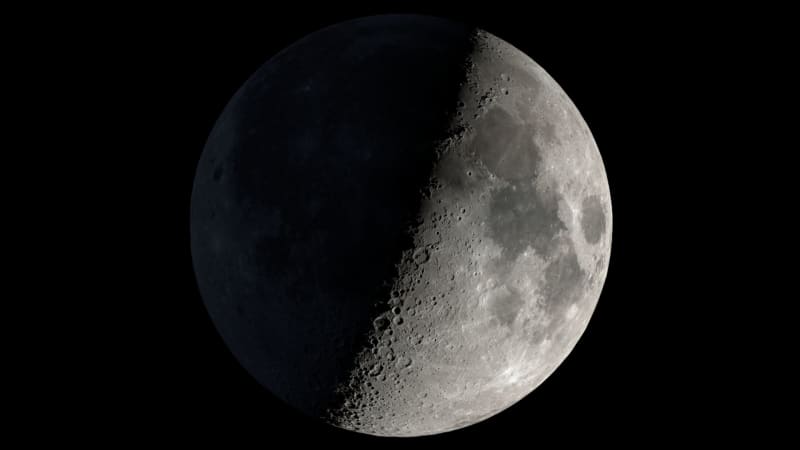
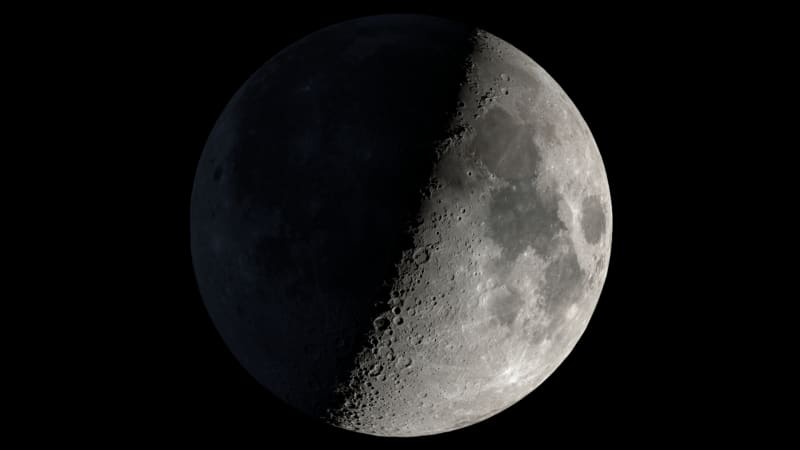
Tonight's first quarter moon offers the perfect opportunity to spot three spectacular lunar craters named after legendary astronomers. The unique lighting will cast dramatic shadows across these ancient impact sites.
Grab your telescope tonight and witness three magnificent lunar craters in their most dramatic lighting of the month.
Tonight's first quarter moon creates the perfect viewing conditions to explore craters named after Aristotle, Eudoxus, and Giovanni Cassini. The half-lit moon casts shadows that reveal stunning details usually hidden during other lunar phases.
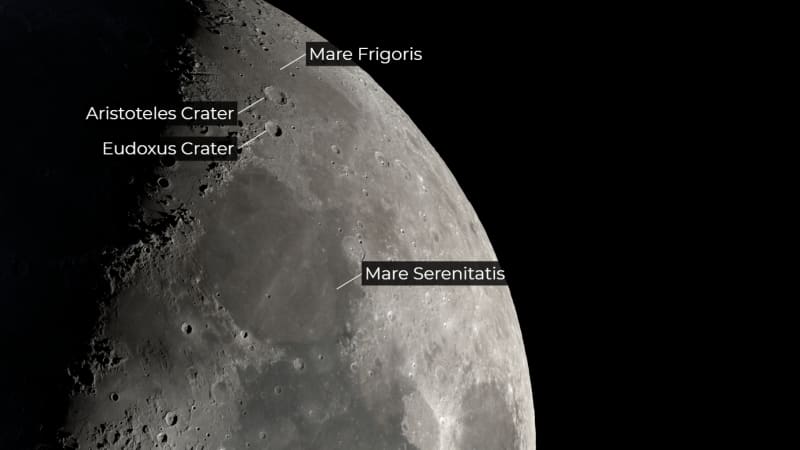
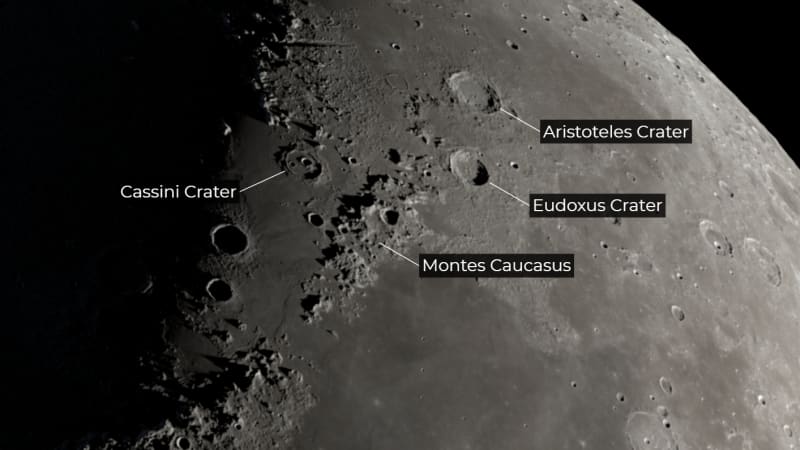
Start with the Eudoxus Crater, located above the ancient lava plain of Mare Serenitatis in the moon's northeastern quadrant. This 42-mile-wide impact site honors the Greek mathematician who first tried mapping planetary motions around Earth. Tonight, shadows will drape across its eastern interior, creating a dramatic view through even modest telescopes.
Just north of Eudoxus sits the Aristoteles Crater, a 54-mile-wide wonder bordering the Sea of Cold. The crater celebrates the philosopher who recognized Earth's spherical shape by observing curved shadows during lunar eclipses. Look for the broken terrain around its central basin, where hill-like features rise from the ancient surface.
Your final destination is the Cassini Crater, perched on the eastern edge of the Sea of Showers. This 35-mile crater honors Jean-Dominique Cassini, who discovered three of Saturn's moons and calculated Mars's rotation speed. Ancient lava flows filled its basin millions of years ago, and two younger craters now sit within its expanse, their interiors veiled in darkness tonight.
Why This Inspires
These craters connect us to the scientists who shaped our understanding of the cosmos. Eudoxus and Aristotle worked without telescopes, using only their eyes and minds to make sense of the heavens. Cassini lived during astronomy's golden age, peering through early telescopes to map our solar system.
Each crater tells two stories: the violent cosmic collision that carved it into the lunar surface, and the human curiosity that led us to name these features after our greatest thinkers. When you observe these craters tonight, you're following in the footsteps of countless skywatchers who looked up and wondered about our place in the universe.
The shadows highlighting these craters will shift and fade as the moon continues its phases, making tonight's viewing window special. Within days, different lighting will reveal entirely new details across the lunar landscape.
Whether you're using binoculars, a backyard telescope, or a high-powered instrument, these three craters offer accessible targets that reward patient observation with breathtaking views of our nearest celestial neighbor.
More Images
Based on reporting by Space.com
This story was written by BrightWire based on verified news reports.
Spread the positivity!
Share this good news with someone who needs it