
Tiny Flying Robot Survives Being Flattened 11,000 Times
Scientists at UCLA and UC Davis created a resilient micro-robot that can take flight again after being crushed under extreme weight or swatted mid-air. Inspired by how insects bounce back from collisions, this breakthrough could revolutionize search and rescue missions in disaster zones.
A robot the weight of two grains of rice just survived being flattened by something 11,000 times heavier and flew away like nothing happened.
Researchers at UCLA and UC Davis watched nature's tiniest aviators and asked a simple question: why do fruit flies and bees walk away from collisions that would destroy our best robots? The answer led them to build something extraordinary.
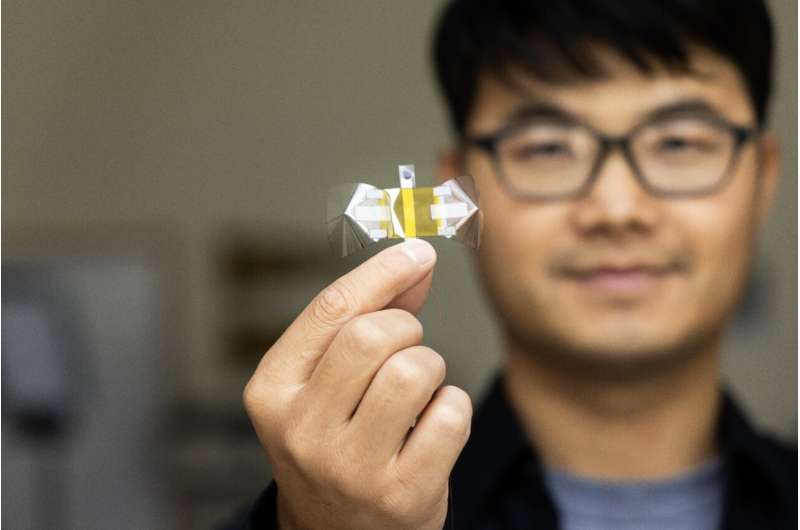
The team created a 185-milligram flying robot made entirely from flexible polymers. Unlike traditional micro-robots with fragile electronic parts, this one mimics the secret weapon of insects: bend, don't break.
"We were inspired by how flying insects survive collisions and other physical disturbances," said Qibing Pei, senior author of the study published in Science Robotics. His team spent years developing soft robotics materials that could replicate nature's resilience.
The robot's "muscles" are made from a special polymer film that expands when electricity flows through it. This creates powerful wing flaps without needing complicated gears or motors. The cone-shaped wings flex on impact, absorbing force instead of shattering.
In tests, the results stunned even the researchers. The robot generated lift three times its own weight and climbed through the air at 40 centimeters per second. When scientists hit it with a flyswatter mid-flight, it kept going. When they placed crushing weights on top of it, it sprang back to shape and flew again.
Wenzhong Yan, co-senior author of the study, calls this "mechanical intelligence." The robot's materials and structure automatically adapt to threats without needing computer commands or human intervention.
The Ripple Effect
This tiny flyer could soon venture where no human or traditional robot can reach. Future versions with their own power source and sensors could squeeze through rubble after earthquakes, searching for survivors in spaces too dangerous or confined for rescue teams.
The robot could monitor wildlife in delicate ecosystems without disturbing habitats. It could inspect hazardous chemical sites or collapsed buildings where recovery missions would risk human lives. Because it bounces back from collisions, operators wouldn't need to worry about losing it in hard-to-reach places.
The breakthrough also opens doors for entire swarms of resilient micro-robots working together. Imagine dozens of these tiny flyers coordinating to map disaster zones or detect gas leaks in industrial facilities.
The research contributes to a growing movement in robotics: learning from billions of years of evolution instead of fighting against it. Insects have already solved the problems engineers are just beginning to tackle.
Right now, the robot receives power through external wires, but the team is working on a fully independent version. Once these resilient little flyers can operate on their own, the places they can help us reach become limitless.
More Images



Based on reporting by Phys.org - Technology
This story was written by BrightWire based on verified news reports.
Building Something New? Try the BrightWire Tech Stack Advisor
Compare modern frameworks, cloud hosting, and AI tools tailored to your project budget and scale.
Spread the positivity!
Share this good news with someone who needs it


