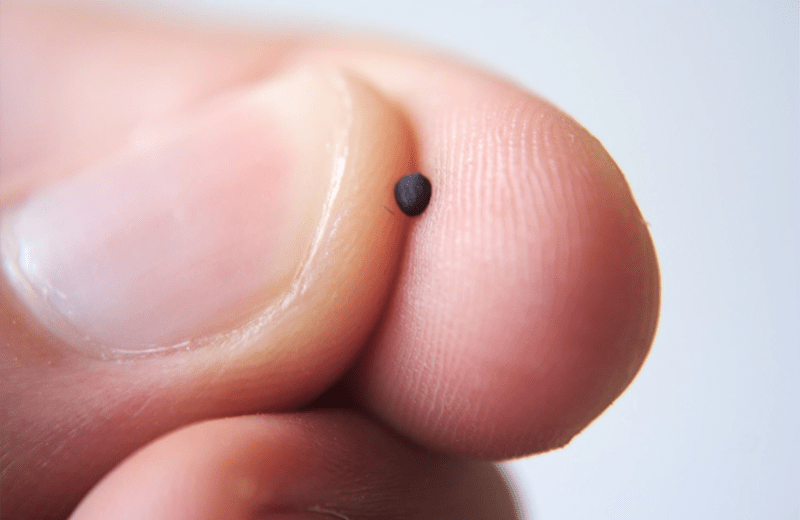
Tiny Microrobot Promises Revolutionary Future for Targeted Medical Treatment
Scientists in Switzerland have created a sand-sized microrobot that can be magnetically steered through blood vessels to deliver medication precisely where needed. This exciting breakthrough could transform how doctors treat brain tumors, aneurysms, and other challenging conditions while dramatically reducing harmful side effects.
A remarkable medical innovation is capturing hearts and imaginations worldwide as researchers unveil a microrobot small enough to fit on a grain of sand, yet powerful enough to revolutionize medicine as we know it. Developed by dedicated scientists at ETH Zurich in Switzerland, this tiny technological marvel can be guided through the human body using magnetic fields, delivering medication with extraordinary precision to exactly where it's needed most.
The excitement surrounding this breakthrough is palpable throughout the medical and scientific communities. Bradley J. Nelson, a professor of robotics and intelligent systems at ETH Zurich and lead author of the groundbreaking paper published in Science, believes we're witnessing the dawn of a transformative era. "We're just at the tip of the iceberg," Nelson shares enthusiastically, expressing confidence that surgeons will discover countless creative applications for this technology.
What makes this advancement so promising is its potential to address one of medicine's most persistent challenges: delivering treatment to specific areas without affecting the entire body. Currently, when someone takes medication, it travels throughout the bloodstream, often causing unwanted side effects while diluting its effectiveness at the target site. These innovative microrobots offer an elegant solution, navigating directly to problem areas like brain tumors, aneurysms, and arteriovenous malformations with remarkable accuracy.
David Blaauw, a robotics professor at the University of Michigan, emphasizes the thrilling possibilities this technology opens. "When you become very small, you can go places and do things that otherwise you couldn't do and see things that you couldn't otherwise see," he explains. The ability to access previously unreachable locations within the body represents a game-changing advancement for countless patients.
The technology itself is wonderfully ingenious yet surprisingly approachable. Surgeons control the microrobot using a device similar to a gaming controller, while six electromagnetic coils positioned around the patient create magnetic fields that gently guide the capsule through blood vessels. By carefully adjusting these fields, doctors can navigate with exceptional precision, almost like piloting a tiny submarine through the body's intricate waterways.
The inclusivity of this innovation is equally heartening. Researchers emphasize that the technology is designed to benefit all of humanity, with special hope for populations who have historically faced barriers to accessing cutting-edge medical treatments. "Our hope is that it will have a very broad impact and especially for people that may not have had as much access or have not had as much medical attention paid to their diseases," Blaauw shares warmly.
Testing has already shown tremendous promise, with successful trials completed in pigs whose vascular systems closely resemble humans, as well as in realistic silicone models used for medical training. While human trials are still an estimated three to five years away, the progress so far has exceeded expectations and generated widespread optimism.
This breakthrough represents more than just technological achievement—it symbolizes hope for millions of patients who face difficult diagnoses. As the field of microrobotics continues its rapid advancement, we're witnessing the emergence of precision medicine that seemed like science fiction just years ago. The future of healthcare is looking brighter, smaller, and more precisely targeted than ever before.
More Images



Based on reporting by Google News - Medical Breakthrough
This story was written by BrightWire based on verified news reports.
Spread the positivity! 🌟
Share this good news with someone who needs it
More Good News
 🧘 Health & Wellness
Breakthrough GLP-1 Study Shows 27% of Global Adults Could Transform Their Health
 🧘 Health & Wellness
Brazilian Scientists Crack Code on Pig-to-Human Kidney Transplants
 🧘 Health & Wellness
Breakthrough Hepatitis B Drug Achieves Functional Cure in Phase 3 Trials
Joke of the Day
Why don't scientists trust atoms?
Explore Categories
Quote of the Day
"The only way to do great work is to love what you do."
— Steve Jobs