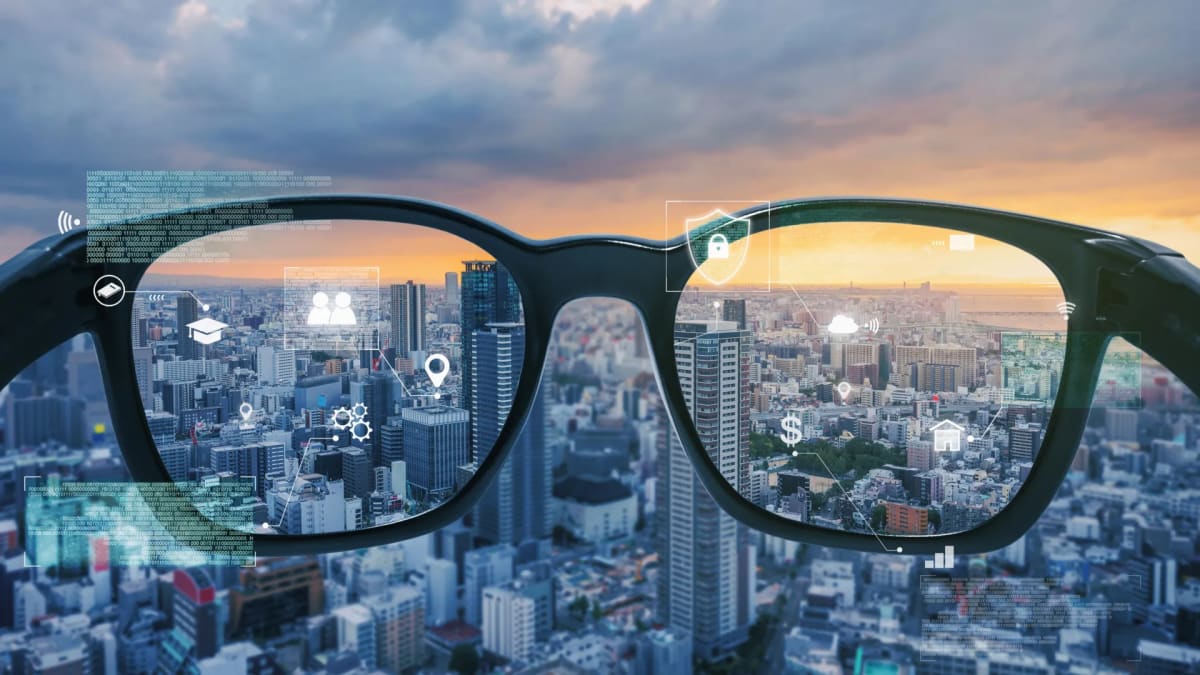
Tiny Pixels Bring Invisible Smart Glasses Closer to Reality
Scientists created the world's smallest OLED pixel, small enough to fit an entire HD display on a grain of sand. The breakthrough could finally make truly wearable smart glasses a reality.
Imagine smart glasses so sleek they look like ordinary eyewear, with no bulky tech giving them away. German scientists just made that future much closer by building the smallest light-emitting pixel ever created.
Researchers at the University of Würzburg built an OLED pixel measuring just 300 nanometers across, about 16 times smaller than conventional pixels. To put that in perspective, you could fit an entire Full HD display into a space smaller than a speck of sand.
The team, led by Professors Jens Pflaum and Bert Hecht, solved a problem that has stumped engineers for years. When you shrink pixels down to nanoscale, they typically short circuit and die within minutes.
Their solution involved adding a tiny optical antenna made of gold and wrapping it with a protective insulating layer. This layer blocks electrical current from entering at the corners and edges, where it would normally create destructive growths that kill the pixel.
The result? A nano-sized pixel that shines just as brightly as its much larger cousins and stays stable for weeks. Even more impressive, it works at room temperature without any special conditions.
Smart glasses have promised to revolutionize how we interact with digital information for years, but the bulky displays needed to power them have held the technology back. Current designs require chunky frames to house the projection hardware, making them obvious and uncomfortable for everyday wear.
This breakthrough changes the equation entirely. With pixels this small, an entire display could be built directly into thin eyeglass arms. The technology could work for both augmented reality glasses that overlay digital information on the real world and virtual reality headsets that need to be lighter and more comfortable.
Why This Inspires
This isn't just about making gadgets smaller. It's about removing the barriers between people and helpful technology.
Parents could get turn-by-turn directions while pushing a stroller. Surgeons could see vital patient data without looking away from the operating table. People with vision impairments could get real-time text descriptions of their surroundings, all through glasses that look completely normal.
The Würzburg team is already working on the next steps: boosting efficiency beyond the current one percent and expanding from orange light to full color displays. They're calling these future devices "made in Würzburg" displays, and they believe the technology could eventually become invisible even when integrated into contact lenses.
Sometimes the biggest leaps forward come in the smallest packages.
Based on reporting by Science Daily
This story was written by BrightWire based on verified news reports.
Spread the positivity!
Share this good news with someone who needs it