Tiny Robots Fly Using Sound Instead of Batteries
Scientists created microscopic robots that move using only sound waves, solving one of technology's biggest challenges. These tiny devices could revolutionize medicine and aerospace without needing batteries or motors.
Imagine a robot so small it weighs less than a grain of sand, yet it can fly through the air powered by nothing but sound.
Researchers at Switzerland's EPFL engineering school just cracked a puzzle that's stumped scientists for years. When devices shrink to microscopic sizes, there's simply no room left for traditional batteries and motors. Now these engineers have found an elegant solution hiding in plain sight: acoustic energy.
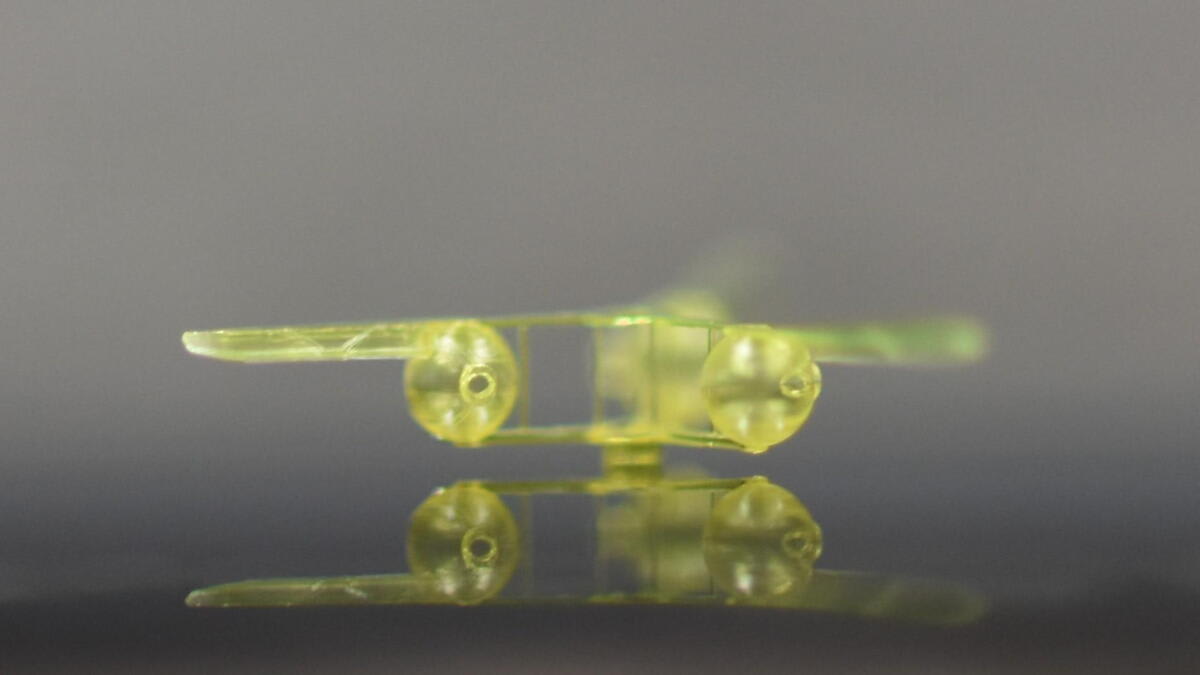
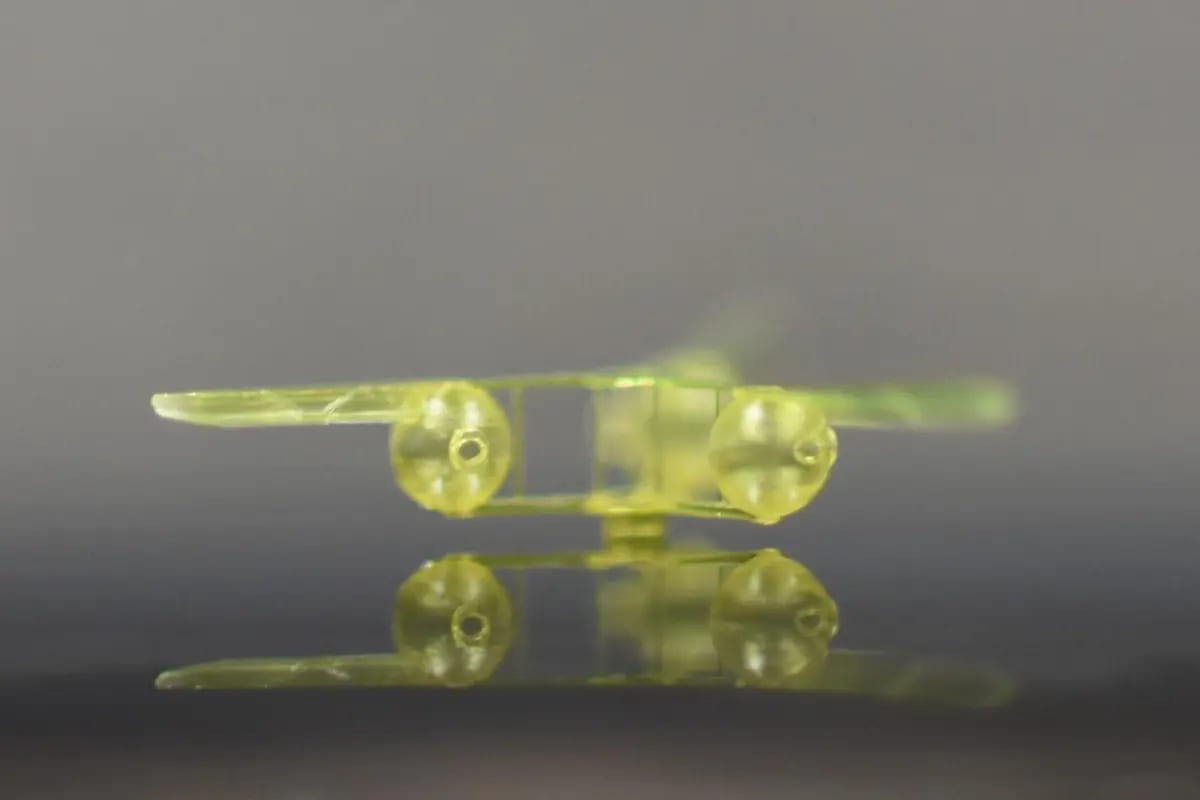
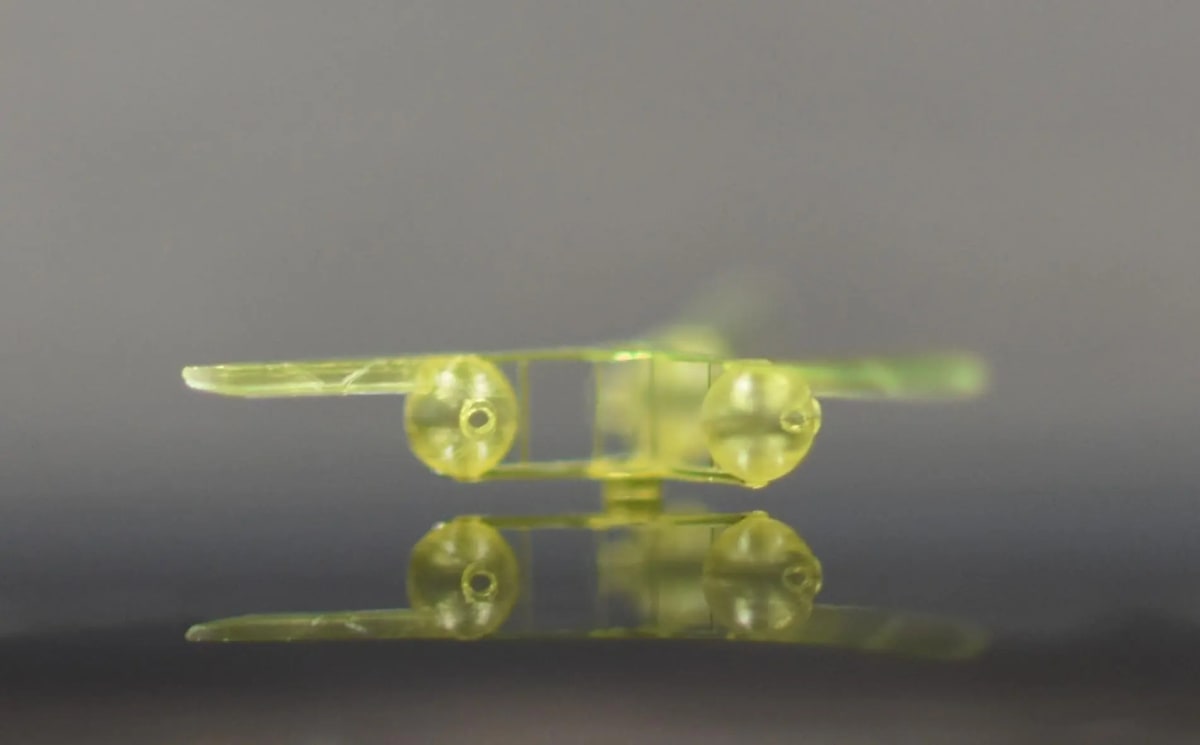
The secret lies in something called Helmholtz resonance, the same phenomenon that creates a humming sound when you blow across a bottle opening. The team designed tiny hollow cavities into their micro-robots that trap and vibrate sound waves at specific frequencies. When sound hits these cavities, air rushes out in a concentrated stream while spreading out on the way back in. This imbalance creates thrust, pushing the robot forward.
The researchers built several prototypes to test their breakthrough. Miniature boats equipped with three different cavities could be steered in any direction by simply changing the sound frequency. Each cavity responds to its own frequency, like a musical instrument tuned to a specific note.
The flying versions are even more impressive. These microfliers weigh just 150 micrograms and feature three microscopic cavities. Powered by ultrasonic frequencies humans can't hear, they successfully flew during testing. One design spun tiny propeller blades at 13,000 revolutions per minute using only sound energy, far faster than many conventional drone propellers.
The Ripple Effect spreads far beyond the lab. Medical applications could transform healthcare, allowing doctors to deploy microscopic devices inside the human body for drug delivery or diagnosis. In aerospace, fleets of coordinated micro-drones could perform inspections in tight spaces unreachable by larger equipment. Security and environmental monitoring could benefit from networks of these ultralight devices working together.
What makes this approach revolutionary is its fundamental difference from previous experiments. Earlier research simply pushed objects around with external sound waves, like using a fan to blow a feather. These new micro-robots actually convert ambient acoustic energy into mechanical thrust, making them self-propelled vehicles rather than passive objects.
The engineering team, led by lab head Selman Sakar, designed acoustic resonators that harness sound at specific frequencies to generate directional thrust and controlled motion. Multiple sound-responsive structures can be built into a single device, with different parts activated by different frequencies to move independently.
Future devices could be entirely flexible, bending and adapting while their acoustic cavities continue generating movement. The possibilities extend to swarms of coordinated micro-robots, each responding to different frequency commands to accomplish complex tasks together.
This breakthrough opens doors to a world where the smallest machines run on the energy that surrounds us, no batteries required.
More Images

Based on reporting by New Atlas
This story was written by BrightWire based on verified news reports.
Spread the positivity!
Share this good news with someone who needs it