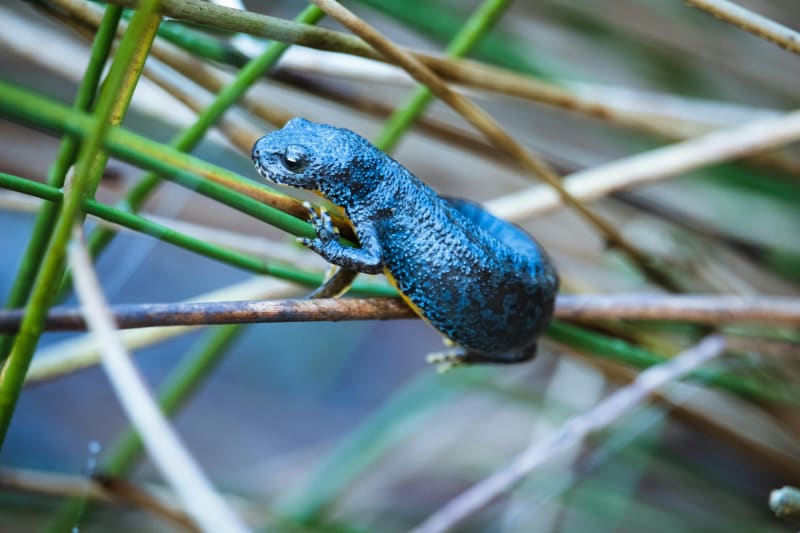
Tiny Salamanders Survive Below-Zero Temps in Canadian Snow
Scientists discovered blue-spotted salamanders can crawl across ice and snow without freezing by "supercooling" their bodies below 0°C. This remarkable ability gives them a head start on breeding season and helps their babies thrive.
Imagine watching a tiny salamander walk across snow and ice without freezing solid. That's exactly what surprised Professor Glenn Tattersall and his team when they ventured into Ontario's Algonquin Provincial Park on a frigid April morning.
Blue-spotted salamanders aren't supposed to survive ice contact. Unlike some frogs that can freeze up to 70% solid and thaw out fine, these amphibians are "freeze intolerant" and should avoid extreme cold at all costs.
Yet there they were, crawling confidently across frozen terrain during their spring migration to breeding waters. The researchers couldn't resist investigating this mystery.
Using specialized thermal cameras, the team measured the salamanders' body temperatures as they trekked through the cold. What they discovered changes our understanding of how these creatures survive harsh Canadian winters.
The salamanders use a process called "supercooling" that lets their bodily fluids drop below freezing without actually turning to ice. Their bodies stay liquid even in sub-zero temperatures, defying the normal rules of physics.
This isn't just a cool party trick. The ability to brave the cold gives blue-spotted salamanders a serious competitive edge in nature's race to reproduce.
By emerging earlier than other amphibians, they reach breeding ponds first and claim the best spots. Their longer breeding season means more time for eggs to develop and babies to grow strong before summer arrives.
Early arrival also helps them dodge predators who show up later in the season. The parents essentially give their offspring a better shot at survival simply by being brave enough to travel through the cold.
Why This Inspires
Most research on salamander cold tolerance happens in sterile labs, but this team went straight to the source. They studied these tiny creatures in their actual environment, trudging through snow to understand how nature solves problems we might never think possible.
The discovery shows that even small creatures we might overlook have developed extraordinary survival strategies. These salamanders are rewriting the rulebook on what "freeze intolerant" really means.
Their findings remind us that the natural world still holds countless surprises waiting to be uncovered. Sometimes the most remarkable adaptations are happening right under our noses, in creatures smaller than your hand, doing the impossible to give their babies a better future.
More Images
Based on reporting by Phys.org
This story was written by BrightWire based on verified news reports.
Spread the positivity!
Share this good news with someone who needs it