Tiny Startup Builds $20M AI Model to Rival Tech Giants
A 26-person American startup just released a powerful open source AI model built on a shoestring budget, proving you don't need billions to compete with tech giants. Arcee's new model gives companies a homegrown alternative that they can actually control.
A scrappy team of 26 people just proved that innovation doesn't require unlimited venture capital or thousands of engineers.
Arcee, a small American startup, released Trinity Large Thinking this week. It's a massive 400-billion-parameter AI model built on just $20 million, a fraction of what tech giants spend on similar projects.
CEO Mark McQuade calls it the most capable open-weight model "ever released by a non-Chinese company." That's not just bragging. It's a statement of purpose.
Arcee wants to give Western companies a powerful AI option they can actually own. Companies can download Trinity, customize it for their specific needs, and run it on their own servers. No dependence on distant tech giants. No worrying about sudden policy changes.
That independence matters more than ever. Just last week, AI powerhouse Anthropic changed the rules for users of the popular coding tool OpenClaw. Customers who thought their subscriptions covered OpenClaw suddenly faced unexpected additional charges.
Arcee offers a different path. Its models run under the Apache 2.0 license, the gold standard for truly open source software. Companies aren't at the mercy of corporate whims or pricing changes.
The Bright Side
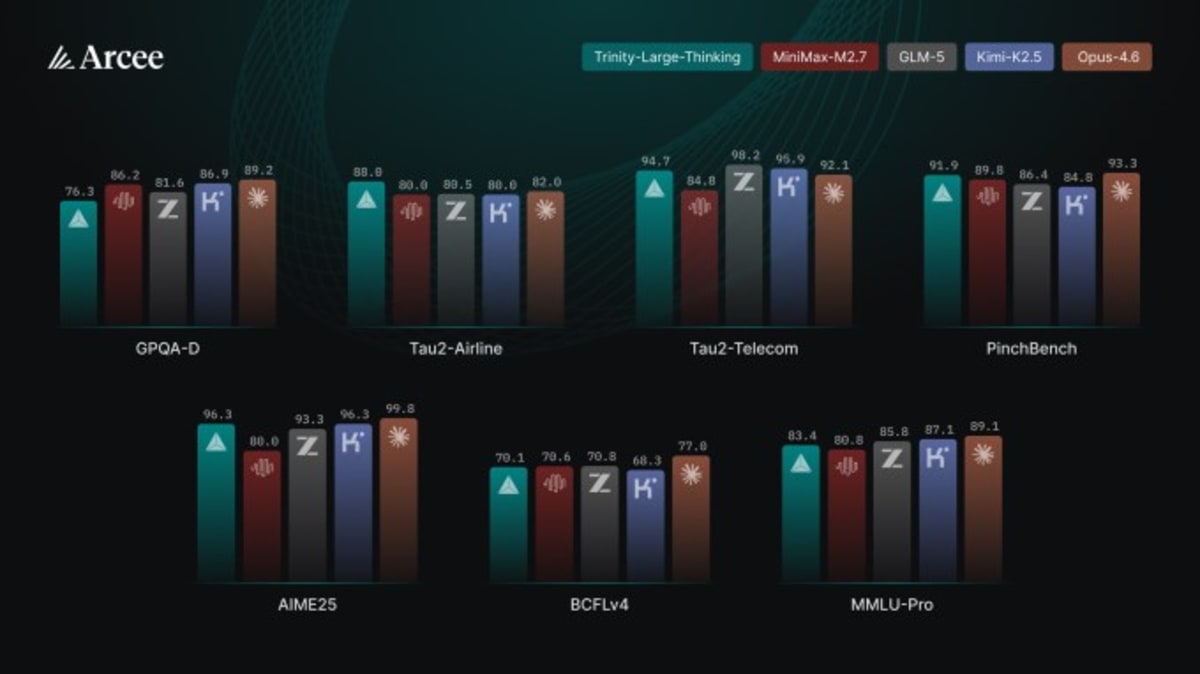
Trinity Large Thinking performs comparably to other top open source models, according to benchmark results shared with TechCrunch. While it doesn't outperform closed models from giants like OpenAI or Anthropic, it offers something those can't: true ownership and control.
The startup's efficiency is remarkable. Building a 400-billion-parameter model on $20 million shows that clever engineering can compete with nearly unlimited resources. It's a reminder that the future of AI doesn't belong exclusively to trillion-dollar companies.
OpenRouter data shows Trinity has already become one of the top models used with OpenClaw, proving that developers appreciate alternatives to corporate-controlled AI. Companies are voting with their feet, choosing independence over marginal performance gains.
Arcee isn't alone in this mission, and that's wonderful news. Countless other American startups are building open source AI models, each contributing to a more diverse and resilient tech ecosystem.
The little guys are proving they can still compete with the giants.
More Images


Based on reporting by TechCrunch
This story was written by BrightWire based on verified news reports.
Spread the positivity!
Share this good news with someone who needs it