Tiny Tardigrades Survived Space, Now Fighting Cancer on Earth
In 2007, microscopic water bears spent 10 days exposed to the vacuum of space without protection and survived. Scientists just used their superpower protein to protect healthy tissue during cancer treatment.
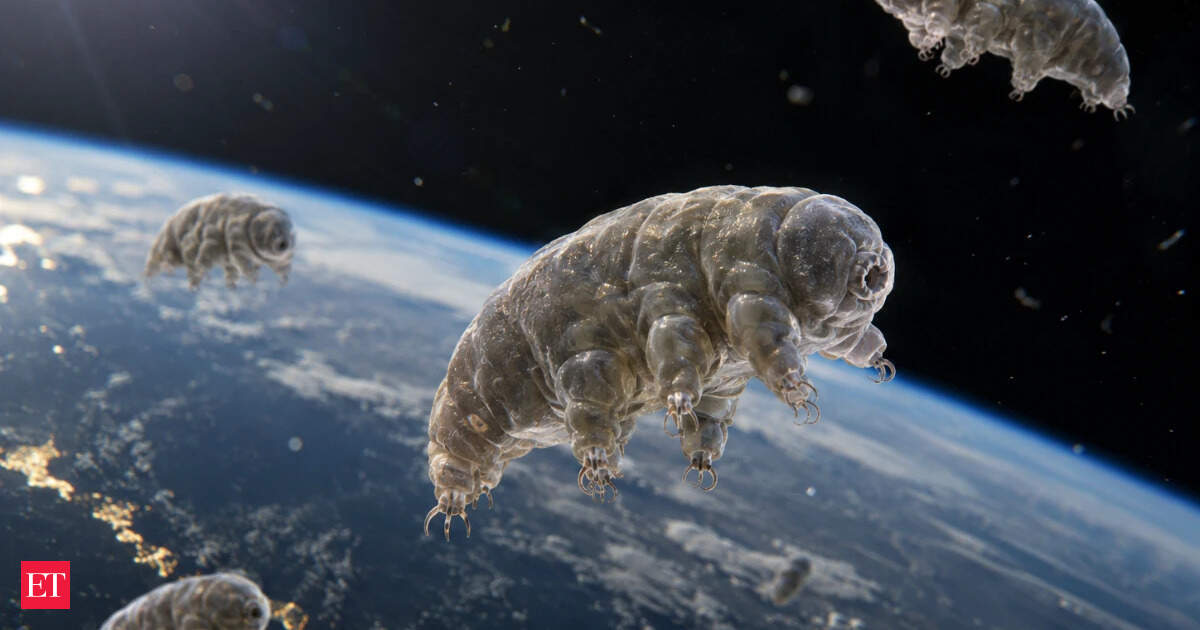
Imagine being tossed into the vacuum of space with no spacesuit, no oxygen, and cosmic radiation bombarding your body for 10 straight days. You'd be dead in 15 seconds, but 3,000 tiny creatures called tardigrades did exactly that and lived to tell the tale.
On September 14, 2007, the European Space Agency strapped these microscopic animals to the outside of a Russian capsule in low Earth orbit. For 10 consecutive days, they floated 258 kilometers above Earth, completely exposed to conditions that would instantly kill a human. When researchers added a few drops of water after the capsule returned to Kazakhstan, most of the tardigrades started moving again within 30 minutes.
The eight-legged creatures, barely half a millimeter long, weren't just lucky. Scientists divided them into groups to test what they could actually survive. The tardigrades exposed only to vacuum did fine, living at nearly the same rates as their Earth-bound cousins. The real test was radiation.
When exposed to solar ultraviolet light (UV-A and UV-B), 68% of one tardigrade species revived after rehydration. The group blasted with the full spectrum of solar radiation, including the most damaging UV rays normally filtered by our atmosphere, didn't fare as well. Only three survived that extreme test.
Here's where the story gets even better. Tardigrades didn't evolve to survive space travel. They evolved to live in puddles that dry up in your backyard gutter. Their space-surviving abilities were just a bonus from learning to handle extreme conditions on Earth.
The Ripple Effect
In 2016, researchers discovered tardigrades produce a unique protein called Dsup, short for "damage suppressor." When scientists modified ordinary human cells with the Dsup gene, those cells suffered 40% less DNA damage from X-rays. That wasn't just a cool lab trick.
Fast forward to 2025, and scientists at MIT and Brigham and Women's Hospital found a practical medical application. They used the same mRNA delivery method from COVID-19 vaccines to temporarily give healthy tissue the tardigrade's protective protein. The result? Healthy tissue stays safer during cancer radiation therapy without permanently altering anyone's genes.
The biggest challenge for astronauts traveling to Mars isn't food, psychology, or even the rockets themselves. It's radiation. These puddle-dwelling creatures might hold the key to protecting both space travelers and cancer patients right here on Earth.
What started as a wild space experiment with nearly indestructible water bears is now helping doctors protect patients during life-saving treatments.
More Images

Based on reporting by Google News - Science
This story was written by BrightWire based on verified news reports.
Spread the positivity!
Share this good news with someone who needs it