Tokyo Scientists Solve Mystery of Missing Ocean Plastics
Researchers in Japan discovered where microplastics from farm fertilizer end up after years of puzzling over vanished ocean pollution. The breakthrough reveals that beaches act as temporary traps, catching plastic before it disappears into unknown ocean locations.
Scientists at Tokyo Metropolitan University just cracked a major puzzle in the hunt for millions of tons of missing ocean plastics.
For years, researchers knew that 90% of plastic flowing into the ocean mysteriously vanishes from the surface. Now they've traced one major culprit's journey from rice paddies to beaches and beyond.
The team focused on polymer-coated fertilizers, tiny plastic capsules used on farms across Japan, China, and parts of Europe and the United States. These fertilizers release nutrients slowly, helping crops grow more efficiently. But their plastic shells create a serious environmental problem.
Professor Masayuki Kawahigashi and Dr. Dolgormaa Munkhbat surveyed 147 plots across 17 Japanese beaches near river mouths and drainage channels. What they found surprised them.
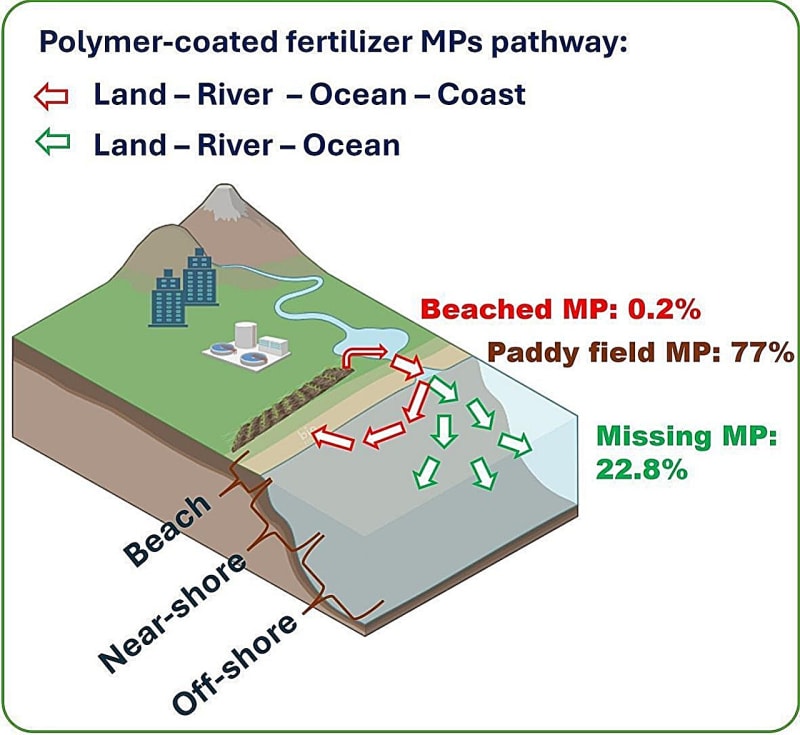
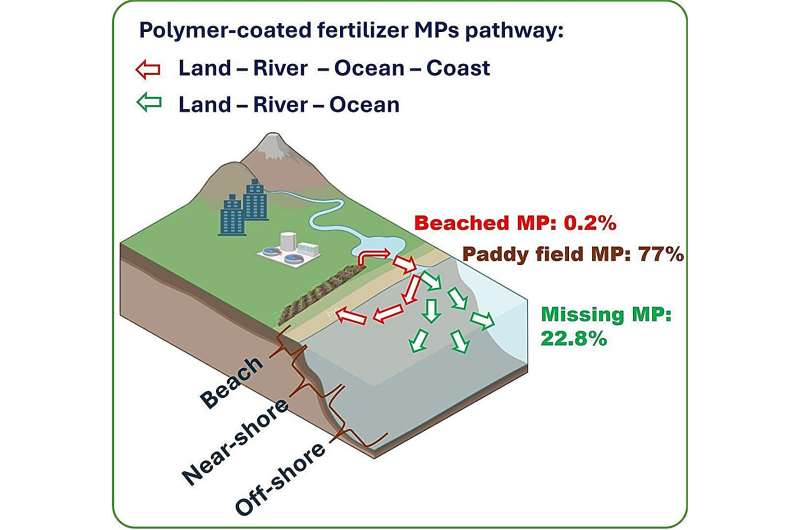
Only 0.2% of fertilizer plastics used on nearby farms wash up on beaches through rivers. About 77% stay trapped in the soil where they were applied. But a whopping 22.8% simply disappear, likely sinking to the ocean floor or accumulating in underwater locations scientists haven't identified yet.
The numbers tell a different story when farms connect directly to the sea through drainage canals. In those cases, 28% of the plastic capsules end up back on beaches. Waves and tides push them onto shore, making beaches temporary stopping points before the plastics continue their journey.
The researchers discovered something else intriguing. Many capsules showed reddish and brown discoloration. Testing revealed iron and aluminum oxide particles coating the plastic, likely making them heavier and more prone to sinking rather than washing ashore.
The Bright Side
This research gives environmental scientists their first clear map of how agricultural plastics move through waterways. Understanding the path means researchers can now focus cleanup efforts on the most effective locations.
The findings also spotlight an actionable problem. Since most plastic capsules stay in farm soil, better collection methods after harvest could prevent them from ever reaching waterways. For the direct drainage channels sending 28% back to beaches, simple filtration systems could catch plastics before they enter the ocean.
Scientists now have specific numbers to work with rather than guessing about plastic transport. That transforms a vague pollution problem into a solvable engineering challenge with clear intervention points.
The research marks a crucial first step in tackling the global mystery of where ocean plastics actually go once they leave our sight.
More Images



Based on reporting by Phys.org - Earth
This story was written by BrightWire based on verified news reports.
Spread the positivity!
Share this good news with someone who needs it