Toucans Revive Brazil's Urban Forest 50 Years After Return
Fifty years after nearly vanishing from Rio de Janeiro, toucans are saving endangered trees in the world's largest urban forest. Scientists discovered the colorful birds are doing the job no other animal can.
The toucans are back, and they're bringing the forest back with them.
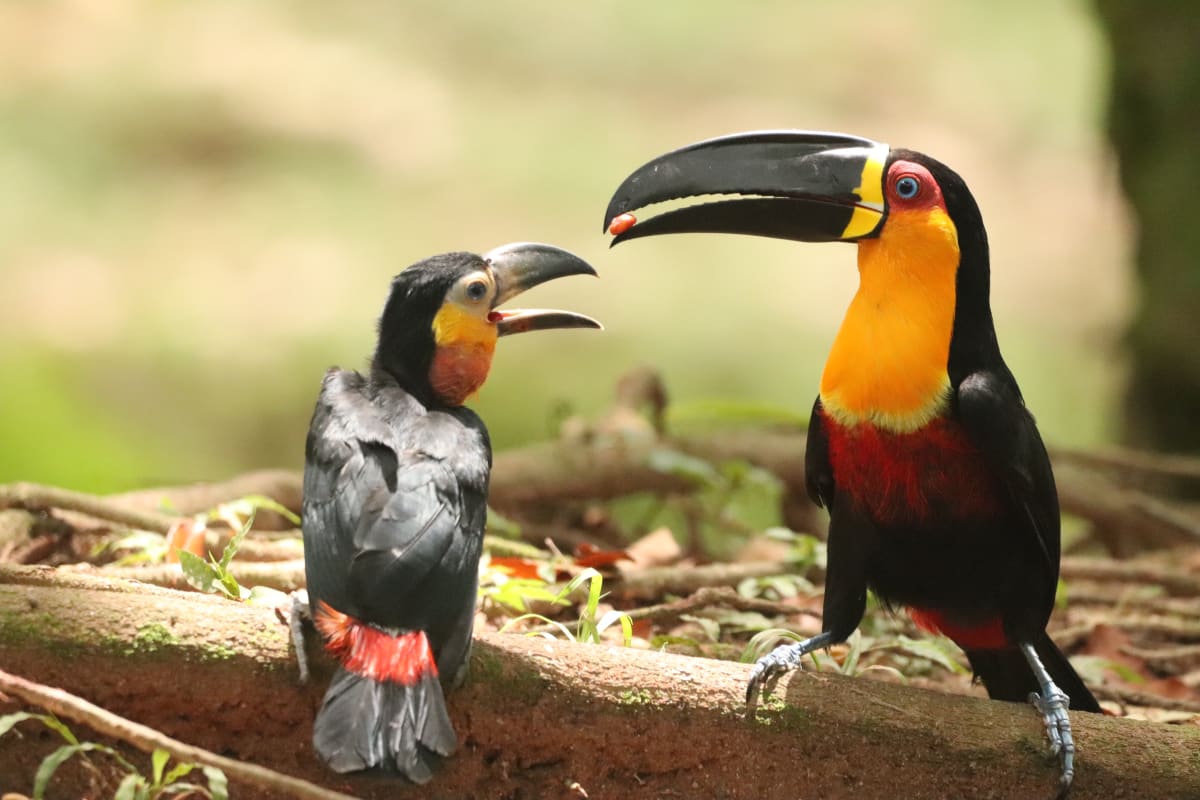
More than 50 years ago, ariel toucans disappeared from Tijuca National Park, a sprawling urban forest in the heart of Rio de Janeiro, Brazil. In 1970, conservationists released 46 of the birds back into the wild, hoping they'd survive. Today, scientists have discovered something remarkable: the toucans aren't just surviving—they're rescuing endangered trees that would struggle without them.
Researchers spent an entire year tracking the birds through Tijuca forest, often hiking more than 12 miles daily to watch what the toucans ate. They compared the birds' current diet to a list of 101 native plants that toucans historically fed on before going locally extinct in the 1960s.
The results stunned them. The toucans, with their signature black beaks and vibrant feathers, now interact with 76% of their historical food sources. Even more impressive, they're feeding on nearly 90% of plants with medium and large seeds.
"They are such sociable and intelligent beings," said lead researcher Flávia Zagury from the Federal University of Rio de Janeiro. "The way they are able to handle fruits: Sometimes it has a hard capsule on the outside, and they hold it with their little feet and open it with their beaks."
That skill matters more than anyone expected. The toucans feast on fruits and seeds that few other animals can crack open, making them essential dispersers for endangered species like the jussara palm and bicuíba-branca tree. Both have lost more than half their natural range and are classified as nationally endangered.
The jussara palm became a toucan favorite, possibly the most consumed plant in their diet. When researchers compared the toucans' eating habits with other recently reintroduced animals like red-rumped agoutis and brown howler monkeys, they found minimal overlap. The toucans fill a unique role no other creature can replace, especially for plants with larger seeds.
The Ripple Effect
This success story reaches beyond one species. Since 1970, the released toucans had been largely unmonitored until this study. Now scientists understand that bringing back one missing piece can help restore an entire ecosystem.
The toucans' return demonstrates how reintroduction programs can work when given enough time. Half a century seemed like forever to wait for answers, but the patience paid off. The birds have almost completely settled back into their original ecological role.
Zagury admits much remains unknown about exactly how many seeds the toucans disperse and their full impact on reforestation. "It's pretty much a blank canvas; there is so much we still don't know," she said.
But what scientists do know brings hope: sometimes nature just needs a second chance.
More Images




Based on reporting by Mongabay
This story was written by BrightWire based on verified news reports.
Spread the positivity!
Share this good news with someone who needs it